
Reviewed · COOKING CLASSES
Pure Bali Village Experience, Cooking & Jamu Class+VIP Transfer
The best part of this day is that you do more than look at Bali’s countryside. You pick herbs, make two kinds of jamu, cook lunch over a bamboo grill, and lend a hand in a rice field. I like the small-group format, which keeps the cooking practical rather than a show, and the mix of food, farming, music, and village life feels far more personal than a standard sightseeing loop.
I also like that hotel pickup and drop-off are included in an air-conditioned vehicle, a real help when the mountain village is about an hour from Ubud. The main drawback is the pace and terrain: this is an eight-hour day with about 30 minutes of downhill walking, rice planting, and a possible hot-spring stop, so it is not a sit-back-and-watch excursion.
Key things to know before you book
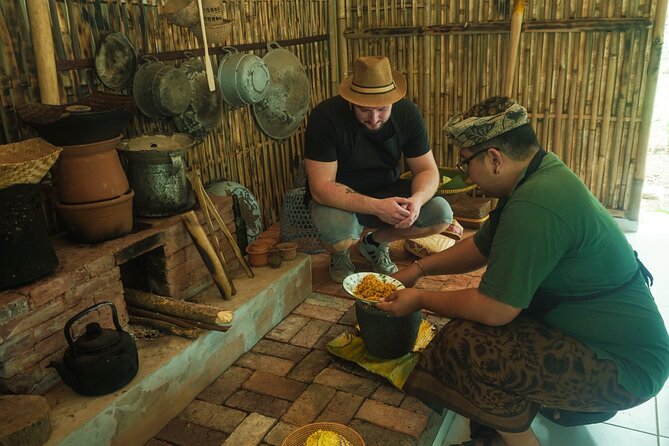
- Make two traditional jamu drinks: Pick herbs and spices from a garden with more than 40 plant varieties, then prepare and taste two herbal tonics.
- Cook a full Balinese lunch: Learn dishes for Nasi Campur Tumping, Sate Lilit, and Lak Lak dessert, including a live bamboo-grill session and a traditional clay pot.
- See daily village life in action: Help plant rice, visit the Balikaru farm, meet animals, and see stingless Trigona bee hives.
- Learn beyond the kitchen: Try the Rindik, a Balinese instrument, and visit a traditional house built around Asta Kosala principles.
- Finish at Belulang Hot Spring: The bath is optional, making the final stop easy to skip if you would rather stay dry.
- Plan for a full day: Pickup begins at 7:30 a.m., the experience lasts about eight hours, and groups are capped at 12 people.
Why this village day feels different from a standard Bali tour
Bali is easy to see through temples, beaches, cafés, and traffic-heavy resort towns. This experience takes you into a mountain village in the Batukaru region, where the focus shifts to food, plants, farming, and family life.
That difference matters. You are not simply driven to a viewpoint, handed a plate, and sent on your way. The day asks you to take part. You walk through a herb garden, prepare ingredients, cook with a chef, plant rice, and speak with local people along the route.
The experience is operated by Balikaru and limited to 12 people. That is small enough for hands-on help at the kitchen stations, though the exact feel will depend on how many people book that day. The tour is offered with an English- or German-speaking guide. Other languages cost extra.
The scenic drive is part of the outing, not just a transfer. Pickup starts at 7:30 a.m., and the drive includes photo stops before you reach the mountain village. If you are staying in Ubud or another central area, the road time adds to the day, but it also gets you away from the busiest tourist zones.
More cooking classes in Bali:
- Ubud Cooking Class Bali with Balinese Chef
★ 5.0 · 1,609 reviews - PRIVATE Authentic Balinese Cooking Class in Ubud at Putu’s Home
★ 5.0 · 644 reviews - Balinese Ubud cooking school (9 Dish Cooking and Market Tour)
★ 5.0 · 540 reviews
Your first taste of the village: Rindik and the herb garden
After arriving, you begin with a leisurely village walk and an introduction to the Rindik, a traditional Balinese instrument. This is a good opening because it gives you a cultural foothold before the more active parts of the day begin.
You then enter a guided herb and spice garden containing more than 40 kinds of plants. The value here is not just the number of plants. You learn which ingredients can become part of jamu, then use herbs you have picked yourself rather than watching a guide prepare everything in advance.
Jamu is a traditional Indonesian health drink made from herbs, spices, and other plant ingredients. It is something many visitors miss because it rarely appears in the usual Bali sightseeing program. At the Jamu Pavilion, you make and taste two types of jamu, along with fruit.
Expect the flavors to be quite different from a sweet café drink. The point is to understand how plant-based drinks fit into local food traditions. If you are curious about Indonesian ingredients, this may be one of the most useful sections of the day.
Cooking at Paon Bali, from Sate Lilit to Lak Lak
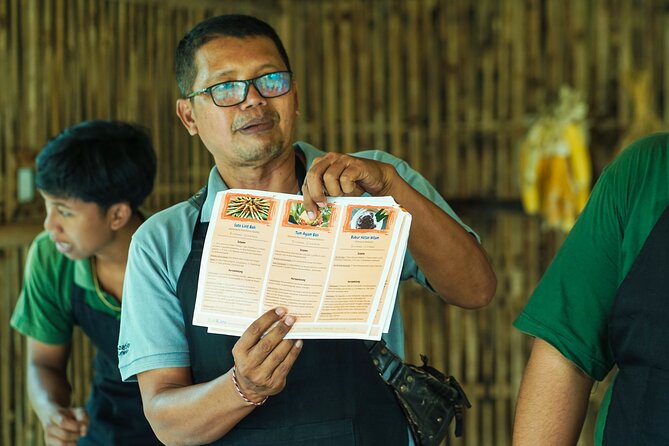
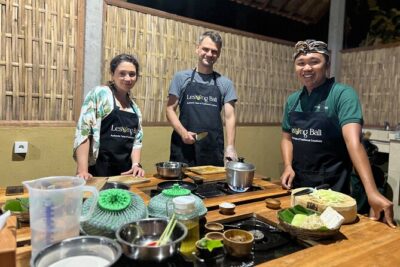
The cooking class takes place at Paon Bali, an open-air kitchen. An on-site chef guides you through an authentic Balinese meal, with enough participation to make the lunch feel earned.
The menu includes Nasi Campur Tumping, a Balinese mixed rice meal, plus dessert. You also prepare Sate Lilit at a live bamboo grill station. Sate Lilit is minced meat or another seasoned mixture shaped around a skewer, and forming it yourself gives the cooking session a hands-on centerpiece.
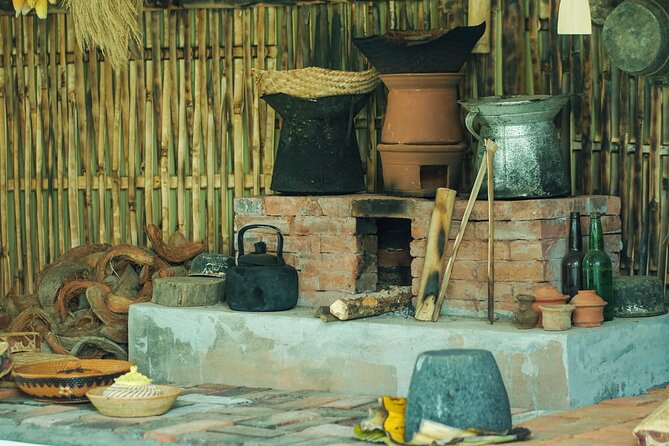
The class also covers Lak Lak, a small Balinese dessert made using a traditional clay pot. This is the kind of detail that separates a useful cooking class from a generic lesson with a local label. You are working with cooking methods and equipment that connect the food to its setting.
Lunch is the meal you have prepared, including dessert. You can expect to spend time chopping, shaping, grilling, and following instructions rather than simply sampling finished dishes. The open-air setting adds to the village feel, though it also means the cooking area is less controlled than a modern indoor kitchen.
Vegetarian dietary needs can be accommodated if you provide the information when booking. Other dietary requirements should also be stated in advance. The tour does not include drinks beyond the jamu and fruit tasting, so personal beverages are an extra cost.
Rice planting and the Balikaru farm
After lunch, you have the chance to help a farmer plant rice. It is a short activity in the schedule, but it adds useful context to the meal you just cooked. Rice is not an abstract ingredient here. You see the work that supports the food culture you have been learning about.
You also visit the Balikaru farm, where you can meet animals and see stingless Trigona bee hives. Stingless bees are especially interesting because they show another side of small-scale farming, one based on local ecosystems rather than large attractions.
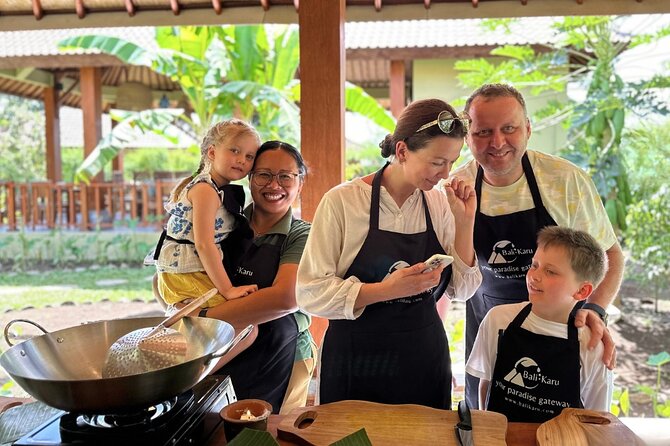
The experience may suit families and curious adults who prefer doing something with their hands. One review describes a family group enjoying the shared preparation of the meal, and that makes sense: the cooking stations and farm activities give children and adults separate ways to take part.
The rice field work and farm visit are not polished stage shows. Conditions can be muddy or uneven, and your clothes may not stay spotless. Wear practical clothing and shoes that you do not mind getting dirty. The provided information does not specify clothing or towel arrangements, so pack with the outdoor portions in mind.
More private driver days in Bali:
- Denpasar Arrival Transfer: Airport to Hotel
★ 4.5 · 105 reviews - Private Arrival Transfer: Bali Airport to Hotel
★ 3.5 · 47 reviews - Denpasar Departure Transfer: Hotel to Airport
★ 4.5 · 37 reviews - Private Departure Transfer: Hotel to Bali Airport
★ 3.5 · 14 reviews
A 30-minute village walk and Asta Kosala architecture
The village walk includes about 30 minutes of soft trekking downhill. You pass through the local settlement with mountain views and have time to chat with residents. The downhill route is part of the charm, but it is also the clearest physical consideration in the program.
If you have knee trouble, balance concerns, or limited walking ability, ask about the route before booking. Service animals are allowed, but the terrain may still be difficult for some people. The tour information does not promise an accessible alternative.
A traditional Balinese compound visit follows. Here you learn about Asta Kosala architecture, a system of design influenced by Balinese Feng Shui. This helps explain why Balinese homes and compounds are arranged in particular ways, rather than treating the house as just another photo stop.
The visit also gives you a chance to see village life at close range. Keep your approach respectful, follow your guide’s instructions, and remember that a traditional compound is a lived-in place, not merely a display.
Belulang Hot Spring: a quiet final stop
The day ends at Belulang Hot Spring. You may take an optional bath, so you can choose to soak or simply enjoy the stop before returning to your hotel.
A hot spring is a fitting finish after cooking, walking, and rice planting. Still, bring realistic expectations. The supplied details do not describe changing rooms, towels, water temperature, or bathing facilities. If you plan to bathe, confirm what you need to bring before setting out.
Some past participants paired the cooking day with a purification ceremony, but that is not listed as part of this experience. Do not assume a spiritual purification is included. The confirmed program offers the hot spring with an optional bath.
What the $89 price covers
At $89 per person, this is not the cheapest way to spend a day in Bali. It is also not just a cooking class. The price includes hotel pickup and drop-off, an air-conditioned vehicle, scenic driving and photo stops, the Rindik introduction, the garden tour, jamu production and tasting, the cooking class, lunch and dessert, rice planting, the farm visit, the village walk, the traditional compound, and the Belulang Hot Spring stop.
You also receive a farewell gift and a personal cooking-class certificate by email after the tour. Tips, drinks, and personal expenses are not included.
I see the value in the combination. A cooking class alone could be less expensive, while a private driver and a series of separate rural stops could cost more once transport and meals are added. Here, you get a full day with one coordinated guide and food included.
The tradeoff is that you are paying for breadth. You do not spend the entire day mastering a small number of recipes, and you do not get a long, slow village stay. Instead, you sample several parts of rural Balinese life in one day.
The activity is booked about 54 days ahead on average, which suggests that you should not leave it until the final days of a Bali trip. It may be especially wise to reserve early during busy travel periods, when small-group departures can fill.
Who will enjoy this experience most
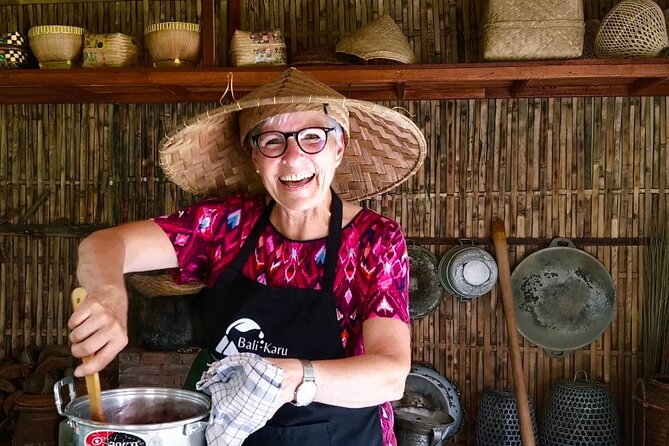
This is a strong choice if you want to understand Bali through food and daily work rather than only through temples and scenic stops. It suits couples, families, and small groups who enjoy active cultural experiences and do not mind sharing instruction with other people.
You are likely to appreciate it if you:
- Want a cooking class where you prepare and eat the meal
- Are interested in jamu and local plants
- Prefer a village setting to a busy tourist district
- Like short walks, farm visits, and simple outdoor tasks
- Value hotel transport instead of arranging a driver
- Can follow instruction in English or German
It is less suitable if you want a private, luxury-style outing, a very slow spa day, or a tightly focused culinary course. The eight-hour schedule covers a lot, and the downhill walk plus rice planting require some physical effort.
The group limit of 12 helps, but it does not make the experience private. If you need a private departure, ask the operator directly rather than assuming the small group size means exclusive use.
Practical advice for a smoother day
Wear light clothing and sturdy shoes for the garden, village walk, farm, and rice field. Plan for the possibility of mud, uneven ground, and tropical weather. If you want to use the hot spring, ask in advance about towels and changing arrangements because those details are not specified.
Tell the operator about vegetarian or other dietary needs when you book. Since the cooking is central to the day, this is not a minor request to make at the last minute.
Bring money for tips, drinks, and personal expenses. Hotel pickup and drop-off are included, but the information provided does not give a full list of pickup zones, so confirm that your accommodation is covered.
The tour requires good weather. If poor weather forces cancellation, you can choose another date or receive a full refund. You can also cancel for a full refund up to 24 hours before the start time. Changes or cancellations inside that window are not accepted.
Should you book the Pure Bali Village Experience?
Book it if you want a full rural day with real participation: make jamu, cook Sate Lilit and Lak Lak, plant rice, visit a farm, and end at a hot spring. The food activities and friendly, hands-on format are the strongest reasons to choose it.
Think twice if you dislike early starts, long driving periods, muddy outdoor work, or group activities. Also remember that the optional bath, language upgrade, drinks, and tips may add to your personal cost.
For many visitors, the $89 price is fair because transport, lunch, instruction, and several cultural activities are bundled together. I would reserve it well before your Bali trip, especially since it is commonly booked about 54 days ahead. This is a good pick for seeing how food, farming, plants, and village customs connect in the Batukaru area.
FAQ
How long does the Pure Bali Village Experience last?
The experience lasts approximately eight hours.
What time does the tour start?
Pickup and the tour start at 7:30 a.m.
Is hotel pickup and drop-off included?
Yes. Hotel pickup and drop-off are included in an air-conditioned vehicle.
What food do you prepare?
You prepare a Balinese meal including Nasi Campur Tumping, Sate Lilit, and Lak Lak dessert. Lunch is made and eaten during the cooking class.
Can I join if I am vegetarian?
Yes. Vegetarian dietary needs can be accommodated if you provide the information in the special requirements section when booking.
Is jamu included?
Yes. You tour the herb and spice garden, prepare two types of jamu, and take part in jamu and fruit tasting.
Is the hot-spring bath required?
No. The visit to Belulang Hot Spring is included, but bathing is optional.
How many people can join the tour?
The maximum group size is 12 people.
What happens if bad weather cancels the tour?
If poor weather causes cancellation, you can choose a different date or receive a full refund. You can also cancel at least 24 hours before the start time for a full refund.
More Workshops in Bali
- Ubud Silver Class Jewelry making in bali
★ 5.0 · 978 reviews - Balinese Farm Cooking Class by Pemulan Bali
★ 5.0 · 410 reviews - Learn to cook Indonesian food at Gili Cooking Classes Trawangan
★ 5.0 · 352 reviews - Balinese Cooking Class in Seminyak
★ 5.0 · 281 reviews
Just added around Bali
- Private Tour – Ubud Kintamani Tours★ 5.0 · 7 reviews
- Bali ATV Ride with Waterfall Dragon Cave and Lunch by Penidago★ 4.5 · 7 reviews
- The Three Temples of Bali Half Day Private Tour★ 4.0 · 5 reviews
- Bali Mangrove Canoeing Tour★ 4.5 · 3 reviews
- Private Departure Transfer: Hotel to Bali Airport★ 3.5 · 14 reviews
- Monkey Forest, Ubud, Waterfall and Rice Terrace★ 4.5 · 53 reviews
- Mount Batur Jeep Sunrise by 4WD with Breakfast★ 5.0 · 18 reviews
- Mount Agung Sunrise Trekking Private Tours★ 5.0 · 11 reviews
Cooking Classes, compared.
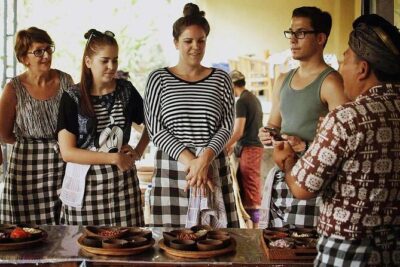
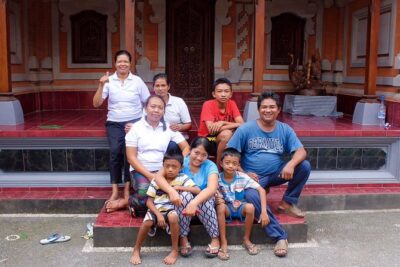
PRIVATE Authentic Balinese Cooking Class in Ubud at Putu’s Home
Read our review →
Balinese Ubud cooking school (9 Dish Cooking and Market Tour)
Read our review →
Learn to cook Indonesian food at Gili Cooking Classes Trawangan
Read our review →
Browse the lists this tour appears in