
Reviewed · UBUD TOURS
Balinese Ubud cooking school (9 Dish Cooking and Market Tour)
The most appealing part of this Ubud experience is its generous menu. You do not make one curry and call it a day. You work through nine Balinese dishes, from sate lilit and lawar to sambal matah and klepon, then sit down to eat the full spread.
I like the morning route for its local market and rice-field stops. I also like the friendly teaching style associated with instructors such as Yogi, plus the chance to choose a vegetarian menu. The main thing to consider is the drive beyond central Ubud. Pickup is limited to the Ubud area, and the cooking school can be around 50 minutes from the palace.
Key points at a glance
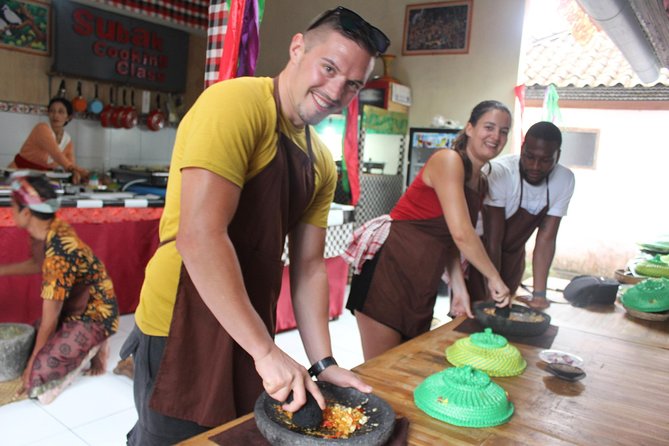
- Nine dishes in one class: Prepare a full Balinese meal rather than only a single main course.
- Morning market option: Shop for produce, sample unfamiliar fruits, and learn how locals buy ingredients.
- Rice-field visit: See how rice is grown and learn about harvest timing and local rice varieties.
- Two menu choices: Select the regular chicken menu or the vegetarian menu when booking.
- Small maximum group: The class accepts up to 14 people, with individual cooking stations available.
- Useful take-home material: Recipes, food skills, and sometimes leftover food give the class value after you leave Bali.
Nine Balinese dishes, not just a cooking demonstration
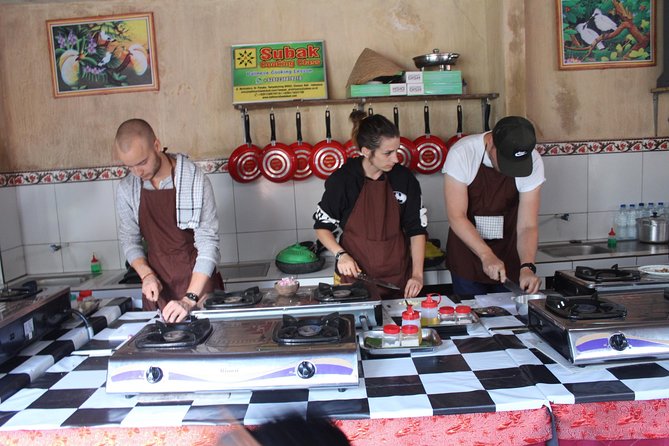
Many cooking classes give you a quick look at a few recipes, then serve lunch. This one aims for a full lesson in the basic building blocks of Balinese food.
The regular menu includes Balinese vegetable soup, chicken with coconut milk and Balinese spices, sweet fried tempe, chicken sate lilit, chicken pepes cooked in banana leaf, lawar, sambal matah, base gede spice paste, and klepon cake. White rice accompanies the main dishes.
That list matters because it covers several different cooking methods and flavors. You work with coconut milk, spice paste, fresh herbs, banana leaf, tempe, vegetables, palm sugar, and coconut oil. You are not simply learning nine versions of the same dish.
The class is also useful for understanding how Balinese food is built. Base gede is a foundation paste, while sambal matah gives the meal a fresh, raw edge. Lawar brings vegetables and spices together, and klepon finishes the meal with a sweet center of palm sugar.
The vegetarian menu replaces the chicken dishes with tofu bumbu Bali, tempe sate with peanut sauce, and pepes tofu. The other dishes remain part of the meal. If you avoid meat, make that choice at booking rather than assuming it can be changed on the day.
More cooking classes in Ubud:
- Ubud Cooking Class Bali with Balinese Chef
★ 5.0 · 1,609 reviews - PRIVATE Authentic Balinese Cooking Class in Ubud at Putu’s Home
★ 5.0 · 644 reviews - Balinese Farm Cooking Class by Pemulan Bali
★ 5.0 · 410 reviews
Choosing between the morning and afternoon programs
The morning option is the fuller cultural outing. It includes a visit to a traditional market, a stop at rice paddies, and the cooking class. You can see the ingredients before they reach the kitchen, try local fruits and sweets, and learn how people buy and sell food.
The market stop is not just a place to walk around with a camera. Your local guide explains fruits, vegetables, spices, cakes, and other ingredients used in Balinese kitchens. You might also see flower offerings being assembled, an everyday sight that connects food shopping with local religious life.
Some of the fruit may be unfamiliar, which makes this part especially worthwhile for food lovers. It gives you a better sense of what is common in Bali than a hotel breakfast or restaurant menu can provide.
The rice-field visit adds a useful bit of context. You learn how rice is grown, how many types of rice are found in Bali, and how long it takes to reach harvest. Several people particularly enjoyed the open views and the chance to photograph the fields, with one outing including a view toward a volcano.
The afternoon option does not include the traditional market. Instead, it includes making a Balinese offering. That is a good choice if religious craft and household tradition interest you more than food shopping. Check the selected time carefully, since the market visit is available only with the morning class and offering-making is listed for the afternoon program.
The drive from Ubud is part of the planning
The stated meeting point is Ubud Palace on Jalan Raya Ubud. Pickup and drop-off are offered in the Ubud area, and the activity returns you to the meeting point at the end.
The cooking school is not necessarily next door to the palace. Some participants describe a drive of roughly 50 minutes from central Ubud to a more rural area. That journey can feel long if you expected a central class, but it also explains why the program can include a very local market, rice paddies, and a Balinese home used as the cooking school.
If you are staying outside Ubud, pickup costs extra and must be requested in advance. Do not assume the included transfer covers Seminyak, Nusa Dua, Canggu, or another part of Bali. Confirm the arrangement before booking and carry cash for any agreed transport charge.
The driving itself deserves a practical note. One account described a driver as uncomfortable and reported confusion over a small toll-road payment. That appears to be an exception among otherwise positive transport comments, but it is still sensible to confirm the pickup details, expected cost, and route before setting off.
Entering a local home kitchen
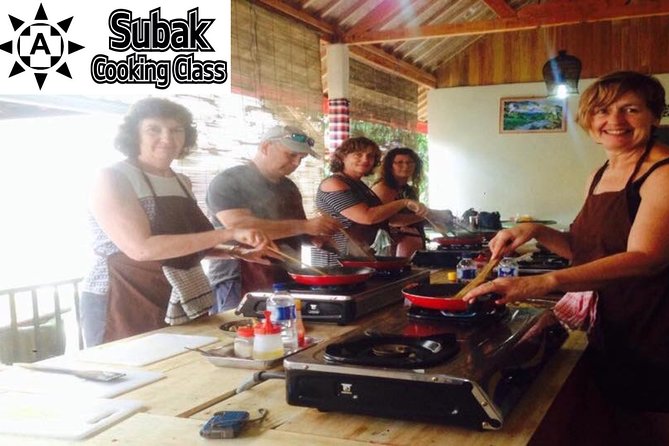
The school operates in a Balinese home setting, according to the supplied details and descriptions of the visit. That gives the class a more personal feel than a polished hotel demonstration kitchen.
The kitchen is organized for group cooking, with stations that let you take part rather than simply watch. Participants have described cooking at one long table, with each person or pair using a stove. The maximum group size is 14, so the class is not private, but the format aims to keep everyone involved.
The kitchen staff prepare some ingredients in advance. This is normal for a class trying to fit nine recipes into about five hours, and it leaves you time to focus on the important work: seasoning, pounding or combining spice mixtures, shaping satay, filling banana leaves, and managing the cooking.
Still, expectations matter. If you want to start with whole chickens, untrimmed vegetables, and every ingredient untouched, this may feel partly pre-prepared. One negative account complained that too much work had already been done and that the instructor was hard to hear during a noisy session. I would treat this as a reason to stand near the chef and ask questions, not as a reason to expect a private lesson.
The class has been led by instructors including Yogi, Putu, and others. Yogi is described as funny, clear, and easy to follow, while guides such as Wayan, Tata, Harry, and Gus have helped with the market, transport, and cultural explanations on different outings. Staff assignments can change, so book for the program rather than a guaranteed individual guide.
More market mornings in Ubud:
- Balinese Cooking class with traditional morning market visit
★ 5.0 · 161 reviews - PRIVATE Ubud Market Tour & Balinese Cooking Class with Putu
★ 5.0 · 125 reviews - Ubud Cooking Class with Optional Market Visit Pickup Included
★ 5.0 · 70 reviews - Balinese Cooking Class with Traditional Market Tour
★ 5.0 · 66 reviews
What you actually cook
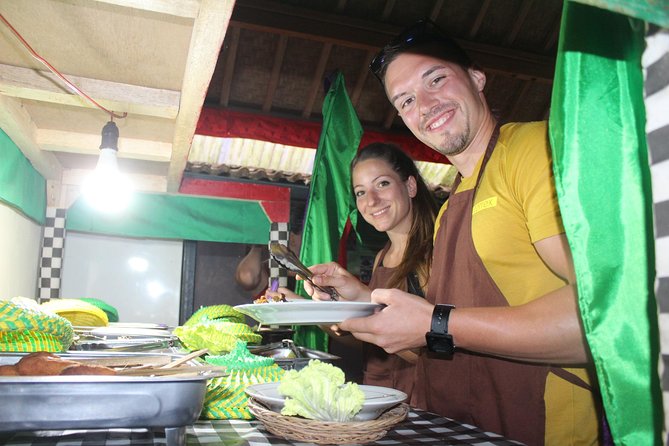
The regular menu gives you a broad taste of everyday Balinese cooking.
Soup sayur Bali introduces a simple vegetable soup. It is a useful starting point because it shows how vegetables can be seasoned without relying on heavy sauces.
Ayam santan bumbu Bali combines chicken, coconut milk, and Balinese spice. This is one of the richer dishes and a good place to pay attention to the balance between aromatics, heat, and coconut.
Tempe manis uses sweet fried tempe. Tempe is made from fermented soybeans and is one of Indonesia’s most useful protein-rich foods. The sweet preparation provides contrast to the savory dishes.
Sate lilit Bali is a particularly interesting lesson because the seasoned mixture is shaped around a skewer rather than cut into chunks. It gives you a different idea of what satay can be.
Pepes ayam is prepared in banana leaf and grilled or steamed. The leaf carries aroma while keeping the chicken moist. At home, you may need to adapt the technique depending on what cooking equipment and banana leaves you can find.
Lawar Bali brings mixed vegetables together with Balinese spices. It is a fresh, textured side dish that helps prevent the meal from becoming too heavy.
Sambal matah is a raw spice mixture finished with coconut oil. You can request less spice if needed. That is worth doing early, since the kitchen serves a communal meal and the heat level may suit local tastes more than cautious palates.
Base gede is the class’s basic spice paste. This is perhaps the most transferable lesson because you can use the paste as a starting point for other Indonesian dishes at home.
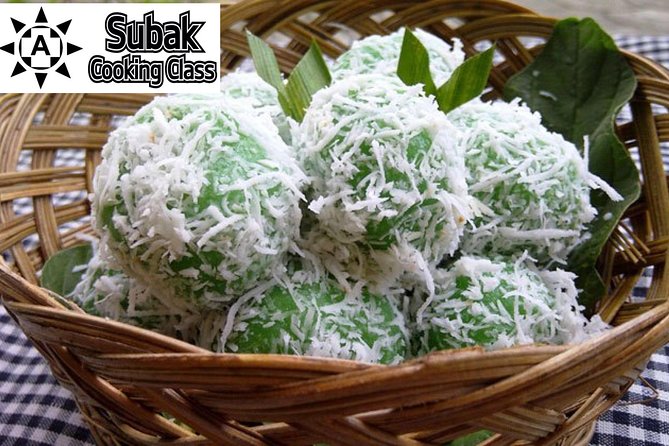
Klepon cake ends the cooking with a small boiled rice-flour sweet filled with palm sugar. The soft texture and burst of sweetness make it a fitting finish after the savory food.
The vegetarian menu keeps the same general structure. Tofu bumbu Bali replaces the chicken dish, tempe takes the place of chicken sate with peanut sauce, and tofu pepes replaces chicken pepes. You still make the soup, sweet tempe, lawar, sambal matah, base gede, klepon, and rice.
Lunch is the payoff, and there is a lot of it
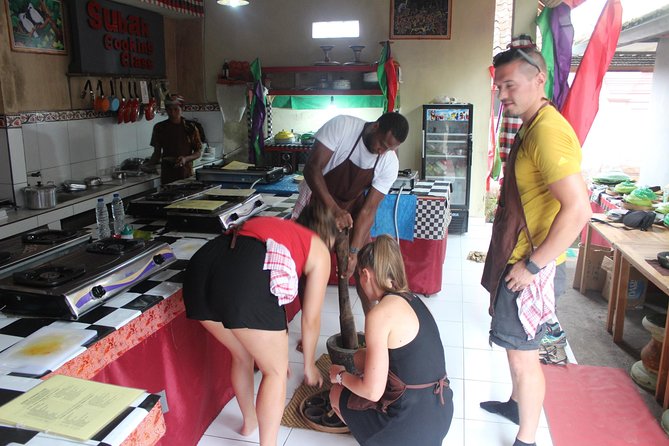
The final meal is not a token tasting. You eat the dishes you helped prepare, served as lunch or dinner in a buffet-style setting.
The quantity is one reason I would advise arriving hungry. With nine dishes plus rice, you may not finish everything. Some participants were offered the chance to pack leftovers for the hotel, which is a practical bonus rather than something to count on as a formal takeaway service.
Food quality depends on the class team and timing, but the ingredients are used promptly and the meal gives you a chance to taste the results side by side. You can compare the fresh sambal with the coconut-based chicken, the sweet tempe with the vegetable dishes, and the different textures created by frying, steaming, grilling, and boiling.
Mineral water is included. Alcoholic drinks are not, so bring money if you want anything beyond the supplied water.
The teaching style and group atmosphere
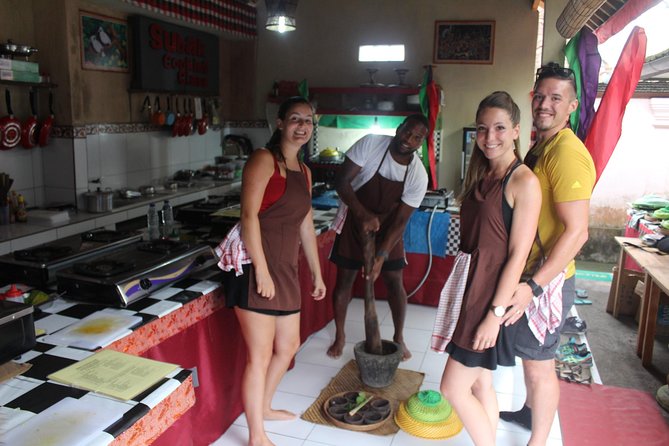
The strongest part of the experience is the human side. The instructors are described as warm, humorous, and willing to explain more than the mechanics of chopping and frying. Lessons can include Balinese words, food customs, religion, farming, and household life.
That makes the class work well for families and mixed-age groups. One family found it especially enjoyable, while couples and friends also appreciated having their own cooking space within a shared class.
English instruction is available, and several descriptions specifically note that the teachers and guides explained the food clearly. The tone is informal, with plenty of help from the kitchen staff. If you want detailed answers, ask as you go. With up to 14 people in the room, the session may be livelier and louder than a one-on-one lesson.
The class also suits cooks with no prior experience. You are guided step by step, and the recipes are supplied afterward. The useful question is not whether you already cook well. It is whether you are willing to participate, taste unfamiliar ingredients, and work at a shared station.
Is $58 good value?
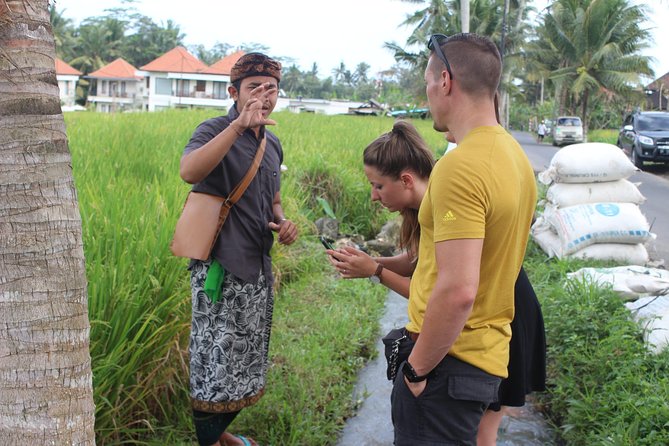
At $58, the experience is priced above a basic local meal but includes much more than lunch. You get about five hours, transport within Ubud, a guide or host, the market and rice-field visits on the morning option, kitchen equipment, bottled water, food tasting, recipes, and a substantial meal.
The nine-dish menu is the key value. Buying a similar number of Balinese dishes at a restaurant would give you food but not the method, ingredient knowledge, market context, or recipes to use later.
The value drops if you are staying far outside Ubud and must pay a sizable transport supplement. It also drops if you mainly want a short demonstration or dislike group cooking. In that case, a simpler class closer to your accommodation may suit you better.
For an active half-day with food, culture, and a meal, I consider $58 reasonable, especially for someone who will actually use the recipes afterward. The listed rating of 4.9 from 540 reviews and a 99 percent recommendation rate point to strong overall satisfaction, though the occasional complaint about transport, sound levels, and recipe delivery is worth keeping in mind.
Small details that make the day easier
Bring your booking confirmation, a camera, and cash for any approved transport supplement. Wear normal, comfortable clothing suitable for a kitchen and a market visit.
Choose regular or vegetarian at booking. Do not wait until the cooking begins if you have dietary needs, since the ingredients and menu are planned ahead.
The experience can be canceled for a full refund up to 24 hours before the start time. Changes or cancellations inside that window are not accepted for a refund.
I would also build in flexibility around the five-hour estimate. The market, rural drive, cooking, meal, and return transfer make this a full half-day. Avoid scheduling a tight afternoon appointment immediately afterward.
Who should book this Ubud cooking class?
I would recommend it to food-focused visitors who want more than a restaurant meal, families looking for a shared activity, and anyone curious about how Balinese ingredients fit into daily life.
The morning version is best if you want the broadest program. It combines the market, rice fields, and cooking lesson, giving you a better sense of where the food comes from. The afternoon option is a sound alternative if you prefer offering-making or have already seen a local market.
I would hesitate if you dislike group activities, need a quiet classroom, or want every ingredient prepared from scratch. I would also think twice if you are based far from Ubud and do not want a long transfer or extra pickup cost.
For most people, the class offers a good balance of instruction, food, and local contact. You leave with recipes, a full meal, and a clearer idea of why Balinese cooking tastes the way it does.
Should you book it?
Book this experience if you want a hands-on food day rather than a quick cooking demonstration. The nine-dish menu, market visit, rice-field stop, and meal make it unusually full for a five-hour outing.
Choose the morning schedule for the best all-round program, and confirm pickup if you are outside Ubud. If you stand close enough to hear the chef, ask questions, and arrive hungry, this is a strong choice for learning dishes you can try again at home.
FAQ
How long does the Balinese cooking experience last?
The experience lasts approximately five hours, including the tour elements, cooking, meal, and return to the meeting point.
Where does the tour start?
The listed meeting point is Ubud Palace at F7V7+72R, Jalan Raya Ubud No. 8, Ubud, Bali.
Is pickup included?
Pickup and drop-off are included for the Ubud area. If you stay outside Ubud, additional charges apply and pickup must be requested in advance.
Does every tour include a traditional market visit?
No. The traditional market visit is provided only with the morning class.
What is included in the morning option?
The morning option includes the market visit, a rice-paddy visit, the cooking class, food tasting, and lunch or dinner made during the class.
What is included in the afternoon option?
The afternoon option includes making a Balinese offering instead of the traditional market visit. The cooking class and meal are also included.
Can I choose a vegetarian menu?
Yes. You can select either the regular menu or the vegetarian menu. The vegetarian version includes tofu and tempe preparations in place of the chicken dishes.
Are recipes provided?
Yes. A copy of the recipes is included for you to take away.
What is the cancellation policy?
You can cancel at least 24 hours before the experience start time for a full refund. Cancellations or changes made less than 24 hours before the start time are not refunded or accepted.
More Shopping in Ubud
- Active Volcano, Rice Field, Hot Spring, Fruit market, Tea Plantation with Lunch
★ 5.0 · 513 reviews - Yogyakarta Cooking Class and Market Tour
★ 5.0 · 99 reviews - Ubud Experience ; Swing, Waterfalls, Art Market, Rice Terrace
★ 5.0 · 56 reviews - Jakarta City Tour: Shopping & Culinary Experience
★ 4.5 · 15 reviews
Just added around Ubud
- Bali ATV Quad Bike and White Water Rafting – All Inclusive★ 5.0 · 7 reviews
- Bali ATV Ride with Jungle Swing and Rice Terrace Tour★ 5.0 · 50 reviews
- Combo Bali ATV Ride with Ayung River Rafting All Inclusive★ 4.5 · 12 reviews
- Bali ATV Ride Adventure★ 4.0 · 22 reviews
- Melukat – The Purification Ceremony at Tirta Empul Temple★ 5.0 · 6 reviews
- Bali ATV Quad Bike with Ubud Day Tour All Inclusive★ 5.0 · 19 reviews
- Bali ATV Ride Adventure and Bali Swing Packages – All Inclusive★ 5.0 · 14 reviews
- Bali ATV Combined with Mumbul Lake And Sangeh Monkey Forest★ 5.0 · 34 reviews
Ubud Tours, compared.



Monkey Forest, Jungle Swing, Rice Terrace, and Water Temple
Read our review →


Uluwatu Sunset, Kecak Dance, and Dinner Jimbaran Beach
Read our review →
Tanah Lot and North Bali Tour: Scenic Journey
Read our review →
Body Massage Experience in Ubud Traditional Spa
Read our review →Browse the lists this tour appears in