
Reviewed · UBUD TOURS
Balinese Authentic Cooking Class in Ubud
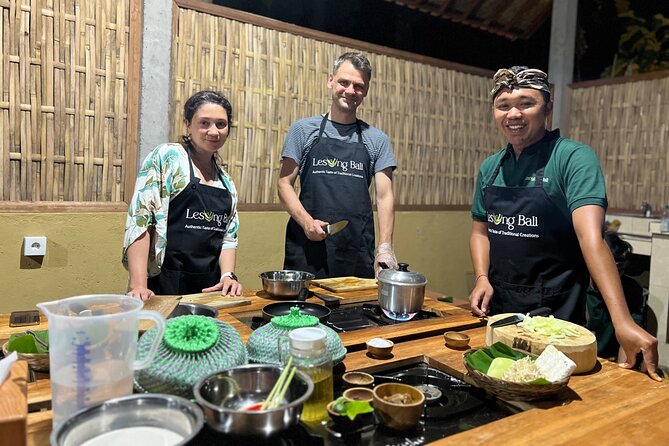
The best part of this Ubud cooking class is that the food lesson begins before you reach the stove. A morning outing can take you through a local market, a traditional Balinese family compound, and a farm where you harvest some of the spices for your meal. I like that the class connects each dish to daily life, and that you use old tools such as a large lesung, a mortar and pestle for pounding spices.
I also like the choice of morning, afternoon, or evening sessions, plus regular, vegetarian, and vegan menus. Guides including Ron, Putri, Don, Gustie, and Begul have been praised for their humor, patience, and clear help. The main consideration is timing: the market visit is offered only with the morning class, and some people may find the cooking pace a little quick when several ingredients are being added at once.
Key points at a glance
- The morning class includes a traditional market visit: Learn about local produce and spices, and possibly sample Balinese fruit before cooking.
- A real cultural stop comes before the meal: Visit a Balinese home and hear about family compounds, daily life, and building layouts.
- You harvest ingredients at the farm: Some spices used in class come directly from the surrounding grounds.
- You cook and eat a six-dish meal: The class is hands-on, with regular, vegetarian, and vegan choices.
- Transfers are included around Ubud: Pickup and drop-off apply within the Ubud area, with extra fees for several resort zones.
- The group can reach 15 people: It is designed as a small-group class, though the amount of personal attention can vary with group size.
Why this class is more than a cooking lesson
Many cooking classes hand you a bowl of premeasured ingredients and move straight to the chopping board. This one gives you a better sense of where Balinese food fits into local life. The route begins on the west side of Ubud, in a countryside setting surrounded by greenery, then moves through a market, a family compound, and a farm before the cooking starts.
That sequence matters. You see ingredients in their everyday setting before they appear on your plate. You also get a look at how Balinese homes are arranged and how food, family, gardens, and ceremony connect.
At about five hours, this is a substantial half-day activity, not a quick demonstration followed by a snack. You should plan to give it a clear block of your day, especially if you choose the morning session with the market visit. The payoff is a meal, cultural context, and cooking skills you can use at home.
More cooking classes in Ubud:
- Ubud Cooking Class Bali with Balinese Chef
★ 5.0 · 1,609 reviews - PRIVATE Authentic Balinese Cooking Class in Ubud at Putu’s Home
★ 5.0 · 644 reviews - Balinese Ubud cooking school (9 Dish Cooking and Market Tour)
★ 5.0 · 540 reviews
Choosing morning, afternoon, or evening
The morning class is the most complete version of the experience. It includes a visit to a traditional market, where you can see the spices, vegetables, fruit, and other ingredients used in Balinese kitchens. The market is also a useful place to learn how local people shop and why fresh ingredients are central to the food.
You may get to try local fruit during the market visit. Go early with an appetite, but do not eat a large breakfast, since the class includes snacks and a generous meal later.
The afternoon and evening sessions skip the market tour, but they still include the Balinese home, farm, and cooking class. These times may suit you better if you prefer a slower start, have already visited a market, or want to leave your morning free for Ubud’s temples and rice fields.
The evening class is also a sensible choice for a hot day. Cooking in the later hours can feel more comfortable, though the exact light and atmosphere around the farm will depend on the season and weather. The key point is simple: book the morning session if the market is important to you.
Visiting a Balinese home and family compound
The stop at a local Balinese home gives the class its strongest cultural element. You learn about Balinese family life, the layout of a traditional compound, and the way buildings are placed within the home grounds. This is not just decoration before lunch. It helps explain the social setting behind the recipes.
The visit usually includes coffee or tea and a local snack, such as Balinese cake or steamed banana pudding. That pause gives you time to ask questions, meet your host, and settle into the slower rhythm of the day.
The level of access can vary. One account described seeing the grounds and garden rather than entering the interior of the house. You should think of this as a hosted look at a family compound, not a full architectural tour of every room.
Some guides add more personal context. Don, for example, has been praised for explaining Balinese ceremonies, traditions, and family life during the visit and the drive. The exact guide depends on the day, but the format gives you a useful window into local life before you start cooking.
Touring the farm and harvesting spices
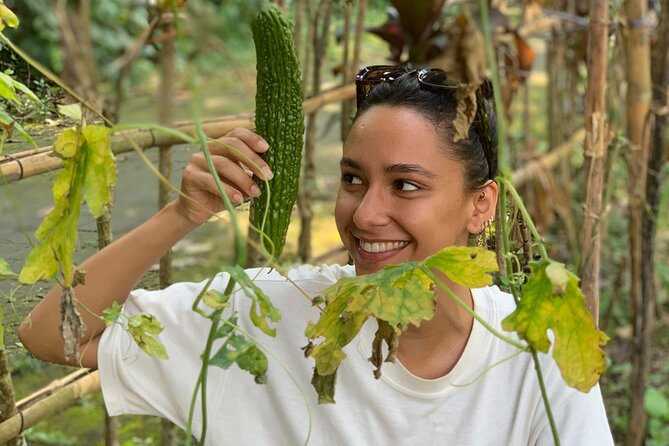
After the home visit, you go to the farm and help choose ingredients for the menu. The class description specifically highlights harvesting spices from the grounds, so you are not simply presented with a tray of anonymous herbs. You can see the plants, smell them, and connect them with the flavors you will soon pound and cook.
This part is modest but important. Balinese cooking often depends on a base of fresh spices, and the preparation itself is part of the flavor. The farm setting also gives the class a calm, open-air feel, with cooking facilities set among garden grounds.
Do not expect a large commercial farm tour with a long list of crops. The value is in seeing the ingredients close to the cooking area and learning how they are used. If you enjoy food markets, gardens, and practical demonstrations, this section will likely interest you more than a formal lecture.
More hands-on workshops in Ubud:
- Ubud Silver Class Jewelry making in bali
★ 5.0 · 978 reviews - Balinese Farm Cooking Class by Pemulan Bali
★ 5.0 · 410 reviews - PRIVATE Balinese Cooking Class in Ubud with Dewa with Transfers
★ 5.0 · 213 reviews - Crafting Heritage Batik Painting Workshops
★ 5.0 · 164 reviews
Pounding spices the traditional way
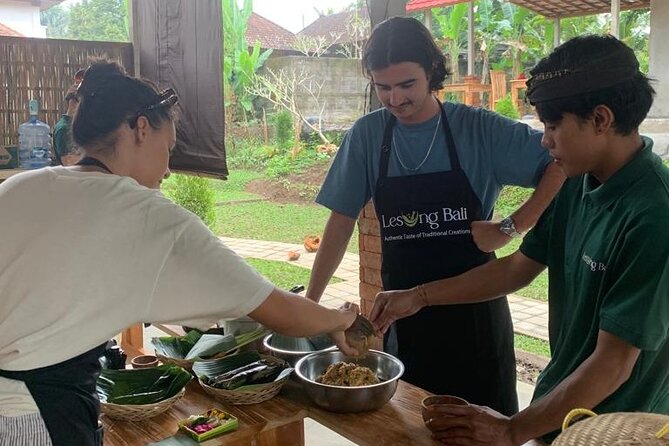
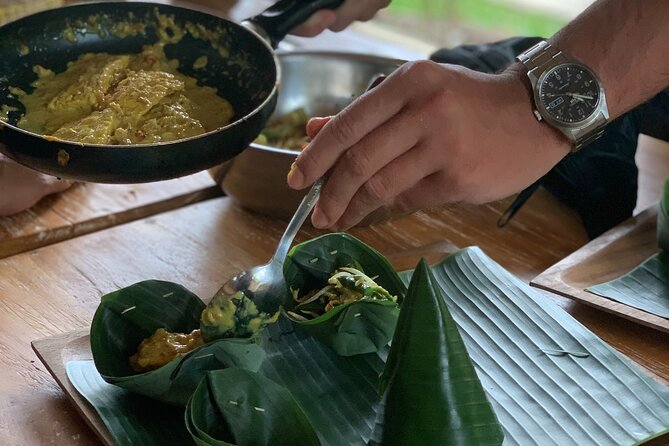
The cooking is hands-on. You chop ingredients, prepare spice mixtures, and use a lesung, a large mortar and pestle, to pound the base for your dishes. This is slower and more physical than using a blender, but it shows you how traditional Balinese cooking develops its texture and aroma.
The chef explains the techniques, quantities, cooking steps, and extra ingredients needed for each menu. You can ask questions as you work, and the class is suitable even if you have little kitchen experience. Several sessions have been led by patient instructors who guide beginners without making them feel out of place.
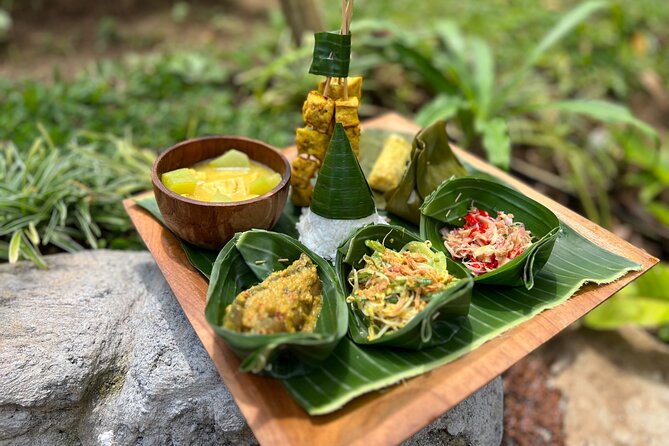
The class may include six different dishes, depending on the menu. You can expect a substantial spread rather than one recipe and a small tasting. One session included six dishes plus dessert, and other descriptions also mention a six-course meal.
There is a small tradeoff. One participant enjoyed the hands-on work but felt rushed at times, especially when the chef added small spices without explaining each one first. If you want every ingredient measured and announced before it reaches the pan, say so and ask questions as you go.
Regular, vegetarian, and vegan menus
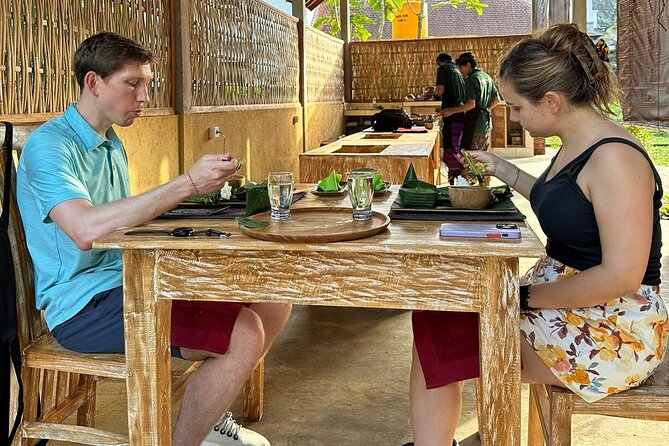
You choose among regular, vegetarian, and vegan options during the class. That makes this easier to recommend to couples or mixed groups, since people do not all need to eat the same style of meal.
The regular menu can include meat and several accompanying dishes. Vegetarian and vegan guests still take part in the same preparation methods, including chopping, pounding, and cooking fresh spice mixtures. The precise dish list is not fixed in the supplied details, so you should confirm the day’s menu if a particular ingredient matters to you.
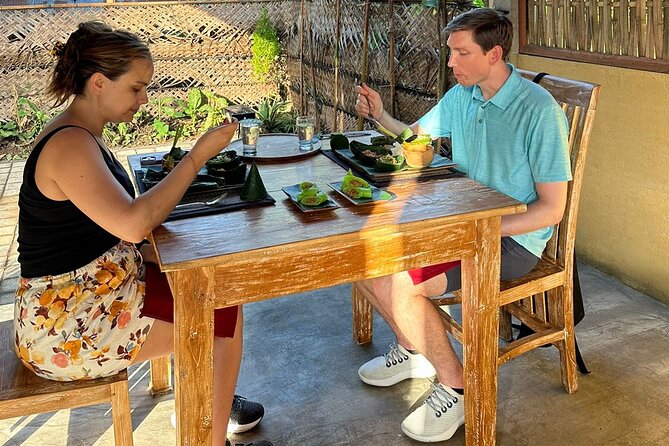
Dessert is included in the generous meal described by several participants, and Balinese cake or another local sweet may also appear with the welcome drinks. Come hungry. The portions can be large enough that you may not finish everything you cook.
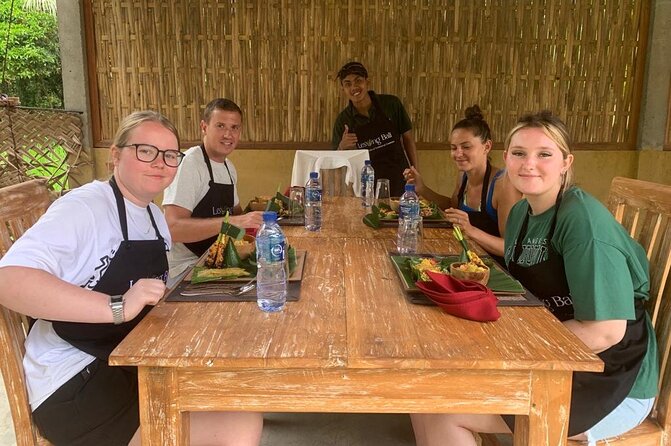
The meal is the real test of the lesson. You get to taste the results of your own work, with the freshness of the farm ingredients and spice blends much easier to appreciate after you have prepared them yourself.
The guides make a real difference
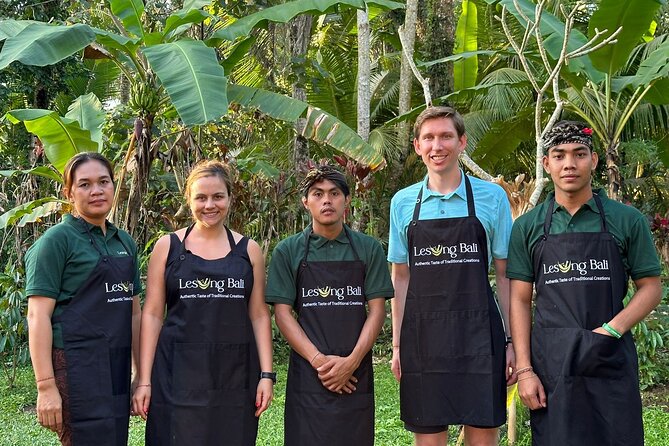
The class has been led by several instructors, including Ron, Putri, Don, Gustie, and Begul. That means your experience may vary a little in tone, but the strongest pattern is warm, personal teaching.
Putri has been praised for being patient and for explaining each step in detail. Ron is known for a funny, relaxed style and has led morning and evening classes, including a private-feeling session when only one person selected an early start. Don adds more cultural explanation, while Gustie has been noted for welcoming people into his family setting and sharing local traditions.
Begul has been described as funny and helpful, though one participant found the pace brisk and wanted more explanation of the small spices. This is useful advice for anyone who likes to understand the reason behind every step: speak up early, and ask the chef to pause when needed.
The group limit is 15 people. That is small enough to feel more personal than a large cooking demonstration, but a full group will not provide the same individual attention as a private lesson. The class works best when you are willing to participate, ask questions, and share the cooking space.
Transport from Ubud and the real cost
The price is $39.71 per person. That includes the cooking class, coffee or tea, mineral water, a Balinese cake, air-conditioned transport, taxes and fees, and free pickup and drop-off within the Ubud area.
For a five-hour outing that combines transport, cultural visits, farm access, instruction, and a full meal, I consider the price reasonable. You are not paying only for a recipe lesson. You are also getting a half-day plan that removes the need to arrange separate transport and finds a countryside setting beyond central Ubud.
The free shuttle has limits. Pickup and drop-off outside Ubud are not included. Extra car charges listed for other areas are IDR 450,000 from Kuta, Seminyak, Sanur, and Canggu; IDR 500,000 from Nusa Dua and Jimbaran; and IDR 550,000 from Uluwatu.
Ask about your exact pickup point before booking if you are staying outside Ubud. The additional car charge can change the value, particularly for a solo participant. For people staying in Ubud, the included transfer is a clear advantage.
Who will enjoy this Ubud experience most
I would choose this class if you want food and culture together, not just a cooking lesson. It suits couples, families, solo visitors, and small groups, and one-person bookings can sometimes feel almost private when few people select the same session.
It is also a good fit for beginners. You do not need polished cooking skills, since the chef demonstrates the techniques and helps as you work. The class gives you enough guidance to make the dishes successfully without turning the experience into a passive show.
Food lovers will appreciate the farm, market, fresh spices, and chance to make several dishes. You should also enjoy conversation and cultural discussion, since the home visit and relaxed welcome are important parts of the day.
This may not be ideal if you want a tightly timed professional culinary course, a fixed published menu, or a market visit at any time of day. It is also less suited to anyone who dislikes shared group cooking or wants a quiet private lesson with no schedule changes.
Practical tips before you book
Choose the morning class if the market matters. That is the only session specifically described as including the market tour.
Arrive hungry but not rushed. You will likely receive coffee, tea, and a local snack before cooking, then eat a large meal made during the class.
Tell the provider about your dietary choice when booking and confirm any important restrictions. Regular, vegetarian, and vegan menus are available, but the exact recipes are not specified.
Wear something comfortable for chopping, pounding spices, and spending time in a garden setting. The cooking is active, not simply watching a chef work.
Keep your questions coming. If you want to know why a spice is added, how much goes into the dish, or what can be substituted at home, ask while the chef is preparing it.
The booking terms are straightforward: you can cancel for a full refund up to 24 hours before the start time. Cancellations or changes inside 24 hours are not refunded, and poor weather or failure to meet the minimum group size may lead to a different date or a full refund.
FAQ
How long does the Balinese cooking class last?
The experience lasts approximately five hours and includes the cultural visits, farm tour, hands-on cooking, and meal.
Does every class include a traditional market visit?
No. The market tour is offered with the morning class only. Afternoon and evening sessions include the other listed parts of the experience.
Are vegetarian and vegan menus available?
Yes. You can choose a regular, vegetarian, or vegan menu during the class.
Is pickup included?
Free pickup and drop-off are included within the Ubud area. Transport from areas outside Ubud costs extra, with listed charges for places such as Kuta, Seminyak, Sanur, Canggu, Nusa Dua, Jimbaran, and Uluwatu.
How many people can join the class?
The activity has a maximum of 15 participants. Group discounts are also offered.
What happens if I need to cancel?
You receive a full refund if you cancel at least 24 hours before the experience start time. Cancellations or changes made less than 24 hours before the start time are not refunded.
Should you book this cooking class?
I would book it if you want a hands-on meal plus a clear look at Balinese daily life. The market option, family compound, farm ingredients, traditional pounding tools, and six-dish meal give the half-day real substance.
Choose the morning session for the fullest program, and choose an afternoon or evening class if you care more about cooking than the market. The class is not perfectly formal, and the pace may occasionally feel quick, but the setting, food, and personal teaching make $39.71 a fair price for a full Ubud experience.
Just added around Ubud
- Bali ATV Quad Bike and White Water Rafting – All Inclusive★ 5.0 · 7 reviews
- Bali ATV Ride with Jungle Swing and Rice Terrace Tour★ 5.0 · 50 reviews
- Combo Bali ATV Ride with Ayung River Rafting All Inclusive★ 4.5 · 12 reviews
- Bali ATV Ride Adventure★ 4.0 · 22 reviews
- Melukat – The Purification Ceremony at Tirta Empul Temple★ 5.0 · 6 reviews
- Bali ATV Quad Bike with Ubud Day Tour All Inclusive★ 5.0 · 19 reviews
- Bali ATV Ride Adventure and Bali Swing Packages – All Inclusive★ 5.0 · 14 reviews
- OFFICIAL ATV KUBER – Tunnel, Waterfall, Rice Field, River, Jungle★ 4.0 · 42 reviews
Ubud Tours, compared.



Monkey Forest, Jungle Swing, Rice Terrace, and Water Temple
Read our review →


Uluwatu Sunset, Kecak Dance, and Dinner Jimbaran Beach
Read our review →
Tanah Lot and North Bali Tour: Scenic Journey
Read our review →
Body Massage Experience in Ubud Traditional Spa
Read our review →Browse the lists this tour appears in