
Reviewed · UBUD TOURS
Bali Cooking Class with Culture Experience
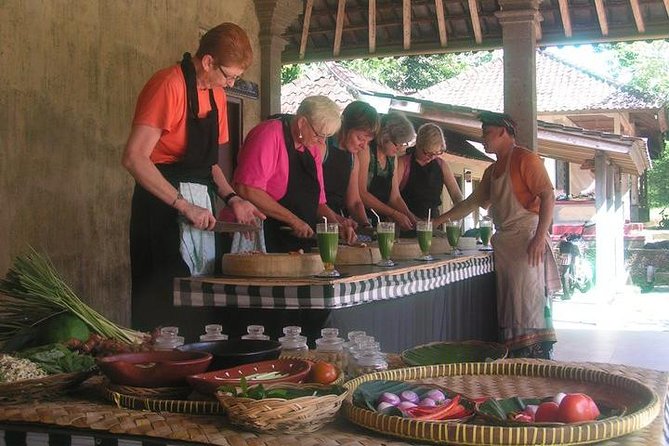
The best part of this Ubud experience happens before the cooking begins. You visit a local morning market with your Family Host, learn about Balinese herbs and spices, and help choose the ingredients that will later become lunch. Then Dewa welcomes you into a family compound with hot coffee or tea and crisp banana fritters. I like that the class connects food to daily life, not just to a list of recipes. I also like the chance to eat a full meal you have prepared yourself, from appetizer through dessert.
The main consideration is the early start. Pickup begins around 7:30 am, and the experience lasts about six hours, so this is a substantial half-day outing rather than a quick kitchen lesson. The group can have up to 12 people, which is still manageable, but it may feel less personal than a private class.
Key points to know before booking
- The market visit comes first: You learn about fresh herbs, spices, fruit, and vegetables before cooking with them.
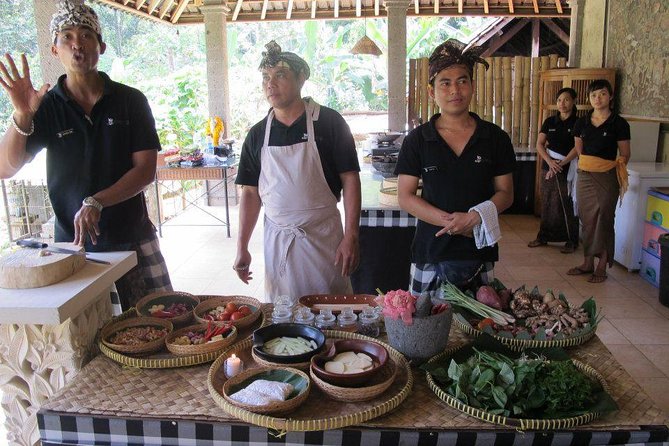
- Dewa hosts the home portion: Expect coffee, tea, mineral water, banana fritters, and an introduction to Balinese family life.
- You prepare a full menu: The class covers an appetizer, several traditional main dishes, side dishes, and dessert.
- The setting is a family compound: Home shrines and household customs are part of the cultural lesson.
- You receive a useful recipe booklet: It includes photos, directions, cooking tips, menu details, and room for notes.
- The price covers a full morning and lunch: At $62, the value depends on how much you want culture, instruction, food, and transport in one package.
Start at the Ubud market while the day is still cool
Your meeting time is 7:30 am, with pickup offered from central Ubud hotels. That early hour is useful here. A local market is at its most active in the morning, and fresh ingredients are central to the class rather than an afterthought.
You begin by looking at the produce needed for the cooking session. Your Family Host explains the herbs, spices, fruits, and vegetables used in Balinese food, then purchases what the group will cook later. This gives you a practical way to understand the cuisine. Instead of seeing unfamiliar leaves and roots on a table with no context, you learn where they fit into a meal.
The market stop also adds a local layer that many cooking classes skip. You can smell the herbs, see the produce before it is prepared, and ask about ingredients that may not be familiar at home. One especially appealing part of the experience is the chance to try fruit that may be difficult to find in the United States.
The market is not presented as a separate sightseeing stop with a long list of attractions. Its purpose is simple and useful: it shows you the raw materials of Balinese cooking. If you prefer a polished kitchen class with everything measured and waiting, this more hands-on beginning may feel less tidy. If you want food connected to place, it is one of the strongest parts of the morning.
More cooking classes in Ubud:
- Ubud Cooking Class Bali with Balinese Chef
★ 5.0 · 1,609 reviews - PRIVATE Authentic Balinese Cooking Class in Ubud at Putu’s Home
★ 5.0 · 644 reviews - Balinese Ubud cooking school (9 Dish Cooking and Market Tour)
★ 5.0 · 540 reviews
Enter a Balinese family compound with Dewa
After the market, you continue to the home setting for the cooking session. Dewa welcomes you with a hot cup of coffee or tea, mineral water, and his freshly made Pisang Goreng, or crispy banana fritters. This small breakfast snack matters because you are starting early and will need something to eat before lunch.
The food is paired with a conversation about Balinese life. You learn about family customs, home shrines, and the way a traditional household functions. The setting is a beautiful Balinese home compound, and the cultural explanation gives the cooking a wider frame.
I like this part because it does not treat Balinese food as a collection of exotic flavors. The lesson links cooking with family, ritual, and home life. One account of the experience also describes a closing ritual of gratitude after the meal, which suggests that the class gives attention to the meaning around the food as well as the techniques.
Keep your expectations practical. This is not a formal tour of every part of the compound, and the supplied details do not promise a long architectural visit. You are there mainly to cook, eat, and learn about the household. Still, being welcomed into a family home makes the experience feel more personal than a class held in a generic commercial kitchen.
Cook a complete Balinese menu, not just one signature dish
The class covers a full menu. You prepare an appetizer, several traditional entrees, accompanying side dishes, and dessert. The exact dishes are not specified in the available information, so you should not book this expecting a particular recipe unless the operator confirms the menu before your visit.
That uncertainty is not necessarily a problem. A full menu lets you see how Balinese meals work as a group. You are not just learning one curry or one sambal. You are working through several parts of a meal and then sitting down to taste how they fit together.
The instruction is designed for home use. You receive an illustrated booklet with the menu, recipes, directions, photos, cooking tips, and space for personal notes. That is an important value point. A cooking class can be enjoyable in the moment and useless later if you cannot remember the ingredients or steps. A photo-based booklet gives you a better chance of recreating the meal for friends and family.
I would take notes even with the booklet. Write down substitutions you might need at home, the texture you are aiming for, and any preparation detail that makes a dish easier. The class gives you the framework, but your own notes can make it more useful once you are back in your kitchen.
The description says you will be able to duplicate the experience at home. That should be read sensibly. Some Balinese produce and spices may be hard to find in your local shop, and the class may use ingredients that require substitutes elsewhere. Still, learning how the ingredients work together is valuable even when you need to adapt the recipe.
Lunch is part of the lesson
Once the cooking is finished, you eat the meal you have prepared. This is the payoff of the morning, and it also lets you judge the results while the techniques are still fresh in your mind.
The meal includes the dishes made during class, along with dessert. You begin with a snack earlier in the morning, but lunch is the substantial food portion of the experience. The supplied feedback places strong emphasis on the quality of the meal, describing it as delicious, fresh, healthy, and traditional.
That combination makes sense. You have seen the ingredients at the market, handled them in the kitchen, and then tasted the finished result. The food is not simply served to you by someone else. You understand more about what went into it, which changes the way you eat it.
A shared lunch also gives you time to talk with the other people in the group and with the hosts. With a maximum of 12 participants, the class is small enough to keep the meal from feeling like a large bus outing, though it is not an intimate one-on-one lesson. If your party wants a private cooking session, check the booking terms carefully because the advertised format is small-group.
More hands-on workshops in Ubud:
- Ubud Silver Class Jewelry making in bali
★ 5.0 · 978 reviews - Balinese Farm Cooking Class by Pemulan Bali
★ 5.0 · 410 reviews - Balinese Authentic Cooking Class in Ubud
★ 5.0 · 239 reviews - PRIVATE Balinese Cooking Class in Ubud with Dewa with Transfers
★ 5.0 · 213 reviews
Why the cultural details add real value
The strongest feature here is the link between food and Balinese life. You hear about home shrines and family customs while the kitchen is being prepared, then take part in a meal that has been built from market ingredients.
That context helps you understand why the class takes place in a home compound. The location is not just a pretty background for photographs. It shows food in the setting where family life and household traditions meet.
The experience also offers a gentle introduction to Balinese hospitality. Dewa’s welcome with banana fritters and a hot drink sets a relaxed tone before the cooking starts. The host’s role is not limited to giving instructions. The available details describe a warm, well-organized approach, with staff checking the pavilion and preparing the class before you begin.
I would book this for the cultural connection as much as for the recipes. If your main goal is advanced culinary training, the information does not indicate a professional-grade kitchen, technical masterclass, or specialized course. If you want to understand local ingredients and enjoy a meal in a family setting, the format fits much better.
The six-hour schedule requires a little planning
Allow about six hours from the 7:30 am start. That includes pickup from central Ubud hotels, the market visit, the welcome and cultural talk, the cooking session, and the meal.
The length is reasonable for what is included, but it affects the rest of your day. Do not schedule a tight afternoon appointment immediately afterward. Pickup times can take longer than expected if other people are being collected, and the class itself includes several stages.
A morning start also means you should plan for an early breakfast routine. The banana fritters are offered after you arrive at the home, not necessarily before the market visit. If you need a larger breakfast, arrange that before pickup or carry something suitable.
The experience is near public transportation, though pickup is offered from central Ubud hotels. That makes it easier to reach than an out-of-town class, but the exact pickup coverage is not stated. Confirm that your accommodation qualifies if you are staying outside central Ubud.
Mobile tickets are accepted, and confirmation is sent within 48 hours of booking, subject to availability. The maximum group size is 12 people. Free cancellation is available if you cancel at least 24 hours before the start time. A later cancellation or change is not accepted for a refund, and the operator requires a minimum number of participants. If that minimum is not met, you are offered another date or experience, or a full refund.
Is $62 a fair price for this Ubud experience?
At $62, this is not the cheapest way to eat in Bali. It is also not simply a restaurant lunch. The price includes a six-hour experience, a market visit, instruction from a professional chef, a breakfast snack, a full lunch, cultural discussion, an illustrated recipe booklet, and pickup from central Ubud hotels.
I think the price is fair if you will use the class for more than one meal. The booklet and cooking skills give it lasting value, while the market and home visit add experiences you would not get by ordering Balinese dishes at a restaurant.
The value is weaker if you are interested only in tasting local food. You can eat for less elsewhere, and the early start plus long duration may not suit someone who wants a relaxed morning. The price also does not guarantee a private class or a particular menu.
For a first visit to Bali, the combination is practical. You learn what some ingredients are, see how they are bought, cook them with help, and then eat the results. That is a useful introduction to Balinese food without requiring you to plan separate market, culture, and dining activities.
Who will enjoy this class most?
I would recommend it to people who want participation rather than a demonstration. You should be ready to handle ingredients, follow instructions, and spend a good part of the morning in the kitchen.
It suits couples, families, and small groups of friends, especially if everyone enjoys eating together afterward. The recipe booklet also makes it worthwhile for home cooks who want to bring Balinese dishes back from the trip.
It is a good fit for curious first-time visitors because the class explains basic ingredients and household customs in one setting. The market visit gives you a simple way to ask questions and get oriented.
You may want to choose another activity if you dislike early starts, have only a few free hours, or want an advanced chef-led course. The available details also do not specify dietary accommodations, so ask about allergies or food restrictions before booking.
Should you book the Lobong Culinary Experience?
Book it if you want a full cultural food experience, not just a cooking lesson. The strongest reasons are the morning market, the welcome at a Balinese family compound, the complete meal, and the recipe booklet you can use later.
The early start and six-hour length are the main tradeoffs. A group of up to 12 people means the class may not feel private, and the exact menu is not provided. But for $62, the package offers solid value for anyone who wants to connect Balinese food with everyday family life.
I would choose this experience for a relaxed day in Ubud when you want to learn, cook, and eat rather than rush from one sight to another. Add it to your plans if a market visit and home-cooked lunch sound more appealing than a standard restaurant meal.
FAQ
Where does the Bali cooking class take place?
The experience is based in Ubud, with the cooking session held at a Balinese family compound connected with Lobong Culinary Experience.
What time does the activity start?
The listed start time is 7:30 am.
Is hotel pickup available?
Pickup is offered from central Ubud hotels. Confirm coverage if your accommodation is outside central Ubud.
How long does the experience last?
The experience lasts approximately six hours.
How many people can join the class?
The activity has a maximum of 12 participants.
Does the experience include a market visit?
Yes. You visit a local morning market, where your Family Host explains and purchases herbs, spices, fruits, and vegetables for the cooking session.
Who is the cooking host?
Dewa welcomes you at the home setting and leads the cooking experience with the staff. The activity also refers to a Family Host during the market visit.
What food is included?
You receive a breakfast snack of Pisang Goreng, along with coffee, tea, or mineral water. You also prepare and eat a full lunch with an appetizer, several entrees, side dishes, and dessert.
Do you receive recipes to take home?
Yes. You receive an illustrated booklet with the menu, recipes, directions, photos, cooking tips, and space for personal notes.
Can I cancel for a refund?
You can cancel at least 24 hours before the local start time for a full refund. Cancellations or changes made less than 24 hours before the start time are not refunded.
Just added around Ubud
- Bali ATV Quad Bike and White Water Rafting – All Inclusive★ 5.0 · 7 reviews
- Bali ATV Ride with Jungle Swing and Rice Terrace Tour★ 5.0 · 50 reviews
- Combo Bali ATV Ride with Ayung River Rafting All Inclusive★ 4.5 · 12 reviews
- Bali ATV Ride Adventure★ 4.0 · 22 reviews
- Melukat – The Purification Ceremony at Tirta Empul Temple★ 5.0 · 6 reviews
- Bali ATV Quad Bike with Ubud Day Tour All Inclusive★ 5.0 · 19 reviews
- Bali ATV Ride Adventure and Bali Swing Packages – All Inclusive★ 5.0 · 14 reviews
- Bali ATV Combined with Mumbul Lake And Sangeh Monkey Forest★ 5.0 · 34 reviews
Ubud Tours, compared.



Monkey Forest, Jungle Swing, Rice Terrace, and Water Temple
Read our review →


Uluwatu Sunset, Kecak Dance, and Dinner Jimbaran Beach
Read our review →
Tanah Lot and North Bali Tour: Scenic Journey
Read our review →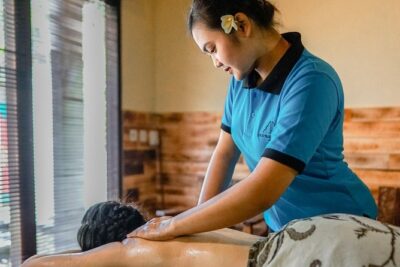
Body Massage Experience in Ubud Traditional Spa
Read our review →Browse the lists this tour appears in