
Reviewed · UBUD TOURS
From Ubud: Authentic Bali Farm Cooking School & Organic Farm
At Taman Dukuh, the best part is the direct farm-to-table rhythm: you see local ingredients at the market, pick some from an 8,000-square-meter organic farm, then turn them into lunch. It feels closer to a village food lesson than a restaurant demonstration.
I like the generous menu of six or more dishes and the recipe book, which includes substitutions, cooking tips, and technique-video links. I also like the calm garden setting and the staff’s patient, playful teaching style. The one catch is that the class can run long, especially when everyone chops onions and chilies from scratch.
Key points to know before booking
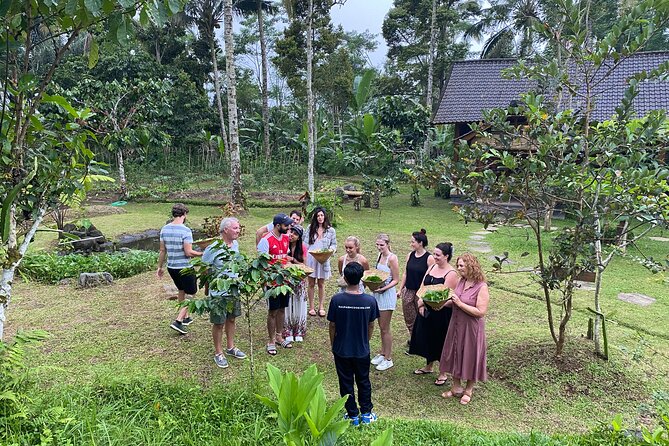
- Morning sessions include the local market: You can see unfamiliar fruit, spices, produce, and delicacies before heading to the farm.
- You harvest your own ingredients: The garden visit gives the cooking a useful sense of place and purpose.
- Six or more dishes are prepared: Expect appetizers, main dishes, and dessert, followed by a full meal.
- The class suits mixed skill levels: Clear English instruction and hands-on help make it workable for beginners.
- Dietary needs can be discussed: The staff accommodated a child’s nut allergy, but you should state any allergy when booking.
- Transport is centered on Ubud Central Parking: The advertised meeting point is on Jalan Suweta, with shuttle transfer available.
A Balinese cooking class with a real farm attached
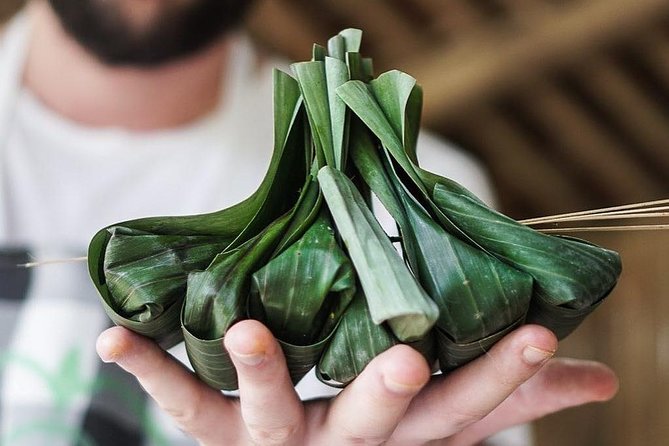
Many cooking classes near Ubud begin and end at a worktable. This one adds a useful first chapter: you learn where the ingredients come from before you cook them.
The school sits in Taro Village, north of Ubud, on a family organic farm. That setting matters. Instead of looking at a display of herbs and vegetables, you walk through the growing area and pick produce for the meal. You get a better sense of Balinese cooking as a practical relationship between garden, kitchen, and family table.
The school is community-run, and the mood is informal. Instructors work alongside you, explain the ingredients in clear English, and keep the pace light with humor. You are not expected to arrive with knife skills or knowledge of Indonesian food. The emphasis is participation, not culinary performance.
The experience lasts about five and a half hours. That is a substantial block of your Ubud day, but the time includes transport arrangements, the farm visit, cooking, and lunch. You are not paying for a quick recipe lesson. You are buying a half-day cultural outing with a meal at the end.
More cooking classes in Ubud:
- Ubud Cooking Class Bali with Balinese Chef
★ 5.0 · 1,609 reviews - PRIVATE Authentic Balinese Cooking Class in Ubud at Putu’s Home
★ 5.0 · 644 reviews - Balinese Ubud cooking school (9 Dish Cooking and Market Tour)
★ 5.0 · 540 reviews
The morning market adds the strongest cultural context
If you book a morning session, the day begins with a visit to a traditional market. This is one of the most valuable parts of the outing because it gives you a clearer picture of the ingredients before they are cleaned, chopped, and placed in bowls.
Your guide can point out local produce, fragrant spices, unfamiliar fruits, and other food items that may not appear on a typical tourist menu. The market also provides the chance to try fruit you may never have encountered before. That small tasting moment helps turn an ingredient lesson into something memorable.
The market visit is available for the morning experience, not necessarily every departure. If seeing the market is important to you, confirm that you have booked the morning option and check the arrangements before setting out. One booking mix-up left participants expecting a market visit without one, so this is worth clarifying rather than assuming.
The market can also make the class feel more authentic, but it is not a polished food show. A traditional market may be crowded, wet, noisy, or visually intense. Go ready for a working local market, not a tidy specialty-food hall. Wear practical shoes and keep your hands free.
From market produce to the organic garden
After the market, the experience moves into the countryside and the farm at Taro. The grounds are carefully maintained, leafy, and shaded, with a peaceful atmosphere that contrasts with the activity of the market.
You will learn about the organic growing methods used on the farm and collect fresh ingredients for the cooking session. Picking your own vegetables is simple, but it changes your role. You are not just watching a chef prepare a Balinese meal. You are helping gather the food that will go onto your plate.
The farm is also a pleasant place to spend time if you want a break from Ubud’s busy center. The setting is described as being among tropical greenery and jungle, with clean facilities and comfortable shaded areas for dining. Bring sun protection and insect repellent anyway. A garden in the tropics is still an outdoor setting.
The farm visit has educational value beyond the recipes. You can ask about unfamiliar plants and see how fresh produce fits into daily cooking. The class does not present sustainability as a slogan. It gives you a practical example through the food you harvest and eat.
Six dishes, plenty of chopping, and a full lunch
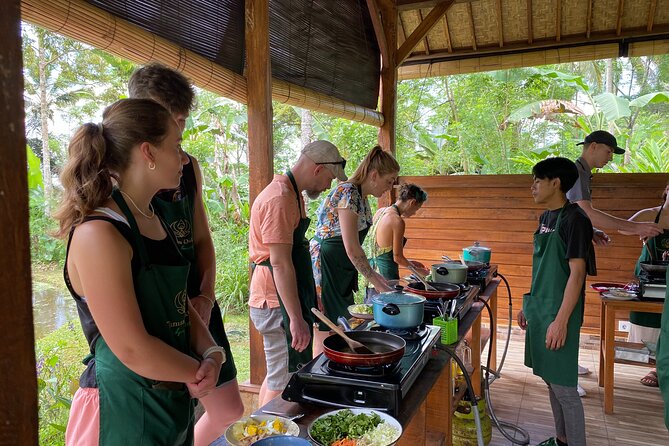
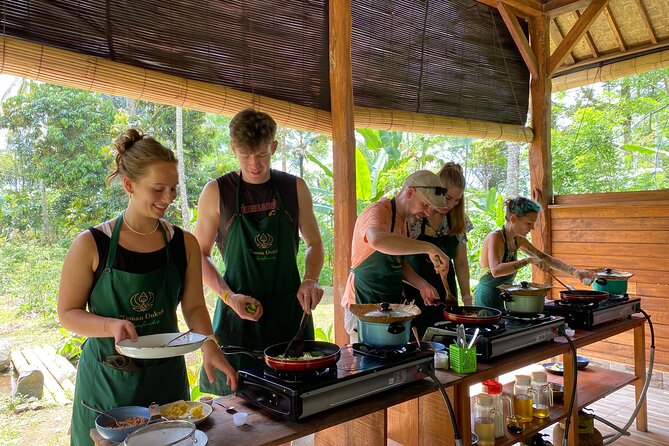
At the cooking school, instructors guide you through at least six Balinese or Indonesian dishes. The menu includes appetizers, main courses, and dessert, giving you a broad introduction rather than a single recipe.
You will work with cooking utensils, an apron, bottled water, and the ingredients supplied for the class. The format is hands-on. You chop, mix, season, cook, and share the work with the rest of the group. The instructors step in with demonstrations and corrections, but they do not simply prepare everything while you watch.
That approach is excellent for beginners. You learn the order of tasks and the logic behind combining the ingredients. The recipes are designed for home use, and the printed and PDF recipe book includes ingredient substitutions, cooking advice, and links to technique videos. This is a real advantage if you live somewhere that does not stock every Balinese ingredient.
The menu is also generous. You eat the food you prepare, and the meal can amount to a feast. Go with an appetite. The class includes lunch, coffee or tea, and the food you cook, but alcoholic drinks and soda cost extra.
There is one practical drawback. One participant felt that the class included too much repetitive chopping, particularly onions and chilies for the main dishes. I can see the point. Doing the prep yourself builds confidence, but it can also use time that might otherwise go toward discussing less familiar ingredients or cooking techniques.
If you enjoy the physical work of cooking, this will probably feel satisfying. If you prefer a demonstration with only a little participation, five and a half hours may feel lengthy. The class is a better match for people who want to make the meal, not just eat it.
More farm visits around Ubud:
- Balinese Farm Cooking Class by Pemulan Bali
★ 5.0 · 410 reviews - Seaweed Farming Activity and Sightseeing at Diamond Beach
★ 4.5 · 3 reviews
The instructors make the format work
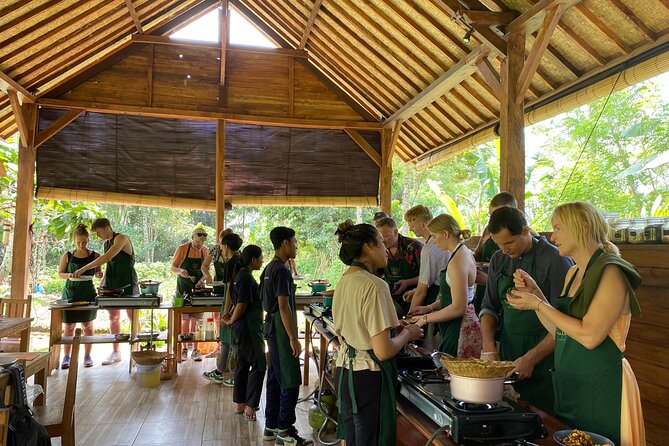
The staff are central to the experience. The strongest pattern is their attentiveness, humor, and willingness to help. They explain the cooking process clearly in English and keep an eye on participants as the dishes come together.
That matters in a group class. A maximum of 20 people is not tiny, though it is still manageable if the instructors divide attention well. You will be working near others, sharing ingredients and dining together. Solo visitors and couples can easily meet people from different countries, while families can take part as a group.
The class also accommodates different cooking abilities. You do not need to know how to balance Indonesian spices in advance. The recipes are presented as approachable, and the staff can help you get the flavors right.
Dietary communication remains important. The staff successfully accommodated a child with a nut allergy, which is encouraging, but you should provide complete information when booking and repeat it to the instructors at the start. The available information does not promise that every dietary request can be handled, so ask before you commit if your needs are strict.
Transport, timing, and what the price covers
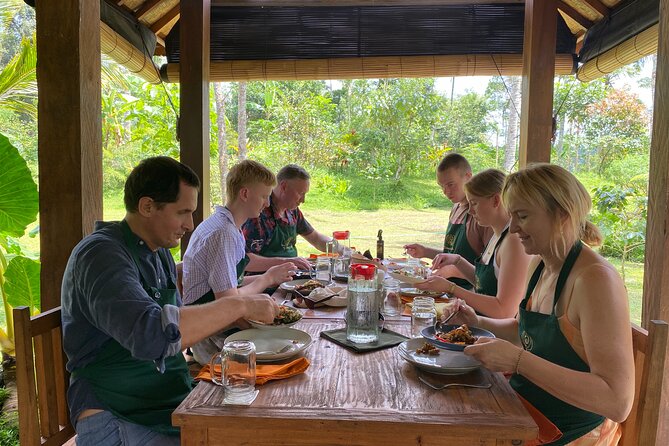
The listed price is $38 per person, with a mobile ticket and an approximate duration of five hours and 30 minutes. For that amount, you receive the cooking class, ingredients, garden visit, cooking utensils, apron, bottled water, coffee or tea, lunch, and the recipe book.
That is good value if you want several activities in one outing. A simple cooking class may cost less, but this experience adds the market option, farm tour, ingredient harvesting, a multi-course meal, and transport in an air-conditioned vehicle. You also leave with recipes you can use at home.
The advertised meeting point is Ubud Central Parking, Jalan Suweta No. 18. Shuttle transfer is available from there. Some arrangements may involve hotel pickup, but do not assume that every hotel or departure includes it. Confirm the pickup point and time so you do not lose part of the morning.
The school is outside central Ubud, in Taro Village. The countryside drive is part of the change in atmosphere, but road conditions and pickup logistics can affect the day. Allow the full half-day rather than scheduling a museum, spa appointment, or airport transfer immediately afterward.
The experience needs good weather and a minimum number of participants. If poor weather or low enrollment causes cancellation, you are offered another date or a full refund. You can cancel for a full refund up to 24 hours before the start time. Changes or cancellations inside that window are not accepted for a refund.
Who will get the most from this farm cooking class
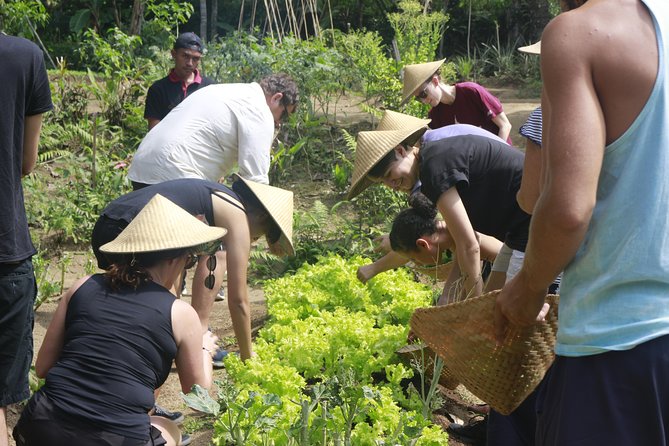
I would recommend this outing to you if food is one of your main ways of understanding a place. It gives you ingredients, farming, market life, local instruction, and a shared meal in one package.
It is particularly good for:
- First-time visitors who want more than a standard restaurant meal
- Couples looking for a relaxed half-day activity
- Families with children who enjoy picking, chopping, and tasting
- Beginners who want recipes that can be recreated at home
- Solo visitors who like meeting people around a shared table
- Anyone interested in organic farming and Balinese ingredients
The class may be less suitable if you have limited time in Ubud or dislike group activities. It also may not suit you if you want an advanced culinary workshop. An advanced class exists through the provider but is not part of this booking option, so experienced cooks should check the exact menu and level before reserving.
The morning option is the better choice if the market matters to you. An afternoon session may suit you better if you prefer a slower start, but the available information does not promise the same market visit. Check the departure details carefully.
Small drawbacks worth weighing
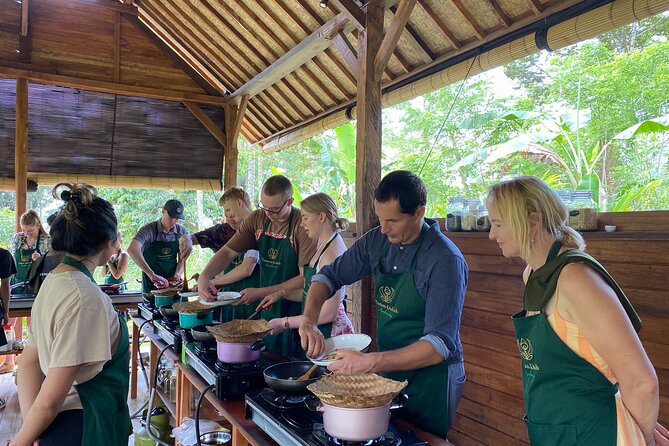
The overall package is strong, but it is not flawless. The most useful criticism concerns pacing. Chopping every ingredient yourself can make the class feel longer than necessary, especially once the novelty wears off.
Group size can also affect the rhythm. With up to 20 participants, you may sometimes wait for access to a work surface or instructor attention. The staff are hands-on, but this is still a shared class rather than a private lesson.
Transport is another minor consideration. One participant found the bus in need of better cleaning. That does not change the farm or the food, but it is a fair reminder that the vehicle may be functional rather than luxurious.
Finally, the market visit needs careful confirmation. It is a major attraction of the morning program, yet one participant was told at pickup that the market was not included while others attended it. Treat the market as a feature to verify, not an automatic promise for every departure.
These points are manageable when you book the right session, allow enough time, and arrive ready for active cooking. The setting, food, and staff are the parts that carry the experience.
What to bring and how to plan your day
Wear clothes you can cook in and shoes suitable for a farm and market. You may spend time outdoors, so a hat, sunscreen, and insect repellent are sensible. The school provides an apron, utensils, bottled water, and coffee or tea.
Eat lightly before the class, particularly if you have booked the morning departure. You will receive food during the experience and then eat the dishes you prepare. The meal is substantial enough that arriving very hungry is reasonable.
Tell the provider about allergies and dietary restrictions before arrival. A nut allergy was accommodated successfully, but the class includes shared preparation, so early notice gives the staff a better chance to plan safely.
Keep your schedule open for the full five and a half hours. The countryside drive, farm walk, cooking, and meal all contribute to the pace. If you rush away, you may spend the final course watching the clock instead of enjoying the result.
Should you book Taman Dukuh?
Book this experience if you want a hands-on introduction to Balinese food in a calm rural setting. The combination of market, organic farm, ingredient picking, group cooking, and shared lunch offers more context than a standard kitchen class.
At $38, the value is especially good for anyone who would otherwise book separate food and countryside activities. I would choose the morning session, confirm the market visit, and allow the whole day’s rhythm to unfold.
Skip it only if you want a short demonstration, a private chef lesson, or an advanced cooking course. For everyone else, this is an accessible, filling, and practical way to connect Ubud’s food culture with the farms and markets behind it.
FAQ
Where does the cooking class begin?
The advertised meeting point is Ubud Central Parking at Jalan Suweta No. 18, Ubud, Bali. Shuttle transfer is available from Ubud Central Parking.
How long does the experience last?
The activity lasts approximately five hours and 30 minutes. It ends back at the meeting point.
Is the market visit included in every session?
The traditional market visit is part of the morning experience. Confirm the departure details when booking if this visit is important to you.
How many dishes will I prepare?
You will prepare six or more Indonesian or Balinese dishes, including appetizers, main courses, and dessert.
Is lunch included?
Yes. Lunch includes all the food you cook during the class. Coffee or tea, bottled water, cooking utensils, and an apron are also included.
Can dietary restrictions or allergies be accommodated?
The staff accommodated a child’s nut allergy. You should provide details about allergies or dietary needs when booking and confirm them with the instructors.
What is the cancellation policy?
You can cancel up to 24 hours before the experience for a full refund. Cancellations or changes made less than 24 hours before the start time are not accepted for a refund. If bad weather or insufficient enrollment cancels the activity, you are offered another date or a full refund.
Just added around Ubud
- Bali ATV Quad Bike and White Water Rafting – All Inclusive★ 5.0 · 7 reviews
- Bali ATV Ride with Jungle Swing and Rice Terrace Tour★ 5.0 · 50 reviews
- Combo Bali ATV Ride with Ayung River Rafting All Inclusive★ 4.5 · 12 reviews
- Bali ATV Ride Adventure★ 4.0 · 22 reviews
- Melukat – The Purification Ceremony at Tirta Empul Temple★ 5.0 · 6 reviews
- Bali ATV Quad Bike with Ubud Day Tour All Inclusive★ 5.0 · 19 reviews
- Bali ATV Ride Adventure and Bali Swing Packages – All Inclusive★ 5.0 · 14 reviews
- Bali ATV Combined with Mumbul Lake And Sangeh Monkey Forest★ 5.0 · 34 reviews
Ubud Tours, compared.


Monkey Forest, Jungle Swing, Rice Terrace, and Water Temple
Read our review →


Uluwatu Sunset, Kecak Dance, and Dinner Jimbaran Beach
Read our review →
Tanah Lot and North Bali Tour: Scenic Journey
Read our review →
Body Massage Experience in Ubud Traditional Spa
Read our review →Browse the lists this tour appears in