
Reviewed · UBUD TOURS
Balinese Cooking class with traditional morning market visit
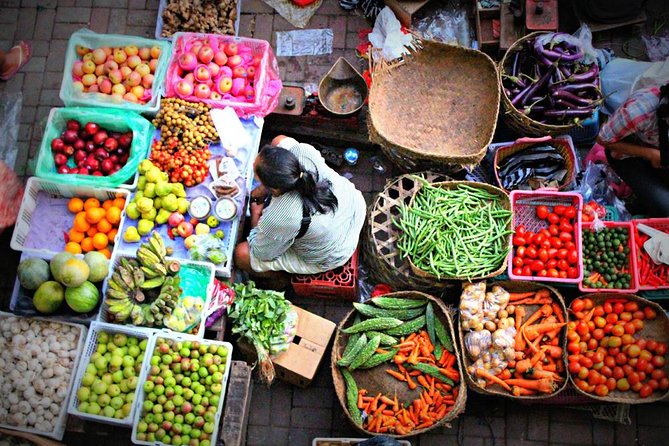
The best part of this Ubud experience happens before the cooking begins. You visit a local morning market, taste unfamiliar fruits and sweets, and choose the herbs, vegetables, spices, and other ingredients that will shape your meal. It gives you a useful glimpse of daily Balinese food life instead of dropping you straight into a tourist kitchen.
I like the small maximum group of eight, which gives the chef time to help you at the stove. I also like the canang offering lesson, a cultural detail many food classes skip. The main consideration is the early market visit and six-hour length, which may feel long if you want only a quick cooking demonstration.
Key points to know
- The market comes first: Learn about Balinese herbs, spices, fruits, vegetables, and local sweets while choosing ingredients.
- Laplapan adds a local setting: The class takes place in a traditional village, with a warm welcome and a scenic jungle-side kitchen.
- You make a canang offering: Learn how Balinese offering baskets are prepared before cooking begins.
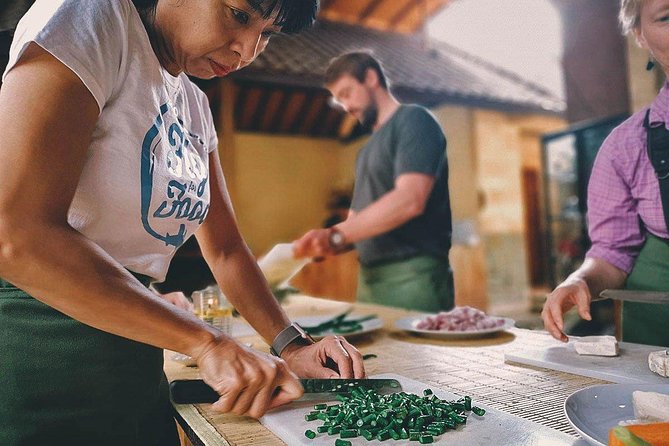
- The class is genuinely hands-on: Prepare starters, main dishes, and dessert with guidance from local chefs.
- Hotel pickup is included: Air-conditioned transport links your hotel, the market, and the workshop.
- Vegetarian needs can be accommodated: Dietary requests have been adapted during past classes, but you should give notice when booking.
Why the morning market makes this more than a cooking lesson
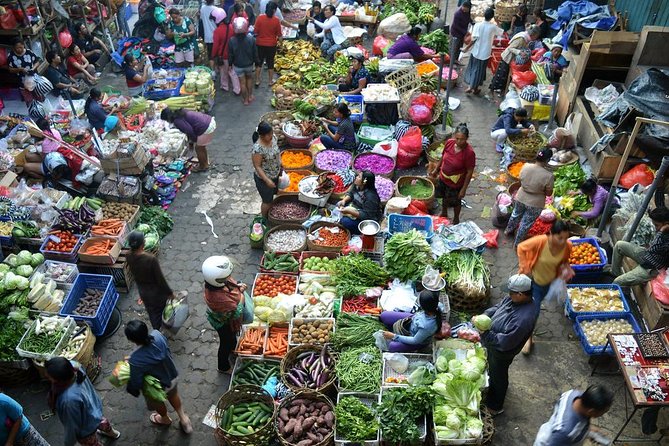
Many cooking classes begin with pre-measured ingredients lined up on a table. This one starts closer to the source. After pickup, you go to a local fresh food market and look over the ingredients used in Balinese kitchens.
You can expect to see vegetables, herbs, fruits, meat, spices, and small local foods. The guide explains what the items are and how they are used. Some people have tasted unfamiliar fruit at the market, while others have sampled local sweets to enjoy later with coffee.
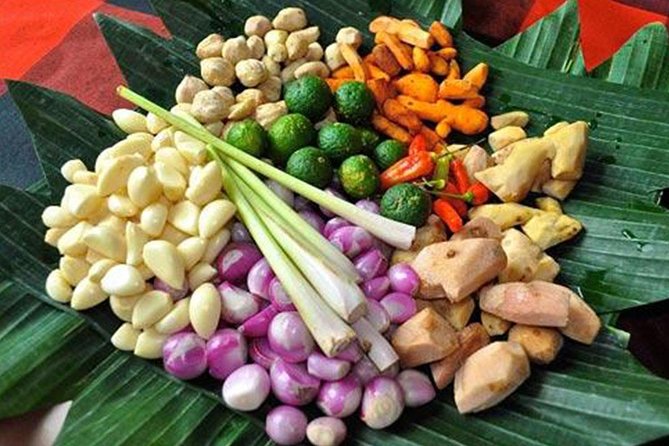
That market stop matters because Balinese food depends on ingredients that may be new to you. You learn to recognize the difference between everyday herbs and stronger spices, and you begin to understand why freshly prepared spice mixtures are so important to the cuisine.
The visit is described as brief by some people who have taken the class, so do not expect a long market study. Its purpose is to introduce the ingredients and local shopping habits, not to provide a full history of Ubud’s food trade.
I see that as a fair trade-off. The market visit gives the class a sense of place without using the entire morning. If you are especially interested in markets, you may wish it lasted longer. If you mainly want to cook, the short format keeps the day moving.
More Cooking Classes in Ubud
- PRIVATE Authentic Balinese Cooking Class in Ubud at Putu’s Home
★ 5.0 · 644 reviews - PRIVATE Balinese Cooking Class in Ubud with Dewa with Transfers
★ 5.0 · 213 reviews - PRIVATE Ubud Market Tour & Balinese Cooking Class with Putu
★ 5.0 · 125 reviews
The ride from your hotel to Laplapan village
Pickup is offered from your hotel, and the transport is air-conditioned. That is a practical benefit in Bali, especially after an early start and before several hours of cooking.
The driver is part of the experience rather than just a person behind the wheel. One driver, Awan, was praised for explaining places along the route, and other comments also describe the driver as helpful and reliable. Pickup has even worked for people staying as far away as Sanur, though the exact pickup area and timing are not stated.
After the market, you continue to Laplapan, a traditional village outside central Ubud. The cooking workshop is set in attractive jungle surroundings, and the setting helps the class feel connected to village life rather than placed in a sealed-off demonstration room.
You should allow about six hours for the full outing. That includes transport, the market, the offering activity, cooking, and the final meal. The actual pickup time is not provided, so confirm it when you book.
Making a canang before you touch the stove
Before cooking, you learn about Balinese offerings and make a canang. These small offering baskets are made from woven palm leaves and are part of everyday Hindu Balinese practice.
The activity is simple enough for children and first-time crafters, but it carries cultural meaning. You are not just handling an attractive decoration. You get a basic explanation of why offerings are made and how they fit into ordinary life in Bali.
This is one of the strongest parts of the experience for anyone who wants more than recipes. Food in Bali is closely connected to family, ceremony, and community, so learning about a canang gives you useful context before you start preparing a meal.
The offering lesson also changes the pace. You are not rushing from the market straight into a kitchen. You have a quieter activity first, with time to ask questions and get comfortable with the local hosts.
The amount of instruction may vary with the group and the schedule. It is an introduction rather than a full course in Balinese religious practice, but it is a worthwhile addition and one of the more distinctive features here.
Cooking several Balinese dishes with Wayan and Dewa
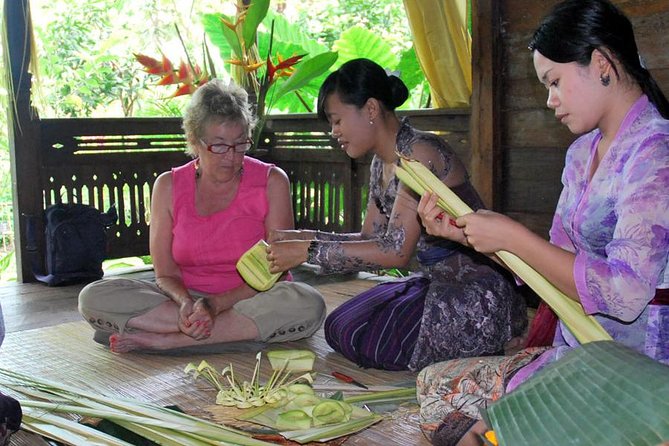
The cooking class is led by local chefs, with Wayan and Dewa receiving repeated praise for their warmth, humor, patience, and clear instruction. Putu and other members of the team may also lead parts of the day, so the exact host can vary.
The class covers traditional preparation methods and a range of dishes. You work on starters, main courses, and an authentic dessert, then sit down to eat what you have made. Past sessions have included as many as nine dishes, while another description refers to a five-course set, so the exact menu is not fixed.
That flexible menu is useful. It allows the kitchen to work with market ingredients and adjust for dietary needs. Vegetarian options have been available, and dietary requirements have been accommodated in past classes. Still, tell the provider about your needs ahead of time rather than waiting until you arrive.
The staff pre-prep some ingredients to keep the class moving. That means you will not spend six hours chopping onions, but it also means not every single step is done entirely from scratch by each person. You should expect a mix of demonstration, shared preparation, and hands-on work.
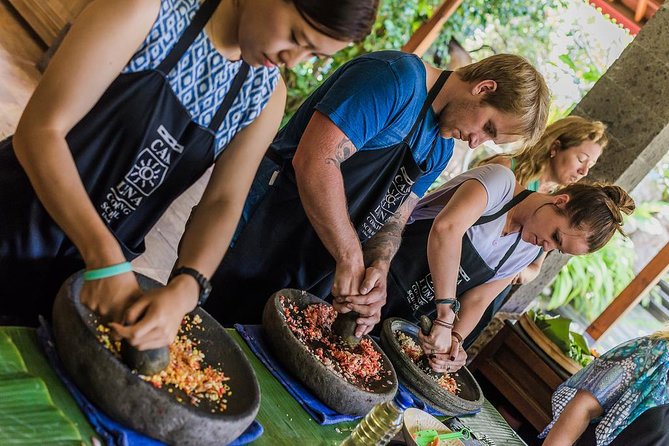
In a small group, you get a better chance to pound, mix, season, shape, and cook rather than simply watch. One solo participant had the chance to prepare every dish during a private lesson, though that was a special group situation rather than something guaranteed.
The teaching style is informal and social. Wayan has been described as patient and easy to understand, with a good sense of humor. That matters when you are working with unfamiliar ingredients or trying to judge the right texture of a spice paste.
If you are already an experienced cook, the class may not offer advanced technical training. Its strength is showing you how local ingredients and methods fit together, then giving you enough practice to repeat some of the dishes at home.
Same base, a completely different kind of day:
- All-Inclusive Ubud Private Tour
★ 5.0 · 14,344 reviews - Best of Ubud Full-Day Tour with Jungle Swing
★ 5.0 · 8,571 reviews - Ubud: Monkey Forest, Jungle Swing, Rice Terrace, and Water Temple
★ 5.0 · 7,160 reviews - Best of Ubud 1-Day Private Tour
★ 5.0 · 4,451 reviews
The final meal is part of the value
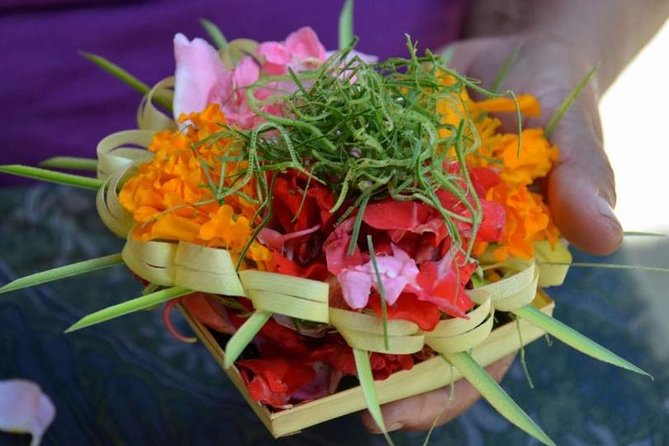
At the end, you sit down and eat the food you prepared. This is more satisfying than receiving a plate from the kitchen because you understand the work behind each dish.
The meal can be generous. Past participants have described preparing and eating several dishes, with the food presented attractively as well as tasting good. The welcome drink and snack at the start also help make the workshop feel like a hosted meal rather than a bare cooking lesson.
The shared table is a social plus for solo participants and couples. You meet the other cooks, compare results, and enjoy the food together. Families have also taken part, with children as young as six included in one session.
Do not expect restaurant service or a choice from a large menu. You eat the dishes selected for the class, and the menu may change. For most people, that is the point: you are learning a set meal rather than ordering one.
Some participants have received recipes to recreate the dishes at home. Since a recipe book is not listed as an official inclusion, treat that as a possible extra rather than a promise. The cooking equipment, class fee, transport, and taxes are included, while personal expenses are not.
What $35 buys you in Ubud
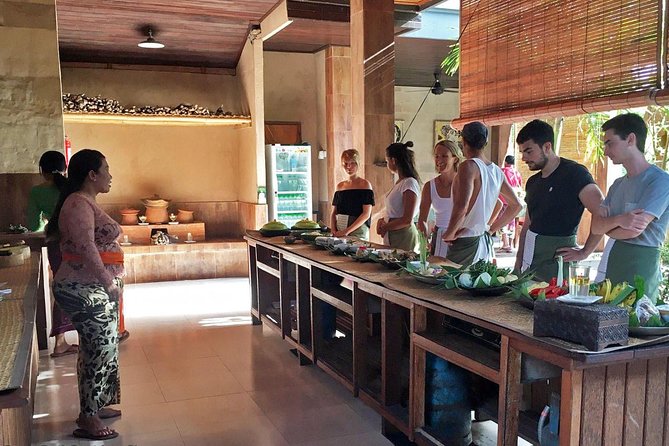
At $35 per person, this is strong value if you use the whole experience. You are paying for hotel pickup, air-conditioned transport, a market visit, local guidance, the canang activity, cooking instruction, ingredients, equipment, and a sit-down meal.
The value is not just the amount of food. You also get several hours of contact with local hosts and a practical look at Balinese ingredients. A standard restaurant meal would cost less in some situations, but it would not give you the market lesson or the ability to repeat the cooking at home.
Group discounts are available, which can make the outing more appealing for families or friends. The advertised maximum is eight people, keeping the class smaller than many large food demonstrations.
The price does not cover personal spending. That mainly matters if you want to buy snacks or other items at the market. The available information does not specify whether market purchases are expected, so carry only what you may want for personal use.
With a 99 percent recommendation rate and 161 ratings at five stars, the experience has a strong record. That should not replace checking the current pickup details and menu, but it supports the idea that the class delivers what it promises: food, culture, and active participation.
Who will enjoy this cooking class most
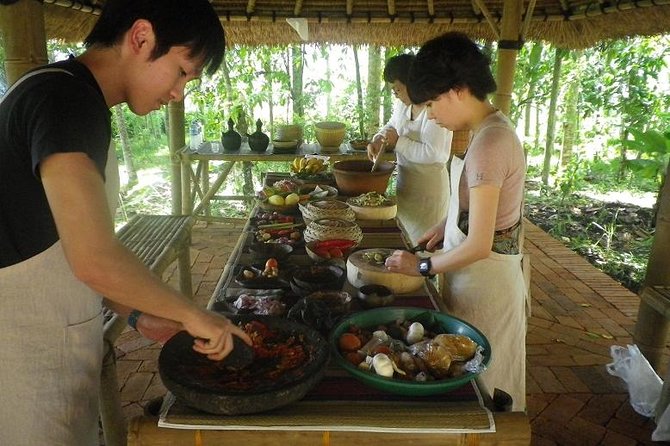
I would choose this for you if food is one of the main ways you like to understand a place. The market and offering lesson give the day more depth than a recipe-only class.
It also suits first-time cooking-class participants. The instructors provide guidance and assistance, and the tone is friendly rather than formal. You do not need professional kitchen skills to take part.
Families can consider it too. Children have enjoyed the market, the offering activity, and the cooking, though the six-hour length may be a lot for very young children. Since the class includes knives, heat, and food preparation, adults will need to stay involved.
Solo visitors have a good reason to book. The small group makes it easier to meet people, and the shared meal gives the day a natural ending.
You may want another activity if you dislike early mornings, organized group outings, or eating a set menu. The market visit is part of the appeal, but it may not satisfy someone looking for a long, independent market exploration.
Practical details to check before booking
The tour lasts about six hours and includes hotel pickup. The transport is air-conditioned, and the advertised group limit is eight people.
Confirmation is provided at booking. Pickup times are not stated in the available information, so ask for the exact collection time and location, especially if you are staying outside Ubud.
Tell the provider about vegetarian requirements or other dietary needs in advance. Past classes have adapted the menu, but the available information does not promise every dietary option.
Free cancellation is available if you cancel at least 24 hours before the local start time. Cancellations or changes made less than 24 hours ahead are not accepted for a refund.
The activity is sold by Bali Ubud Tour. The listed price is $35 per person, with group discounts offered.
Should you book the Balinese cooking class?
Book it if you want a hands-on food experience with a cultural side. The local market, canang lesson, village setting, and shared meal give you more than a standard kitchen class, while the small group keeps the instruction personal.
I especially recommend it for first-time visitors to Bali, families with school-age children, solo food lovers, and anyone who wants recipes and techniques to take home. Wayan, Dewa, Putu, and the wider team have created a warm teaching style, and the included transport removes a fair amount of planning.
Skip it if you want a short activity, a fully private lesson, or a long, independent market visit. Otherwise, $35 is a sensible price for a full morning and afternoon of local food, practical instruction, and time with Balinese hosts.
FAQ
How long does the Balinese cooking class last?
The experience lasts approximately six hours, including hotel pickup, the market visit, the cultural activity, cooking, and the final meal.
Is hotel pickup included?
Pickup is offered from your hotel, and air-conditioned transport is included. The exact pickup details are not provided, so confirm the collection time and location when booking.
Where does the cooking class take place?
After the market visit, you continue to the traditional village of Laplapan, where the workshop takes place in jungle surroundings.
How large is the cooking group?
The activity has a maximum of eight travelers according to the tour information. Smaller groups may sometimes provide more individual cooking time.
What happens at the morning market?
You visit a local fresh food market, learn about Balinese ingredients, and choose vegetables, herbs, meat, fruits, and spices for the class. You may also taste some local foods.
Will I learn about Balinese culture as well as cooking?
Yes. Before cooking, the class includes an introduction to Balinese offerings and instruction in making a canang and related equipment.
What types of food will I cook?
The class includes starters, main courses, and an authentic dessert. The exact number and selection of dishes can vary, with past sessions preparing five-course sets or as many as nine dishes.
Are vegetarian or dietary options available?
Vegetarian options have been offered, and dietary requirements have been accommodated during past classes. Inform the provider of your needs in advance.
What is included in the $35 price?
The price includes cooking equipment, cooking class fees, air-conditioned transport, and taxes. Personal expenses are not included.
Can I cancel for a full refund?
Yes, if you cancel at least 24 hours before the experience start time, based on local time. Cancellations or changes made less than 24 hours before the start are not accepted for a refund.
More Shopping in Ubud
- Yogyakarta Cooking Class and Market Tour
★ 5.0 · 99 reviews - Ubud Experience ; Swing, Waterfalls, Art Market, Rice Terrace
★ 5.0 · 56 reviews - Jakarta City Tour: Shopping & Culinary Experience
★ 4.5 · 15 reviews - Bali Arts shopping with temples-waterfall visit.
★ 5.0 · 6 reviews
More Markets in Ubud
- Balinese Ubud cooking school (9 Dish Cooking and Market Tour)
★ 5.0 · 540 reviews - Ubud Cooking Class with Optional Market Visit Pickup Included
★ 5.0 · 70 reviews - Balinese Cooking Class with Traditional Market Tour
★ 5.0 · 66 reviews - Active Volcano, Rice Field, Hot Spring, Fruit market, Tea Plantation with Lunch
★ 5.0 · 513 reviews
Just added around Ubud
- Bali ATV Quad Bike and White Water Rafting – All Inclusive★ 5.0 · 7 reviews
- Bali ATV Ride with Jungle Swing and Rice Terrace Tour★ 5.0 · 50 reviews
- Combo Bali ATV Ride with Ayung River Rafting All Inclusive★ 4.5 · 12 reviews
- Bali ATV Ride Adventure★ 4.0 · 22 reviews
- Melukat – The Purification Ceremony at Tirta Empul Temple★ 5.0 · 6 reviews
- Bali ATV Quad Bike with Ubud Day Tour All Inclusive★ 5.0 · 19 reviews
- Bali ATV Ride Adventure and Bali Swing Packages – All Inclusive★ 5.0 · 14 reviews
- OFFICIAL ATV KUBER – Tunnel, Waterfall, Rice Field, River, Jungle★ 4.0 · 42 reviews
Ubud Tours, compared.



Monkey Forest, Jungle Swing, Rice Terrace, and Water Temple
Read our review →


Uluwatu Sunset, Kecak Dance, and Dinner Jimbaran Beach
Read our review →
Tanah Lot and North Bali Tour: Scenic Journey
Read our review →
Body Massage Experience in Ubud Traditional Spa
Read our review →Browse the lists this tour appears in