
Reviewed · BANYUWANGI TOURS
Ijen Blue Fire Trekking
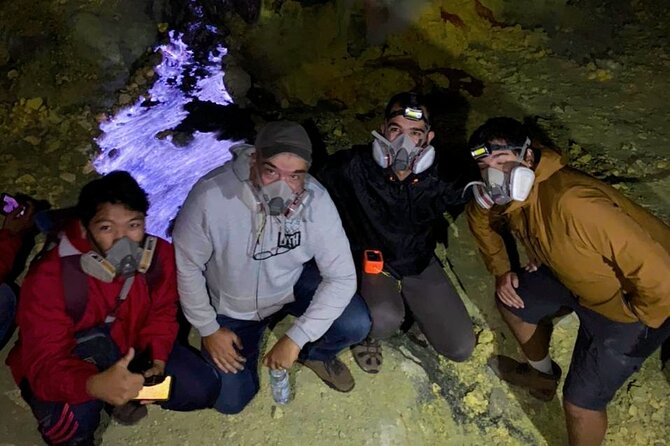
Ijen’s famous blue fire is the reason to lose a night’s sleep. From Banyuwangi, you leave around 12:30 am, climb in darkness, and may see electric-blue flames flickering through sulfur fumes before sunrise. The crater lake then changes the mood completely, with turquoise water and a vast volcanic bowl.
I like the private format, since your guide can set the pace and help you avoid the thickest crowds. I also like the practical kit: gas mask, goggles, headlamp, bottled water, coffee or tea, transport, and insurance are included. Guides named Aldo, Malik, and Andy receive especially warm praise for their care and local insight.
The catch is the physical demand. The route has been described as roughly 10 kilometers in total, with steep inclines and a very steep rocky descent into the crater. Blue fire is also tied to volcanic conditions, so it may not be visible on every departure.
Key points to know before booking
- Blue fire is a natural event, not a guarantee: volcanic activity can affect access and visibility.
- The day begins at 12:30 am: expect a late-night transfer followed by a climb before dawn.
- The crater descent is the hard part: loose, steep rock makes this more than a casual viewpoint walk.
- Private transport and a private guide are included: only your own group takes part.
- Safety equipment is supplied: you receive a gas mask, goggles, and headlamp.
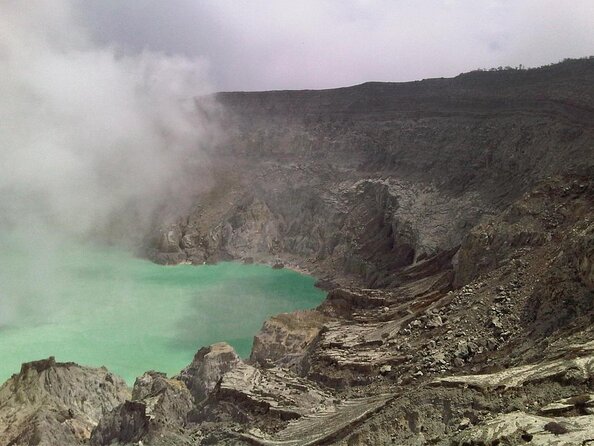
- The sunrise and turquoise lake complete the visit: even without blue fire, the crater offers a striking second act.
Why Ijen is worth the midnight start
Mount Ijen is unusual because it offers two very different sights in one outing. First comes the blue fire, a natural glow produced by burning sulfur gases. Then comes daylight, when you can see the crater lake and the scale of the volcanic setting.
That timing explains the early departure. You need to reach the crater area while it is still dark, and the sunrise is part of the plan. This is not a relaxed morning tour with a late breakfast. It is a night trek followed by a mountain viewpoint, so you should be comfortable trading sleep for a rare sight.
The tour lasts about eight hours in total. That includes pickup, transport, the trek, time around the crater, and the return to Banyuwangi. The pickup area is broad: you can arrange collection from a Banyuwangi hotel, port, or airport.
I like that this is a private activity rather than a shared group departure. Your group can walk together without being tied to strangers at every turn. A good guide can also help with timing, photos, and the pace of the climb.
More walks and treks around Indonesia:
- Mount Batur Sunrise Hike and Natural Hot Spring Option
★ 5.0 · 1,927 reviews - Mount Batur Sunrise Hike with Breakfast
★ 5.0 · 1,757 reviews - Mount Batur Sunrise Trekking Private All Inclusive
★ 5.0 · 906 reviews
Leaving Banyuwangi at 12:30 am
The listed start time is 12:30 am. That makes the first practical question simple: can you manage a night with very little sleep? You will want to rest beforehand and keep the evening free.
Private transportation is included, which removes the need to arrange a separate late-night ride. The exact pickup time and point should be confirmed when you book, especially if you are arriving at the port or airport rather than staying at a hotel.
Coffee or tea and bottled water are provided. These are small inclusions, but they matter at this hour. A hot drink before the walk can help you get moving, while water is essential during the climb.
The operator provides an English-speaking guide. Aldo is described as an experienced guide who prepares well and helps make the trip easier. Malik has been praised for his local background and for steering a group away from crowded sections when possible. Andy is also identified as a primary guide.
Those names are useful when you book. If you have a preference, you can ask which guide is scheduled, though availability may change.
The climb through the forest before dawn
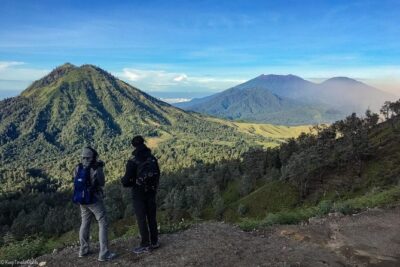
The walk begins in darkness, with a headlamp lighting the path ahead. The route passes through tropical forest before reaching the more exposed volcanic ground. You should expect a steady uphill walk, not a paved stroll to a lookout.
The physical rating is moderate, but that label needs context. One account puts the total distance at about 10 kilometers and notes that the inclines were steeper than expected. The final descent into the crater is particularly demanding, with a very steep rocky trail.
You should have a moderate level of fitness and be ready for uneven ground. Good walking shoes are important, though the supplied information does not specify a footwear requirement. Take the warnings seriously if you have asthma, vertigo, or problems with cold exposure. The tour specifically says that people with asthma, hypothermia, and vertigo should not take part.
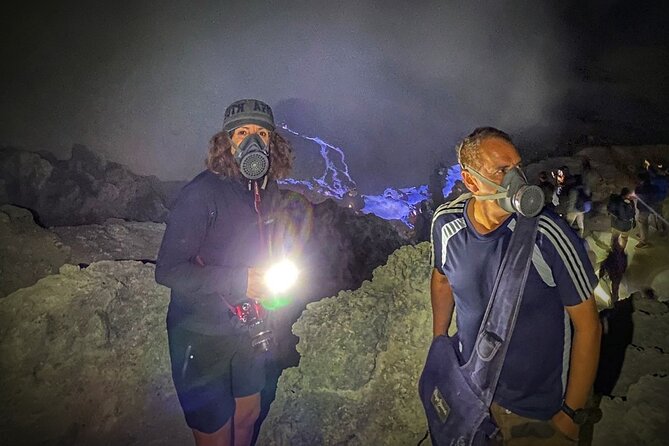
The headlamp is included, as are goggles and a gas mask. These are not decorative extras. Sulfur fumes can be strong near the crater, and the equipment is there to help protect your eyes and breathing. Listen closely to your guide about when to wear the mask and where to stand.
Children must be accompanied by an adult. The operator also notes that a minimum number of people may be required to run the tour, although this is a private experience for your own group.
Seeing the blue fire in the sulfur zone
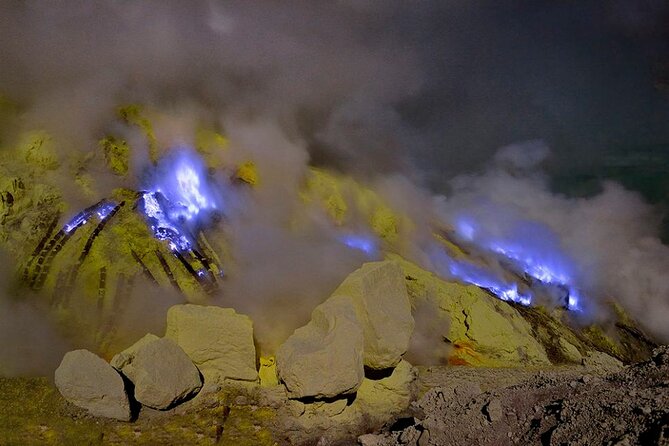
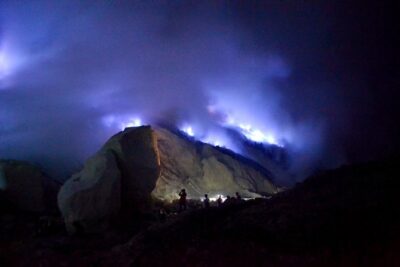
The blue fire is the tour’s headline sight. In the dark, sulfur gases can burn with an intense blue glow, creating an eerie effect among the smoke and rock. It is one of Ijen’s most unusual natural features, and the darkness is essential to seeing it clearly.
The blue fire is not a stage-managed show. Volcanic activity can change, fumes can limit access, and the phenomenon may not be visible. One operator response explains that increased volcanic activity had, at times, prevented visitors from seeing it.
That uncertainty is important when you decide how to judge the tour. If you book only for a guaranteed blue-fire photograph, you may be disappointed. If you see it, the moment can be extraordinary. If you do not, the crater, miners, and sunrise still form the rest of the experience.
Safety must come first here. You may see smoke rising from the sulfur area and notice the sharp working conditions faced by miners. The gas mask and goggles are supplied, but protective equipment does not make the fumes harmless. Stay with your guide and follow any instructions about moving away from a smoky section.
Photography is possible, but the conditions are difficult. Darkness, smoke, headlamps, and limited time can make photographs less tidy than the images that first inspired your visit. Bring patience rather than expecting every shot to be perfect.
A few more Indonesia half-days to weigh up
- From Banyuwangi or Bali Sunrise Ijen Vulcano Hiking All Inclusive
★ 5.0 · 50 reviews - Ijen Crater Tour
★ 5.0 · 33 reviews - 2 Days Private Tour Ijen and Bromo from Banyuwangi
★ 5.0 · 31 reviews - Sukamade Turtle Land Beach (2D1N)
★ 5.0 · 17 reviews
Meeting the sulfur miners
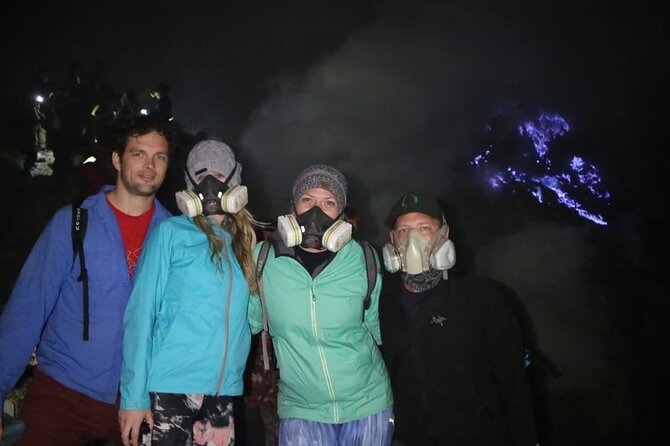
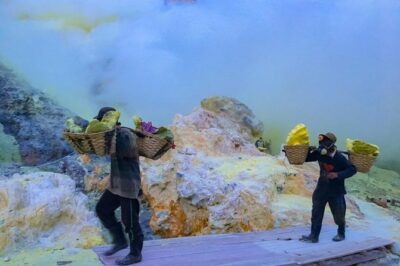
Ijen’s sulfur miners are part of the mountain’s human story. They carry heavy loads of sulfur by hand, walking routes that are already hard for people carrying nothing. Seeing this work gives the crater a human scale that a scenic viewpoint alone cannot provide.
The sight can be moving, but it should also make you pause. These are working people, not performers arranged for an audience. Follow your guide’s lead, avoid blocking the path, and treat photographs with care.
The tour description calls the miners among the strongest workers in the world. The more useful takeaway is practical: the route is a workplace as well as a natural site. You may share narrow or difficult sections with people carrying sulfur, so patience matters.
The guide is listed as an English-speaking professional guide, not a miner or student acting as a guide. That distinction gives you a clearer point of contact for safety, questions, and pacing.
The steep descent into the crater
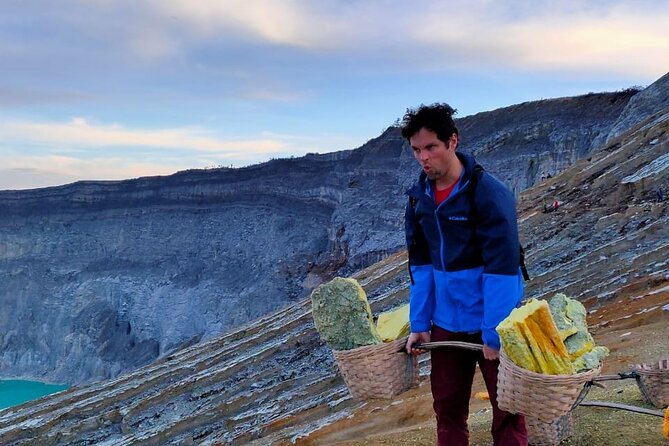
The crater descent is where the outing becomes an adventure rather than a simple mountain walk. After the uphill approach, you may continue down a steep rock trail toward the sulfur area. This section can be physically and mentally harder than the climb.
You should not assume the published distance tells the whole story. Ten kilometers on rough, steep ground feels much longer than ten kilometers on a flat road. A person who regularly walks hills may find it manageable, while someone expecting a gentle sightseeing route may struggle.
The private format helps here. Your guide can keep your group together and give you more direct help than you might receive in a large party. Still, no guide can remove the steepness. If your knees, balance, or breathing are unreliable, this is probably the wrong excursion.
The descent also affects the schedule. The blue fire visit takes place before sunrise, and you then need to return toward the rim or viewpoint in time for daylight views. Keep your attention on your footing rather than rushing after a photograph.
Sunrise over the turquoise crater lake
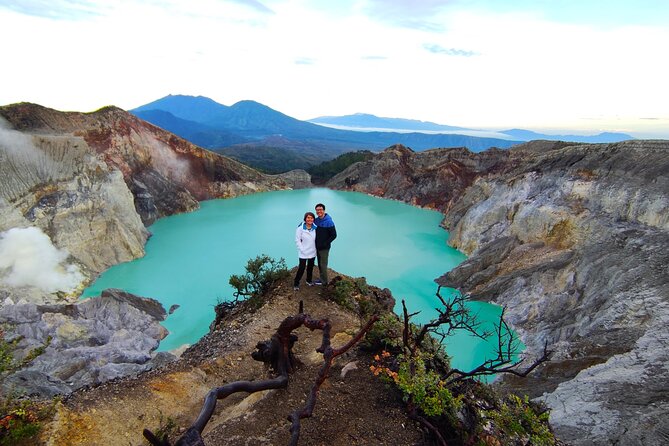
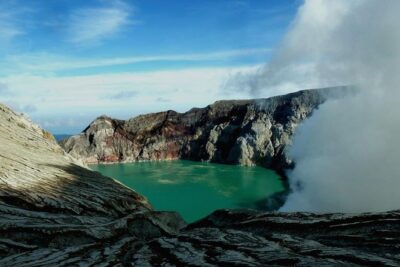
Sunrise brings the reward after the darkness and sulfur fumes. Ijen’s crater lake is vivid turquoise and fills much of the broad volcanic bowl. In daylight, you can finally see the setting that was hidden during the blue-fire portion.
The lake is described as the largest acid lake, so this is not water for swimming or casual contact. Its color is striking, but the acidity is also a reminder that this is an active volcanic environment. Keep to the permitted paths and listen to your guide.
The sunrise depends on weather and season. Clear conditions can give you the best chance of seeing the lake and surrounding crater clearly, while cloud or poor weather can reduce the view. The tour provider says that if poor weather forces cancellation, you will be offered another date or a full refund.
This is also the easiest part of the outing to appreciate at your own pace. After the effort of the climb and the concentration required near the sulfur fumes, daylight lets you look around, take photographs, and understand the shape of the crater.
What the $69 price really covers
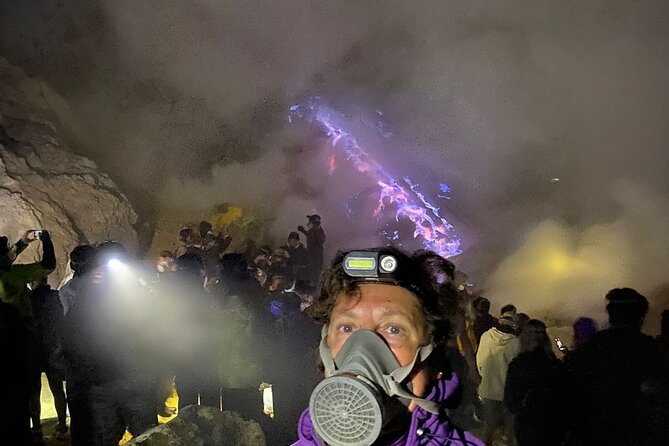
At $69 per person, the price is reasonable if you value a private vehicle, guide, safety gear, and a very early transfer. You are not paying only for access to a viewpoint. The fee bundles private transportation, an English-speaking guide, coffee or tea, bottled water, a gas mask, goggles, a headlamp, and insurance coverage.
The value improves for a small group, since the private format gives you direct support without joining a larger departure. It is also useful if you need pickup from a Banyuwangi hotel, port, or airport and do not want to arrange separate transport in the middle of the night.
The price does not change the nature of the trek. You still need to handle the physical work yourself, and a private guide cannot guarantee blue fire or clear sunrise weather. Think of the fee as paying for logistics, local assistance, and safety support around a difficult natural site, not for a guaranteed result.
The experience is booked, on average, 48 days ahead. That suggests you should plan early if Ijen is central to your Banyuwangi schedule. Confirmation is provided at booking, and the tour is available with a mobile ticket.
What the high ratings get right, and where caution is needed
The overall score is 4.8 from 44 reviews, with 91 percent recommending the experience. The strongest praise centers on the guides. Aldo is repeatedly described as well prepared and helpful, while Malik receives credit for local knowledge and smart crowd management.
That matters because Ijen is not just about finding the trailhead. The guide helps you handle the fumes, difficult ground, timing, and changing conditions. Several accounts also praise the drivers and guides for helping with photographs and making the short time in the area count.
The feedback is not perfectly uniform. One account describes poor language skills and weak customer service, even while calling the scenery beautiful. That is worth keeping in mind. Service can vary by the guide and crew assigned on the day, so ask questions early and state any concerns clearly.
Another useful warning concerns distance and steepness. The route may feel harder than the basic description suggests. I would book this for the scenery and the challenge, not if you want an easy nature outing.
The operator offers free cancellation up to 24 hours before the start time for a full refund. Changes or cancellations made inside that window are not accepted, and poor weather may lead to a new date or full refund.
Who should book the Ijen night trek
Ijen suits you if you want a rare volcanic sight and are happy to work for it. It is a strong choice for people who enjoy mountain walks, unusual geology, sunrise photography, and direct contact with local working life.
It also suits you if you prefer a private arrangement. The vehicle, guide, and schedule are for your group alone, which is helpful when you want a slower pace or more personal help with photographs.
I would think twice if you have asthma, vertigo, or difficulty coping with cold conditions. The operator specifically excludes those conditions, and the sulfur area is not a place to test your limits. The route also demands balance and stamina.
Book early if you are visiting Banyuwangi on a fixed timetable. Blue fire and weather can change, so leave room in your plans if possible. And keep your expectations honest: the best outcome is blue fire, a clear sunrise, and a strong guide, but nature controls the first two.
Should you book it?
Book this tour if the idea of walking into a dark volcanic crater, seeing sulfur flames, and watching sunrise over a turquoise lake genuinely excites you. The private transport, supplied safety gear, and guides such as Aldo and Malik add real value to a demanding night.
Skip it if you want a short, gentle viewpoint visit or if sulfur fumes and steep rocky paths are a concern. For the right person, this is one of Banyuwangi’s most memorable outings, but its rewards come with an early start, hard walking, and no promise that blue fire will appear.
FAQ
What time does the Ijen tour start?
The tour starts at 12:30 am.
How long does the Ijen Blue Fire Trekking experience last?
The experience lasts approximately eight hours.
Where can pickup be arranged?
Pickup is offered from Banyuwangi hotels, the port, or the airport.
Is this a private tour?
Yes. Only your own group participates in the activity.
Is an English-speaking guide included?
Yes. An English-speaking guide is included, and guides named Aldo, Malik, and Andy are associated with the tour.
What safety equipment is provided?
The tour includes a gas mask, goggles, and a headlamp. Insurance coverage is also included.
Is the tour suitable for children?
Children must be accompanied by an adult.
Can people with asthma or vertigo join?
No. The tour information says that people with asthma, hypothermia, vertigo, and similar conditions cannot take part.
What happens if poor weather cancels the tour?
You will be offered a different date or a full refund if poor weather causes cancellation.
Can I cancel for a full refund?
Yes, if you cancel at least 24 hours before the experience start time. Cancellations made less than 24 hours before the start are not refunded.
Just added around Indonesia
- Bali ATV Quad Bike and White Water Rafting – All Inclusive★ 5.0 · 7 reviews
- Bali ATV Ride with Jungle Swing and Rice Terrace Tour★ 5.0 · 50 reviews
- Combo Bali ATV Ride with Ayung River Rafting All Inclusive★ 4.5 · 12 reviews
- Bali ATV Ride Adventure★ 4.0 · 22 reviews
- Melukat – The Purification Ceremony at Tirta Empul Temple★ 5.0 · 6 reviews
- Bali ATV Quad Bike with Ubud Day Tour All Inclusive★ 5.0 · 19 reviews
- Bali ATV Ride Adventure and Bali Swing Packages – All Inclusive★ 5.0 · 14 reviews
- Bali ATV Combined with Mumbul Lake And Sangeh Monkey Forest★ 5.0 · 34 reviews
Banyuwangi Tours, compared.
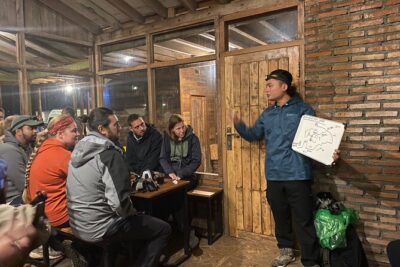
From Banyuwangi or Bali Sunrise Ijen Vulcano Hiking All Inclusive
Read our review →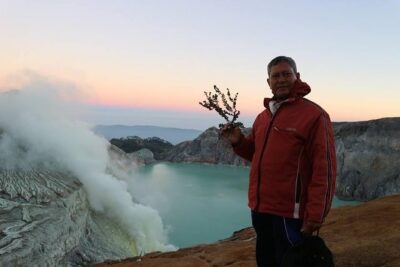
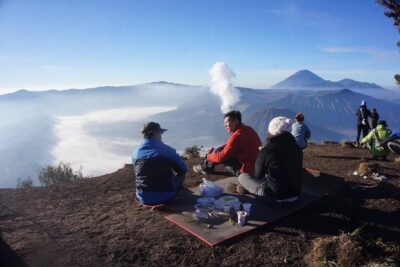
2 Days Private Tour Ijen and Bromo from Banyuwangi
Read our review →
Browse the lists this tour appears in