
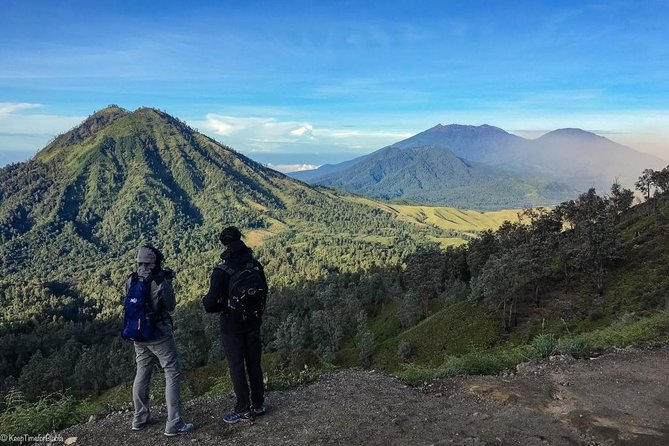
Reviewed · BANYUWANGI TOURS
Kawah Ijen Midnight Tour (1 Day)
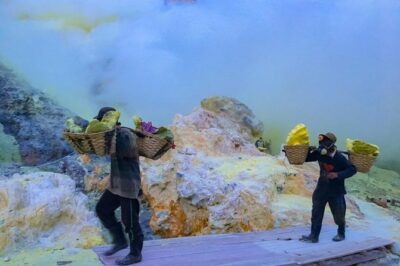
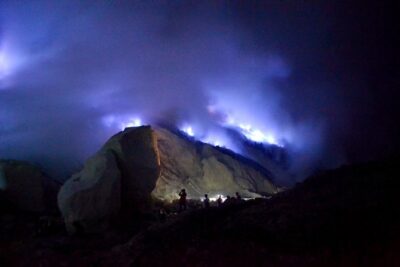
The main draw is Kawah Ijen after midnight, when the mountain’s burning sulfur can create an eerie blue flame in the crater. The climb continues toward sunrise, with a chance to see sulfur carriers hauling heavy loads by hand.
I like the private transport and personal guide, since a dark volcanic trail is a poor place to sort out logistics alone. I also like that a flashlight and gas mask are provided, and guides such as Deden, John, and Tickin have helped visitors manage the rougher parts of the route.
The catch is the physical effort. You need moderate fitness, and the descent toward the crater can be narrow, stony, and hazardous. You also need to keep a good pace if seeing the blue flame is your priority, since delays can mean missing it in the crowd.
Key points to know before booking
- The 12:30 am start is designed for the blue flame and sunrise: You leave Banyuwangi in the middle of the night and spend the early hours climbing.
- This is a private tour: Your group has its own vehicle and guide rather than joining a large shared party.
- The crater descent is the hardest section: The route down is dark, narrow, and stony, so steady footing matters.
- A gas mask and flashlight are included: These are practical items for a sulfur crater visited at night.
- The sulfur carriers add human context: You learn about workers carrying loads of sulfur stone, sometimes close to 70 kilograms.
- The $61.54 price covers useful basics: Private transport, a guide, admission, flashlight, and gas mask are included, while food and drinks are not.
Why Kawah Ijen is worth leaving bed at midnight
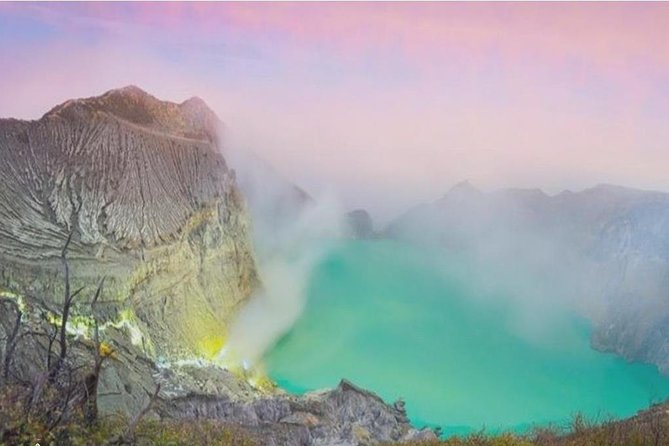
Kawah Ijen is not a gentle morning sightseeing stop. The early start is the point. You set out from Banyuwangi at 12:30 am, travel to the volcano, and begin the climb in darkness so you can reach the crater area before sunrise.
The reward is a rare natural sight: blue flames caused by burning sulfur. The color is the result of sulfur gases burning, and the effect is especially striking at night. It is also a time-sensitive part of the outing. One guide gave a clear practical warning: do not walk too slowly on the way up if you want a good chance of seeing the blue flame, since the crater area can become crowded and some people miss it.
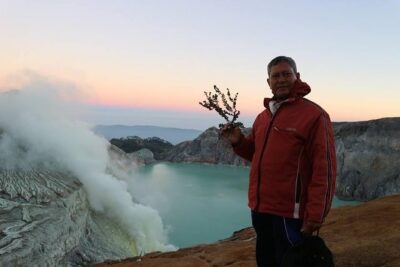
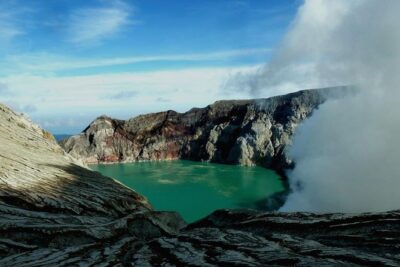
After the night portion, you watch the sun come up from the top. That gives the trip a useful rhythm. First comes the strange, smoky glow below; later comes daylight, which lets you take in the crater and mountain more clearly.
I would book this for the combination, not for one photo. The blue flame is unusual, the sunrise changes the mood completely, and the sulfur-mining story gives the mountain a human side.
A few more Indonesia half-days to weigh up
- Best of Ubud 1-Day Private Tour
★ 5.0 · 4,451 reviews - Nusa Penida All-Inclusive Day Trip
★ 5.0 · 3,489 reviews - Nusa Penida day trip: boat, 4 snorkeling, Manta rays & Land tour
★ 5.0 · 2,033 reviews
The midnight pickup from Banyuwangi
The tour begins at your accommodation or agreed meeting point in the Banyuwangi area. Pickup is offered, and the outing ends back at the starting point after roughly eight hours.
Private transport matters here. You are not trying to arrange a late-night taxi, find the correct mountain entrance, or negotiate a return ride after a tiring climb. The driver handles the road while you focus on sleeping a little, organizing your clothing, and preparing for the hike.
This is also where the private format earns its keep. A private tour lets your guide pay attention to your pace and footing rather than managing a large mixed group. Guides named Deden, John, and Tickin have each been associated with the experience, and the strongest praise centers on patient help along the route and clear explanations of the mining work.
One practical point: food and drinks are not included. Bring what you need for the night, since the price does not cover personal expenses. The provided flashlight and gas mask are useful, but they do not replace sensible preparation for a long walk in the dark.
The climb to the crater before sunrise
The climb is the physical core of the day. The crater portion is described as taking about three hours, while the complete experience lasts around eight hours once transport, waiting, the sunrise, and the return are counted.
You should expect a long walk uphill and back down. The route is not presented as an easy stroll, and the required fitness level is moderate. One account describes the hike as long but worthwhile, while another calls the ascent physically hard. That is a fair way to think about it: manageable for a reasonably fit person, but demanding if you rarely walk uphill.
Darkness changes the task. Even with a flashlight, you will need to watch your footing and stay close to the guide. The guide’s role is not just to point out the way. Deden, in particular, has helped with tricky sections and with the narrow, stony path during the descent.
I like the private guide most at this stage. You can ask questions, stop briefly when needed, and receive help in places where a loose pace or a distracted walk could cause trouble. Still, private does not mean effortless. You remain responsible for bringing suitable shoes, moving carefully, and being honest about your fitness.
Reaching the blue sulfur flame
The blue flame is the most distinctive part of the outing, but it is also the part that requires the most care. You go at night because the blue color is visible in darkness. In daylight, the effect is not the same.
The route toward the crater can be rough and narrow. One important warning from the experience is that the descent can feel dangerous, especially in the dark. You should not treat the gas mask as permission to linger in sulfur fumes or wander away from the guide. Follow instructions, keep your mask ready, and do not rush simply to get a closer view.
The flashlight is another small inclusion with a big practical effect. A phone light is less comfortable for a long, uneven route, and using your phone constantly can make it harder to keep both hands free. Having a separate light lets you concentrate on the ground.
The precise visibility of the flame can depend on conditions and crowding. The tour requires good weather, and poor weather can lead to a different date or a full refund. The experience does not promise that every night will produce a perfect view, so I would book it for a strong chance at a remarkable sight, not an absolute guarantee.
Same base, a completely different kind of day:
- All-Inclusive Ubud Private Tour
★ 5.0 · 14,344 reviews - Best of Ubud Full-Day Tour with Jungle Swing
★ 5.0 · 8,571 reviews - Ubud: Monkey Forest, Jungle Swing, Rice Terrace, and Water Temple
★ 5.0 · 7,160 reviews - ️Nusa Penida by Private Boat – Snorkeling 4 spots, Swim with Mantas + Land Tour
★ 5.0 · 6,424 reviews
Sunrise from the volcano
Once you have spent the dark hours around the crater, sunrise gives you a safer and clearer look at the setting. The same path that felt mysterious at 3 am becomes easier to understand in daylight.
This change is one reason the early start makes sense. You are not simply waking early for a standard sunrise. You first experience the crater under very different conditions, then see the mountain open up as the light arrives.
The sunrise section also gives you a natural pause after the most demanding part of the hike. You can take in the views, catch your breath, and think about the contrast between the blue sulfur fire and the morning scene above it.
Do not expect the day to end at the viewpoint. The journey back is still part of the workout. The total outing lasts about eight hours, so save energy for the return rather than treating the crater as the finish line.
Meeting the sulfur carriers
The mining story is not a decorative extra. It is one of the most meaningful parts of the visit.
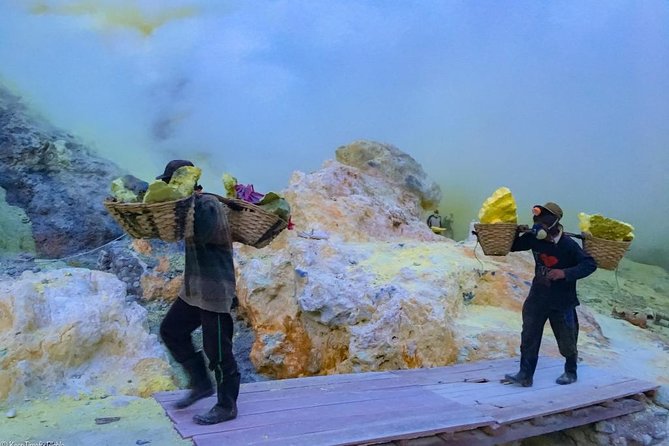
You learn about traditional sulfur carriers who work on the mountain and carry sulfur stone on their shoulders. The supplied information describes loads approaching 70 kilograms, a detail that makes the physical demands of the work difficult to ignore.
A guide can provide context about the mining operation and the lives connected to it. Deden and John have been specifically associated with explaining the region and the work, while other guides have focused more on helping with the route. Together, those two roles make the experience stronger: you understand both the mountain and the people working on it.
Approach this part with respect. You are seeing a workplace as well as a natural attraction. The carriers are not simply part of the scenery, and the scale of their loads is a reminder that the mountain has a daily economic life beyond sightseeing.
What the $61.54 price really covers
At $61.54 per person, the price is easiest to judge as a package of logistics and equipment rather than as payment for a short viewpoint stop.
Included are:
- Private transport
- A private tour guide
- Entrance fees
- A gas mask
- A flashlight
That combination removes several costs and decisions you would otherwise need to handle yourself. The private vehicle is especially useful for a 12:30 am departure, and the guide adds real value on a dark route with a difficult crater descent.
Food and drinks are not included, nor are other personal expenses. Group discounts may be available, which could improve the value if you are booking with companions. Since this is a private activity, only your group participates, so the price may feel more reasonable when shared among several people.
I would compare it with the cost and stress of arranging nighttime transport, entrance, equipment, and route-finding separately. For a solo booker, $61.54 is not the cheapest way to see Ijen. For a small group that wants a dedicated vehicle and guide, it is a more convincing deal.
Who will enjoy this tour most
This experience suits you if you want Kawah Ijen’s most unusual features in one night: blue sulfur flame, sunrise, and an explanation of the mining work.
It is a good choice for:
- People with moderate physical fitness
- Visitors staying in the Banyuwangi area
- Small groups that value private transport
- Anyone uncomfortable finding a dark mountain route alone
- Photographers and sightseers interested in unusual natural phenomena
- Visitors who want cultural context along with the views
I would think twice if you dislike night hiking, struggle with long uphill walks, or need a relaxed morning schedule. The trip is physically demanding, and the crater descent is not a minor detail.
The private format may also be less useful if your only goal is to spend as little as possible. You are paying for convenience, safety support, equipment, and one-on-one attention.
A practical way to prepare
The supplied details do not specify a clothing or footwear list, so I would keep preparation sensible rather than elaborate. Wear shoes suited to a long, uneven walk, and bring food and water because they are not included.
Keep the flashlight ready from the beginning. Stay with the guide in the dark, particularly when approaching the crater and during the descent. The gas mask is provided for sulfur conditions, but careful movement and following instructions remain just as important.
Pace yourself on the ascent. You need to move efficiently enough to reach the blue flame area in time, but hurrying on loose or narrow ground is a poor bargain. The right approach is steady, controlled, and close to the guide.
The tour requires good weather. If conditions force cancellation, you are offered another date or a full refund. The same applies if the minimum number of participants is not met. For your own plans, remember that cancellations made at least 24 hours before the 12:30 am start qualify for a full refund, while later cancellations and changes are not accepted.
Should you book the Kawah Ijen Midnight Tour?
I would book this tour if you want the full Ijen experience and value having the hard parts organized. The blue flame and sunrise combination is special, and the private vehicle, guide, flashlight, gas mask, and entrance fee make the $61.54 cost easier to justify.
Book with clear expectations. This is a serious night hike, not a quick scenic outing. The descent can be hazardous, the walk is long, and the blue flame depends on conditions and timing.
If you are reasonably fit, willing to start at 12:30 am, and interested in the lives of the sulfur carriers as well as the crater, this is a strong option from Banyuwangi. If your priority is comfort or a slow pace, choose another activity.
FAQ
Where does the Kawah Ijen Midnight Tour start?
The tour starts in Banyuwangi, in Banyuwangi Sub-district, Banyuwangi Regency, East Java, Indonesia. Pickup is offered from accommodation in the Banyuwangi area.
What time does the tour begin?
The stated start time is 12:30 am.
How long does the complete experience last?
The tour lasts approximately eight hours. The Kawah Ijen crater portion is listed as about three hours.
Is this a private tour?
Yes. This is a private activity, and only your group participates.
What is included in the price?
Private transport, a private guide, the entrance fee, a gas mask, and a flashlight are included.
Are food and drinks included?
No. Food, drinks, and other personal expenses are not included.
What happens if bad weather cancels the tour?
You will be offered a different date or a full refund. The experience requires good weather, and the same alternatives apply if the minimum number of participants is not met.
Just added around Indonesia
- Bali ATV Quad Bike and White Water Rafting – All Inclusive★ 5.0 · 7 reviews
- Bali ATV Ride with Jungle Swing and Rice Terrace Tour★ 5.0 · 50 reviews
- Combo Bali ATV Ride with Ayung River Rafting All Inclusive★ 4.5 · 12 reviews
- Bali ATV Ride Adventure★ 4.0 · 22 reviews
- Melukat – The Purification Ceremony at Tirta Empul Temple★ 5.0 · 6 reviews
- Bali ATV Quad Bike with Ubud Day Tour All Inclusive★ 5.0 · 19 reviews
- Bali ATV Ride Adventure and Bali Swing Packages – All Inclusive★ 5.0 · 14 reviews
- Bali ATV Combined with Mumbul Lake And Sangeh Monkey Forest★ 5.0 · 34 reviews
Banyuwangi Tours, compared.
From Banyuwangi or Bali Sunrise Ijen Vulcano Hiking All Inclusive
Read our review →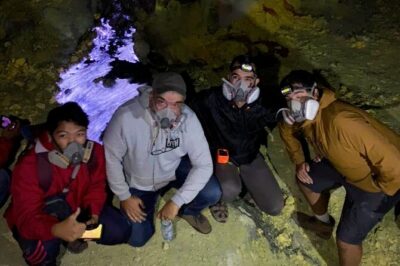
2 Days Private Tour Ijen and Bromo from Banyuwangi
Read our review →
Browse the lists this tour appears in