
Reviewed · UBUD TOURS
Ubud: Monkey Forest, Rice Terraces & Sacred Temples
The most memorable part of this Ubud day is the change of mood. You move from cheeky macaques and carved temple gates to broad rice-field views, then finish at Mengening Temple, where a small offering workshop gives Balinese religious life a personal, practical feel.
I like the mix of famous sights and quieter ones. I also like that entrance fees, bottled water, an air-conditioned vehicle, and hotel pickup are included, so the $69 price is easy to understand. The main drawback is the length: at about 12 hours, this is a full day on the road, with several 90-minute stops and a long return journey.
Key points to know before booking
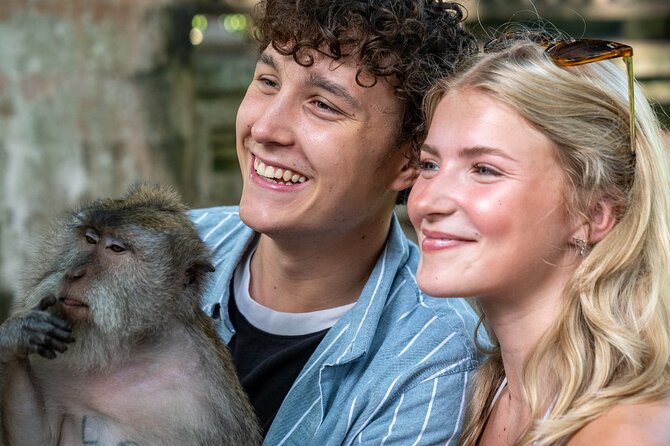
- Mengening Temple adds real cultural context: You make a canang sari offering and learn why these small flower arrangements matter in daily Balinese life.
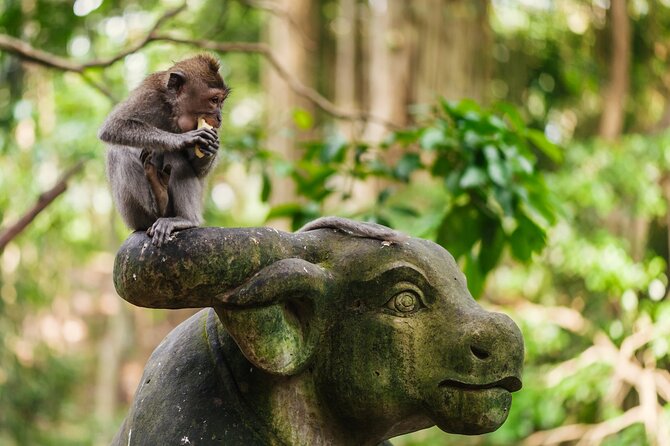
- Monkey Forest is more than a photo stop: Expect moss-covered shrines, stone carvings, thick jungle paths, and free-roaming macaques.
- Goa Gajah begins the sightseeing with ancient stonework: The dramatic cave entrance and old bathing pools make it one of Ubud’s most unusual sacred sites.
- Tegalalang delivers the big view: The rice terraces are highly photogenic, though the stop is centered on viewpoints rather than a long walk through the paddies.
- You have one vehicle for the whole day: Hotel pickup and drop-off make this simpler than arranging separate rides between spread-out sights.
- The group can reach 20 people: That is still manageable, but it is not the same as having a private guide and car.
Why this Ubud day works
Ubud is best understood through contrasts. It is not only a place of art shops and cafés. Its sacred spaces are woven into jungle, village lanes, farming areas, and family life. This tour gives you several ways to see that connection in one day.
You begin with a hotel pickup at about 9:30 a.m. and travel into the Ubud area in an air-conditioned vehicle. The ride matters because the stops are spread out. You do not need to bargain for separate taxis, find parking, or keep checking directions.
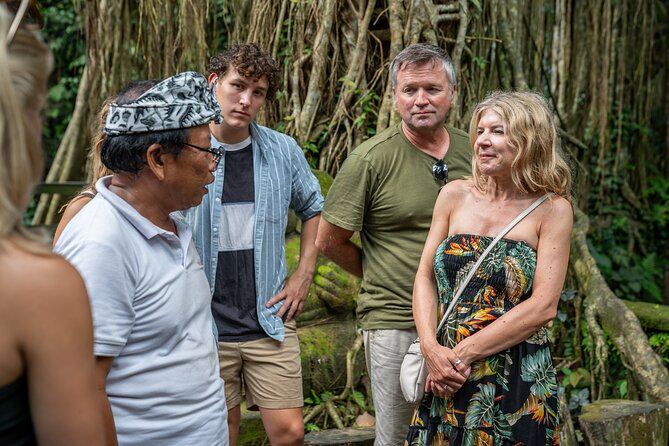
The English-speaking guide is central to the experience. Names assigned to this tour have included Dan, Ariana, Laras, Gunawan, and Haris, with drivers such as Mariyasa, Juliantara, Nengah, and Gus Alit. Assignments can change, but the strongest pattern in the feedback is clear: the guides explain Balinese culture, religion, customs, and practical details patiently. The drivers are also praised for being friendly and careful.
That human side gives the tour much of its value. Without explanation, a temple can look like a handsome collection of gates and statues. With a good guide, you begin to understand why people bring offerings, how purification fits into Balinese life, and why these places are treated as active sacred sites rather than museum pieces.
More Monkey Forest Tours in Ubud
- Ubud: Monkey Forest, Jungle Swing, Rice Terrace, and Water Temple
★ 5.0 · 7,160 reviews - Ubud Tour with Monkey Forest Waterfalls Temples and More
★ 5.0 · 495 reviews - Gorilla Cave ATV Bali Ubud, Monkey Forest, Temple, and Lunch
★ 5.0 · 295 reviews
Goa Gajah and the strange face in the stone
Your first major stop is Goa Gajah, usually called the Elephant Cave. The name can confuse first-time visitors, since the site is known more for its carved entrance and temple setting than for any obvious elephant inside.
Allow about 90 minutes here. The entrance has a dramatic, weathered face cut into the rock. You pass through the mouth-like opening into a small cave area, then explore the surrounding temple grounds, old stone remains, and bathing pools.
The appeal is close-up detail. This is not a wide scenic stop. It is about carved stone, shaded corners, and the feeling of a place that has been used and respected over a long period. Your guide can help separate the archaeological features from the living religious areas.
You will want comfortable footwear. The ground around temple sites can be uneven, and there may be steps or damp sections. A sarong or suitable temple clothing may also be useful, although the tour information does not specify a dress code or clothing loan.
Goa Gajah is a strong opening stop because it gives you context before the more famous Monkey Forest and rice terraces. The drawback is that the cave itself is not large. If you expect a vast underground complex, you may find the visit brief, but the surrounding grounds make the 90-minute stop worthwhile.
Monkey Forest among shrines and macaques
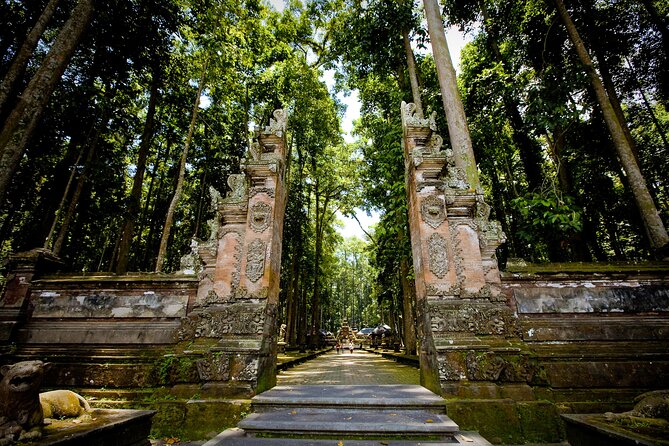
The Sacred Monkey Forest Sanctuary brings a very different energy. Here, macaques move freely through a thick jungle setting filled with moss-covered temples, old carvings, and leafy paths.
You have about 90 minutes to walk through the sanctuary. This is enough time to see the main atmosphere and watch the monkeys, though it is not a slow, all-day exploration. The macaques are part of the setting, not trained performers, so your guide’s instructions matter.
Keep your belongings secure and follow staff guidance. The tour description emphasizes close encounters, but it does not promise specific animal behavior. Some monkeys may sit near the path, while others may ignore you completely. The best approach is to watch rather than chase a photograph.
I like this stop because it joins nature and religion in a way that feels very Ubud. The jungle is not just a green backdrop. Temple structures, stone figures, and living animals share the same space, giving the visit a slightly mysterious mood without turning it into a staged attraction.
The tradeoff is that macaques can make some people uneasy. If you dislike animals moving close by, this may be the least comfortable stop. For most people, careful behavior and attention to the guide make it an entertaining part of the day.
Ubud Palace and the center of town
After Monkey Forest, you continue to Ubud Palace. The visit lasts about 90 minutes and focuses on the royal compound’s courtyard, traditional Balinese design, carved gateways, and decorative details.
This stop helps explain Ubud’s public face. The palace is one of the town’s best-known landmarks, and its architecture gives you a clear look at the formal side of Balinese design. Look for layered gateways, stone ornament, and the way open courtyards organize the compound.
The palace is not presented as a long historical lecture or a large museum visit. It is a compact architectural stop. That makes it useful in a busy day, but it may feel less personal than Mengening Temple later on.
Your guide can add the cultural background that the buildings alone cannot provide. Guides such as Ariana, Laras, and Haris received especially warm praise for explaining traditions in clear English and taking time with questions. That patience is valuable here, where the difference between decoration and religious symbolism is not always obvious.
More Rice Terrace Tours in Ubud
- Full-Day Tour to Water Temples and UNESCO Rice Terraces in Bali
★ 5.0 · 2,539 reviews - Ubud: Downhill Cycling with Volcano, Rice Terraces and Meal
★ 5.0 · 536 reviews - Ubud eBikes Tour to Tegallalang Rice Terrace
★ 5.0 · 507 reviews - Ubud Top Attractions: Waterfalls, Temples and Rice Terraces
★ 5.0 · 460 reviews
Tegalalang’s famous rice terraces
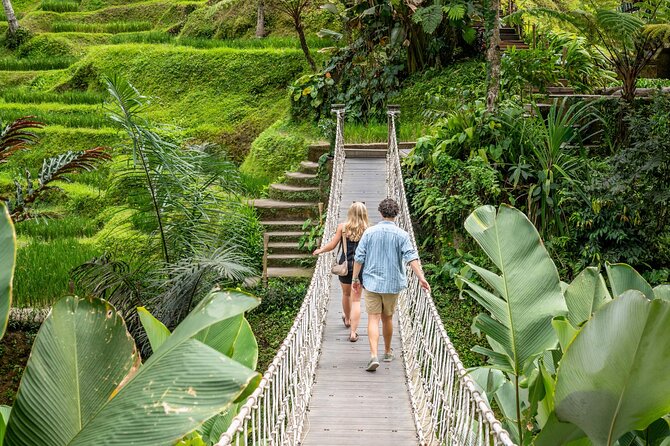
In the early afternoon, you reach Tegalalang Rice Terrace, one of Bali’s best-known rural views. From the viewpoint, you see bright-green paddies arranged in broad stepped layers along the hillside.
You have about 90 minutes. This is your big photography stop, so keep some space on your phone and do not rush the first few minutes. The view changes with the light, weather, and stage of cultivation, but the terraces remain the visual centerpiece.
It helps to set realistic expectations. The experience centers on seeing the terraces from viewpoints. The supplied details do not promise a long farm walk, a planting demonstration, or a private visit with farmers. If you want a more active rice-field experience, you may need a separate activity.
Tegalalang can also be the most commercial-feeling part of the day simply because it is so popular, though the tour information does not specify which shops or add-ons you will encounter. The value here is convenience: you reach the famous view with transport arranged and still have time for the temple visit that gives the day more depth.
Mengening Temple and the canang sari workshop
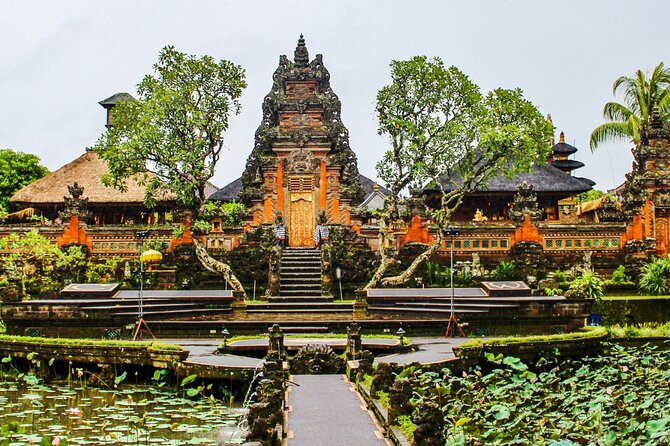
The final main stop is Mengening Temple, a quieter purification temple set in a jungle environment. You have about two hours here, the longest stop of the day, and that extra time is well used.
This is where the tour moves beyond sightseeing. You take part in an offering workshop and learn how to make a canang sari. These small arrangements commonly combine woven palm leaves, flowers, and other symbolic elements. The important point is not making a perfect object. It is understanding that offerings are part of ordinary Balinese religious practice.
The workshop gives you something to do with your hands, but its real value is what it explains. Your guide can connect the offering to gratitude, prayer, and daily routines. That makes the temples earlier in the day easier to read. You begin to see offerings not as photo props, but as small acts with meaning.
Mengening also offers a calmer setting after the macaques, palace, and rice-terrace viewpoint. You can pay attention to the temple atmosphere and the surrounding jungle rather than ticking off another famous sight.
There is one practical point to keep in mind. A purification temple is a sacred place, so respectful clothing and behavior are important. The tour does not provide detailed clothing rules, so confirm current requirements before departure if you are unsure.
Transport, timing, and group size
The day runs for about 12 hours, starting around 9:30 a.m. and returning in the late afternoon or early evening. The listed stop times add up to a full schedule, and the return journey alone is estimated at about two hours.
That makes this a better choice for a first full day in Ubud than for a relaxed final day before an evening flight. You need enough energy for repeated walks, temple visits, and time in the vehicle. Bali traffic can affect any road-based schedule, so treat the advertised duration as approximate rather than a guarantee.
The air-conditioned vehicle is a real benefit. Ubud can feel hot and humid, and moving between outdoor sites is more pleasant when you have a cool place to sit. Bottled water is included, but you should still bring sun protection and comfortable shoes.
The maximum group size is 20 people. That keeps the cost below a private tour, but the experience will not have the same flexibility as a car reserved for only you and your party. If you want extra time at one stop, the group schedule may not allow it.
Is $69 a fair price?
At $69 per person, the tour offers solid value if you want several of Ubud’s major sights in one day. You receive hotel pickup and drop-off, an air-conditioned vehicle, an English-speaking guide, entrance fees, bottled water, and the offering workshop.
The strongest value is convenience plus interpretation. You are not paying only for admission tickets. You are also paying to connect five very different places without arranging transport between them, while having someone explain what you are seeing.
A self-guided day might cost less on paper, especially for people already staying near Ubud and comfortable arranging local rides. But separate transport, entrance fees, and the time spent planning can narrow the gap. A private car would offer more control, but usually at a higher total cost.
The tour is less useful if you have already seen Monkey Forest, Goa Gajah, the palace, and Tegalalang. In that case, the Mengening visit and offering workshop may still appeal, but you could prefer a slower day focused on villages, walks, or temple rituals.
Who should book this tour?
I would choose this for a first visit to Ubud, especially if you want culture and scenery in equal measure. It suits couples, families, and solo visitors who prefer an organized day with a guide rather than a string of independent taxi rides.
It is also a good fit if Balinese customs interest you. The canang sari workshop and purification temple provide a more useful cultural encounter than simply taking pictures at a gateway.
I would think twice if you dislike long road days, crowded attractions, or seeing several major sites at a fixed pace. The day includes both popular places and quieter ones, but it is still a packed schedule.
Guide quality appears to be one of the experience’s strongest assets. If you are assigned someone like Dan, Ariana, Laras, Gunawan, or Haris, expect the cultural explanations to be a major part of the day. Drivers have also been praised for their patience, friendliness, and help with unexpected problems, including one case where a guide assisted with a lost mouth retainer.
My booking advice
Book it if you want an efficient introduction to Ubud with a clear cultural thread. The macaques and rice terraces supply the memorable pictures, while Goa Gajah, Ubud Palace, and Mengening Temple add architecture, ritual, and local meaning.
Skip it if you want a slow, private day or already know Ubud’s headline sights. The $69 price is strongest for first-time visitors who value transport, admissions, water, and a guide in one package.
Free cancellation is available up to 24 hours before the 9:30 a.m. start time. Changes or cancellations made inside that window are not accepted for a refund, so leave some room in your plans.
FAQ
How long does the Ubud tour last?
The experience lasts about 12 hours, including hotel pickup, visits to the main sites, and the return journey.
What time does the tour start?
The listed start time is 9:30 a.m.
Is hotel pickup included?
Yes. Hotel pickup and drop-off are included in the tour.
What sites are visited?
The tour visits Goa Gajah, the Sacred Monkey Forest Sanctuary, Ubud Palace, Tegalalang Rice Terrace, and Mengening Temple.
Is the Monkey Forest entrance fee included?
Yes. Entrance fees are included in the price.
Is the tour conducted in English?
Yes. An English-speaking guide is included.
How many people can join the tour?
The activity can have a maximum of 20 travelers.
Is bottled water included?
Yes. Bottled water is included.
Does the tour include an offering workshop?
Yes. The workshop teaches you about making a canang sari offering and its role in Balinese daily life.
Can I cancel for a full refund?
Yes, if you cancel at least 24 hours before the experience start time. Cancellations made less than 24 hours beforehand are not refunded.
More Monkey Forest Visits
- Bali ATV Quad Adventure – Ubud Monkey Forest and Waterfall
★ 5.0 · 261 reviews - Ubud Tour with Swing, Temple, Monkey Forest, and Waterfall
★ 5.0 · 224 reviews - Bali Quad Bike Through Gorilla Cave – Monkey Forest and Waterfall
★ 5.0 · 146 reviews - Ubud: Waterfall, Rice Terraces, and Monkey Forest Private Tour
★ 5.0 · 108 reviews
Just added around Ubud
- Bali ATV Quad Bike and White Water Rafting – All Inclusive★ 5.0 · 7 reviews
- Bali ATV Ride with Jungle Swing and Rice Terrace Tour★ 5.0 · 50 reviews
- Combo Bali ATV Ride with Ayung River Rafting All Inclusive★ 4.5 · 12 reviews
- Bali ATV Ride Adventure★ 4.0 · 22 reviews
- Melukat – The Purification Ceremony at Tirta Empul Temple★ 5.0 · 6 reviews
- Bali ATV Quad Bike with Ubud Day Tour All Inclusive★ 5.0 · 19 reviews
- Bali ATV Ride Adventure and Bali Swing Packages – All Inclusive★ 5.0 · 14 reviews
- Bali ATV Combined with Mumbul Lake And Sangeh Monkey Forest★ 5.0 · 34 reviews
Ubud Tours, compared.
Monkey Forest, Jungle Swing, Rice Terrace, and Water Temple
Read our review →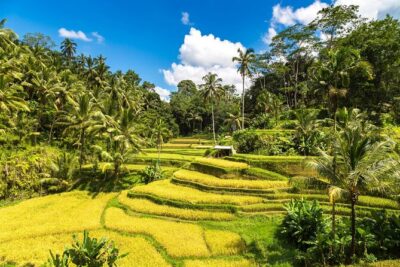

Uluwatu Sunset, Kecak Dance, and Dinner Jimbaran Beach
Read our review →
Tanah Lot and North Bali Tour: Scenic Journey
Read our review →
Body Massage Experience in Ubud Traditional Spa
Read our review →Browse the lists this tour appears in