
Reviewed · SEMINYAK TOURS
Taste & Explore Bali: Denpasar Street Food & Historic Sites
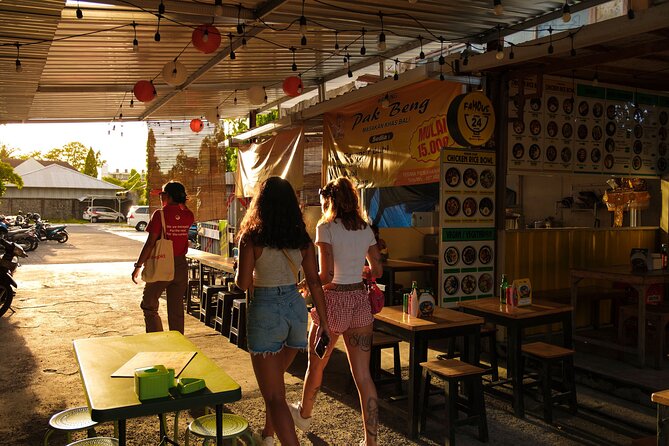
The best part of this experience is that it gets you out of Seminyak’s tourist center and into central Denpasar, where food is tied closely to daily life, ceremony, and local trade. You’ll walk from a Hindu temple and historic square to market stalls serving babi guling, bakso, sweets, fruit, and coffee.
I like the small size, capped at 12 people, and the way the tour supports four to six local food stalls instead of treating the market as a backdrop. I also like the mix of food and history, especially the chance to try babi guling, a ceremonial roast pork dish not usually served as an everyday tourist snack.
The main drawback is dietary choice. This is not suitable for vegetarians, vegans, or anyone with a gluten allergy or intolerance, and the food is local rather than adapted for young children. Bring comfortable shoes, an open mind, and enough room for several small tastings.
Key points at a glance
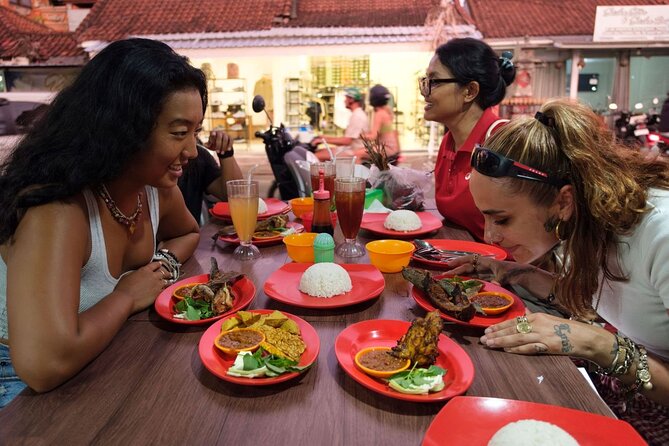
- Babi guling is the signature taste: Try Bali’s famous roast pork in a setting that explains its ceremonial role.
- Central Denpasar replaces resort Bali: The route covers Pura Agung Jagatnatha, Puputan Square, Catur Muka, Jalan Gajah Mada, and Badung Market.
- The food is bought locally: Your tastings help support several small food stalls and market sellers.
- A guide adds the cultural link: Guides such as Putra, Irfan, Lena, and Srix have led versions of this experience, with food and local customs explained along the way.
- The evening timing works well: The 4 pm start gives you daylight for temples and monuments, then a natural shift toward market food and coffee.
- The group stays personal: A maximum of 12 people makes questions and food explanations easier than on a large bus tour.
Why this Denpasar food walk is different from a resort meal
Seminyak is convenient, but it can also keep you in a narrow slice of Bali. This tour takes you into Denpasar, the island’s capital, for a short route through religious sites, civic monuments, old streets, and working markets.
That change matters. You are not simply eating Indonesian food in a restaurant designed for visitors. You are moving through places where food is bought for homes, ceremonies, and ordinary meals. The market vendors are local people who sell food for a living, and the tour aims to spread its spending across several stalls.
At about $45 per person, the price is not the same as buying one inexpensive market meal on your own. You are paying for a guide, a planned route, several tastings, historical context, and help navigating unfamiliar dishes. I consider that fair value if you want food explained rather than simply handed to you.
The value is less convincing if you already know Denpasar well, speak Indonesian, or prefer to choose every dish yourself. Independent visitors can spend less, but they may miss the background that turns a plate of pork, a bowl of soup, or a colorful rice-flour sweet into part of Bali’s culture.
More food tours in Seminyak:
- Bali Private Food Walking Tour With Locals: The 10 Tastings
★ 5.0 · 243 reviews - Bali Bites Food Tour with 15+ Tastings
★ 5.0 · 114 reviews - Small-Group Denpasar Night Food Tour
★ 4.0 · 22 reviews
Starting at Pura Agung Jagatnatha at 4 pm
The meeting point is Pura Agung Jagatnatha, at Jalan Surapati No. 7 in Denpasar. This is the city’s central Hindu temple, and it gives the tour a calm opening before the food stops begin.
You have about 15 minutes here. That is enough for an introduction and a look at the temple grounds, but not enough for a long religious visit. Dress respectfully, as you would at any Balinese temple, and listen to your guide’s instructions about where you may walk or stand.
I like this beginning because it places food in a wider setting. Balinese cuisine is not separate from religious life. Certain dishes are tied to offerings, family gatherings, and ceremonies, so starting at a temple helps explain why a food such as babi guling can carry more meaning than its ingredients suggest.
Do not expect a full temple ceremony or a detailed architectural tour. The stop is brief, and the focus is on setting the scene for the walk ahead.
Puputan Square and the 1906 resistance
From the temple, the route turns toward Puputan Square, a symbolic point in Denpasar’s story. Here, your guide explains the 1906 resistance against colonial rule and the meaning of the city’s 0 km landmark.
This is useful historical context because the square is not just an open civic space. It connects modern Denpasar with a difficult period of resistance and sacrifice. The tour gives you a short explanation rather than asking you to absorb dates from a plaque.
The stop also helps break up the food tastings. A good food walk needs pauses, and this one gives your palate and your attention a rest before the market portion.
The historical discussion is likely to be fairly compact, since the whole experience lasts only around three hours. If you want a full account of Bali’s colonial period, this tour will not replace a museum visit or a longer history walk. It does, however, give the food a useful local setting.
Patung Catur Muka and Denpasar’s old landmarks
The next stop is Patung Catur Muka, the four-faced god statue in central Denpasar. You’ll have around 15 minutes for photos and a look at nearby colonial-era features, including the Nederlandsch-Indië Sokkelklok.
This is one of the route’s best visual pauses. The statue is a clear city marker, and the old clock adds another layer to the central district’s public architecture. Your guide can connect the monument, the square, and the surrounding streets in a way that is hard to grasp when you pass through by car.
Keep your expectations measured. This is a walking tour with food at its heart, not a monument-focused architecture excursion. You will see and discuss these landmarks, but you will not spend a long time inside a historic building.
The sequence works well, though. Temple, square, statue, and old streets create a quick introduction to Denpasar before the tour turns fully toward eating.
Same base, a completely different kind of day:
- Bali Full-Day Traditional Village Sightseeing Trip All Inclusive
★ 5.0 · 3,069 reviews - Experts Bali Driver : Best Bali Private Driver for Tour in Bali
★ 5.0 · 1,339 reviews - Bali Hai Sunset Dinner Cruise
★ 5.0 · 1,173 reviews - Private Arrival Transfer: Bali Airport to Hotel
★ 4.5 · 739 reviews
Jalan Gajah Mada, roast pork, and bakso
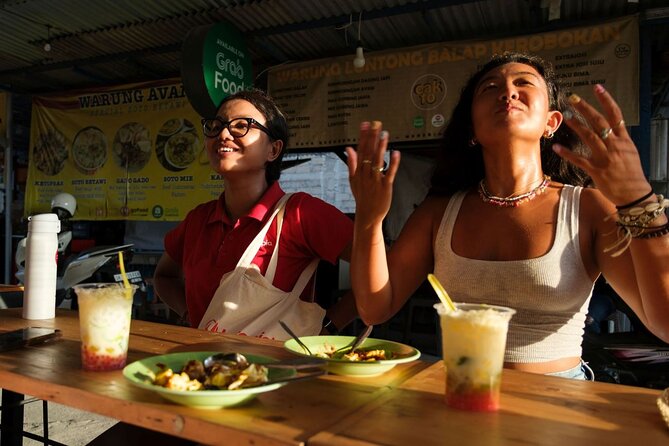
Jalan Gajah Mada brings you into the food part of the route. The street is lined with older buildings and local shops, and the group stops to try two major Indonesian favorites: babi guling and bakso.
Babi guling is Bali’s famous roast suckling pig, seasoned and cooked on a rotisserie. The important point here is not only the taste. The dish is traditionally linked to ceremonies, so trying it gives you a direct connection to Balinese custom. It is also a practical chance to ask how a food associated with special occasions appears in contemporary local eating.
Bakso offers a different experience. This Indonesian meatball soup is warm, familiar, and comforting, with a broth-based format that contrasts with the roast pork. If you are cautious about unfamiliar food, bakso is likely to be an easier introduction than some of the more unusual market items.
The portion sizes are not specified, so think of this as a series of tastings rather than a guaranteed full dinner. Additional food and drinks cost extra. If you arrive hungry, the samples may not be enough for a large appetite, but the route gives you several chances to add something if you want it.
A guide can make a real difference here. Putra has led a version of the experience with close attention to local life, while Irfan has helped explain how to choose Indonesian cakes and soup. Lena has been praised for being easy to talk with and for making the meeting point simple to find. Srix has combined food explanations with customs and landmarks. Your assigned guide may be different, but these examples show the kind of personal guidance the tour is designed to provide.
Badung Market and the sweets of Bali
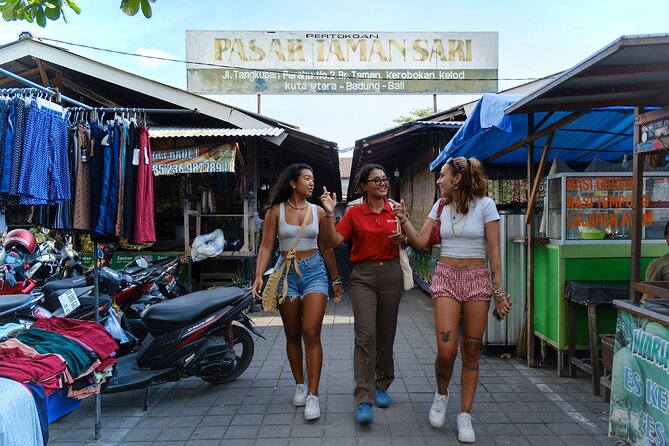
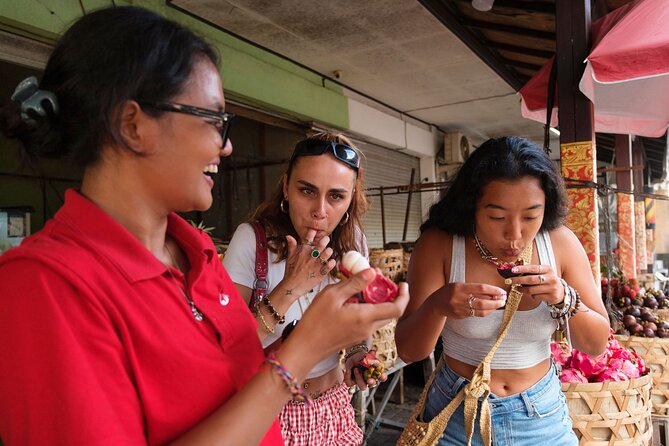
Badung Market is the main market stop, with about 30 minutes set aside for traditional jaje Bali snacks and other street food. This is where you get the clearest sense of the tour’s everyday food focus.
Jaje Bali refers to traditional Balinese sweets, often made with rice flour and coconut. They can be colorful and varied, and they are a good reminder that Indonesian snacking is not limited to fried food or noodles.
This is also the place to ask before choosing. If you do not know what a cake contains, have your guide explain it. Irfan has been especially good at showing people how to select local cakes and soup, which is the sort of small help that makes a market less intimidating.
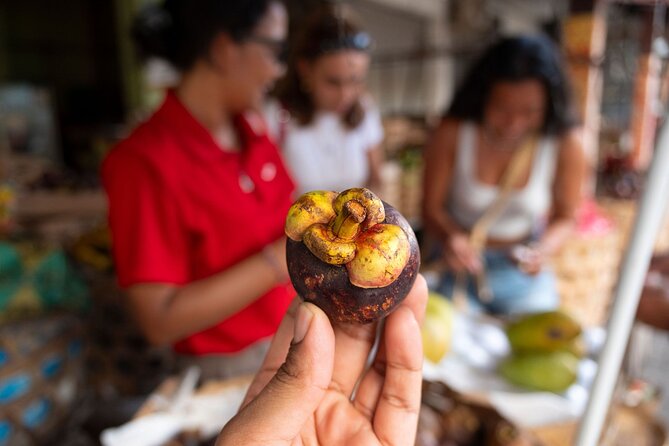
You may also encounter fruit or other foods beyond the main advertised dishes. The exact selection can change with the stalls and the day, so do not expect a fixed tasting menu. That flexibility is part of the market experience, but it also means the food can vary.
The market setting is not polished. It may be crowded, noisy, warm, or wet depending on conditions. That is not a flaw for someone seeking ordinary Denpasar, but it can be a poor fit if you want air conditioning, neatly printed menus, or careful control over ingredients.
Finishing with Arabica coffee at Nadhi Heritage
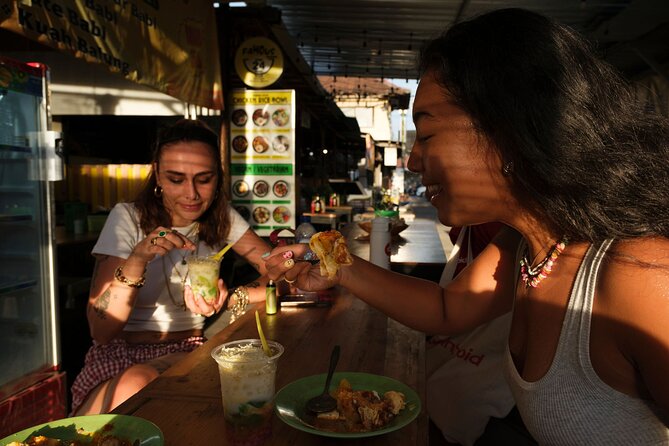
The final stop is Nadhi Heritage on Jalan Gajah Mada No. 122. You finish with Indonesian Arabica coffee, served hot or iced, and have about 30 minutes to settle after the market tastings.
This is a smart ending. Coffee gives you time to ask questions, compare the dishes, and let the guide bring the food and history together. It also makes the experience feel like an evening outing rather than a race from one snack to the next.
The coffee is described as authentic Indonesian Arabica, but the tour does not specify the growing region or brewing method. If you care about coffee technique, ask your guide or the café staff. The useful promise here is choice of hot or iced coffee in a heritage coffee shop, not a formal coffee tasting.
The end point is listed at Nadhi Heritage, near Jalan Gajah Mada No. 122, while the route information also gives a nearby Jalan Gajah Mada address. Confirm the exact meeting details on your mobile ticket and keep the phone number or booking information handy.
How much food do you actually get?
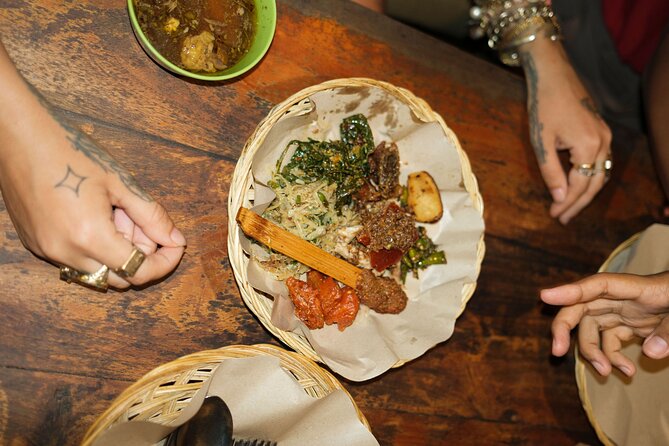
The included food covers babi guling, bakso, jaje Bali snacks, street food at Badung Market, and coffee. That is a broad sample across savory food, soup, sweets, and a drink.
Still, the experience is built around tasting. It is not presented as a large, sit-down meal. I would plan a light meal beforehand if you tend to get hungry early, then decide later if you need anything extra.
The tour also says that all food prepared at the venues is grown and bought locally. That does not mean every ingredient comes from the same farm or that every dish meets a particular dietary standard. It does mean the food is connected to local supply and local sellers rather than being a generic imported menu.
You pay for more than calories. The guide tells you what you are eating, how it fits into local customs, and how to approach foods you may not recognize. That explanation is the main reason to choose this over a self-guided market visit.
Group size, walking, and practical comfort
The maximum group is 12 people, with private or small-group arrangements available. That size is a strong middle ground: large enough to keep the price below a private tour, but small enough for the guide to answer questions and help with food choices.
The tour lasts about three hours and begins at 4 pm. You start with temples and monuments while there is still daylight, then move toward food stalls and coffee as the afternoon turns into evening.
The route is mainly on foot, with a small taxi ride possible near the end. Wear shoes that can handle uneven streets and market surfaces. You should also carry water, though the tour includes coffee and other drinks may be available for purchase.
The start is near public transportation, and the meeting point is Pura Agung Jagatnatha. The end is at Nadhi Heritage on Jalan Gajah Mada, so you should not assume you will finish back in Seminyak. Allow time and money for your onward ride.
Confirmation arrives at booking, and the ticket is mobile. Most people can participate, but children under six are not permitted. Older children can join, though there are no special kids’ meals, and the food is aimed at people ready to try local dishes.
Dietary limits you should take seriously
This is a poor choice for vegetarians, vegans, and anyone with gluten allergies or intolerances. The tour provider says the venues cannot accommodate those needs, and the focus is on specific local dishes rather than substitutions.
Pork is central to the babi guling tasting. If you avoid pork for religious, personal, or health reasons, the experience loses one of its main food highlights. You might still enjoy the history, bakso, sweets, and coffee, but you should not book expecting a modified menu.
Food preparation is local and market-based, so anyone with serious allergies should take extra care. Ask questions through the guide, but do not rely on the tour to provide a controlled allergy-safe meal.
Who will get the most from this tour?
I would choose this tour for you if you want a short introduction to Denpasar that combines food with context. It suits first-time visitors who have already seen the resort side of Bali and want a more ordinary city experience without planning every stop themselves.
It is also a good match if you enjoy asking questions. The strongest part of the tour is the link between food and custom, especially the explanation of ceremonial babi guling, local sweets, and Indonesian soup.
You may prefer another option if you want a long history tour, a large dinner, a private car, or a tightly controlled menu. The market is genuine rather than polished, and the experience asks you to accept unfamiliar textures, ingredients, and surroundings.
The guide matters. Names connected with different departures include Putra, Irfan, Lena, and Srix. Their reported strengths range from food advice and history to easy conversation and explanations of local customs. Since the assigned guide can vary, treat the small-group format as the reliable feature, not a promise of a particular person.
Should you book the Denpasar food tour?
Book it if you want local food with a story, especially babi guling, bakso, jaje Bali, and Indonesian coffee. The 4 pm start, three-hour length, central route, and 12-person limit make it easy to fit into a Bali itinerary.
The $45 price is reasonable when you value a guide, multiple stops, historical background, and support for local vendors. It is less attractive if your only aim is to eat cheaply or if you need vegetarian, vegan, gluten-free, or child-specific food.
For the best fit, arrive ready to walk, keep your dinner plans flexible, and treat the market conditions as part of the experience. Cancel at least 24 hours before the 4 pm start for a full refund. Within 24 hours, the booking is nonrefundable.
FAQ
Where does the tour start?
The tour starts at Pura Agung Jagatnatha, at Jl. Surapati No. 7, Dangin Puri, Denpasar. The scheduled start time is 4 pm.
Where does the tour finish?
The tour finishes at Nadhi Heritage on Jl. Gajah Mada No. 122 in Denpasar.
How long does the experience last?
The experience lasts about three hours.
What food is included?
You will taste babi guling, bakso, traditional jaje Bali snacks, and other street food at Badung Market. The experience also includes Indonesian Arabica coffee, served hot or iced.
Can vegetarians, vegans, or people with gluten allergies join?
No. The tour provider says it cannot accommodate vegetarian or vegan diets or gluten allergies and intolerances.
Are young children allowed?
Children under six are not permitted. Older children can participate, but there are no special kids’ meals, and the food is local and authentic rather than adapted for children.
More Historical Tours in Seminyak
- Bali Unesco World Heritage Sites Tour (Private & All-Inclusive)
★ 5.0 · 91 reviews - Exquisite UNESCO World Heritage Sites in Bali
★ 5.0 · 9 reviews - Full-day Ubud Private tour : Cultural Heritage
★ 5.0 · 5 reviews - Ubud Cultural and Historical Guided Tour with Transfer
★ 5.0 · 4 reviews
Just added around Seminyak
- Ubud Private Tour★ 5.0 · 36 reviews
- Kuta Seminyak Scooter Lessons★ 5.0 · 40 reviews
- Bali Airport Transfers | Bali Airport Welcome pick up | Bali Airport Taxi★ 4.0 · 27 reviews
- Zero Gravity Flotation Therapy in Canggu Bali by Solace Float★ 5.0 · 36 reviews
- Best of North Bali: Banyumala Waterfall, Handara Gate and Temple★ 5.0 · 4 reviews
- Wonderful Bali In 3 Days Private Tour★ 5.0 · 56 reviews
- Ubud Tubing Adventure Holy Spring Temple Private Guided Tour★ 5.0 · 49 reviews
- Surf lesson | Energy surfschool krui★ 5.0 · 3 reviews
Seminyak Tours, compared.
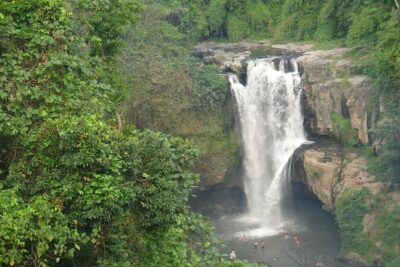
Bali Full-Day Traditional Village Sightseeing Trip All Inclusive
Read our review →

Ubud Hot Springs and Waterfall Private Guided Tour
Read our review →
Bali Secret Waterfall Tour – Private and All-Inclusive
Read our review →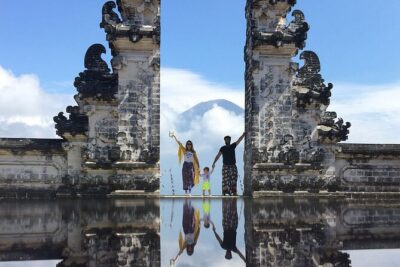

Uluwatu Sunset Tour: Kecak and Fire Dance with Jimbaran Dinner
Read our review →
Bali Blue Lagoon Snorkeling – Lunch and Transport All Inclusive
Read our review →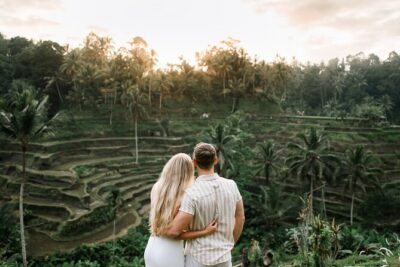
Browse the lists this tour appears in