
Reviewed · UBUD TOURS
Sidemen Trekking: A Walk from a Different Perspective
Sidemen is Bali at a slower, more useful pace. This two-hour walk leads from the local market through village lanes and working rice fields, then follows irrigation channels toward views of Mount Agung. The route uses paths that are easy to miss without someone who knows the area.
I like the close look at daily village life, especially the explanations of rice growing, local crops, offerings, cooking, and Balinese Hindu customs. I also like the small group size, capped at 10 people, and the low price of $13.75, which makes this a strong value for anyone staying near Sidemen.
The main catch is that this is an easy country walk, not a demanding hike. Some paths are narrow, raised, muddy, or slippery, and you need decent balance. It also ends away from the starting point, so arrange your ride home before setting out.
Key points at a glance
- Rice-field paths used by local farmers: Walk beside paddies and irrigation channels rather than viewing the terraces only from a road.
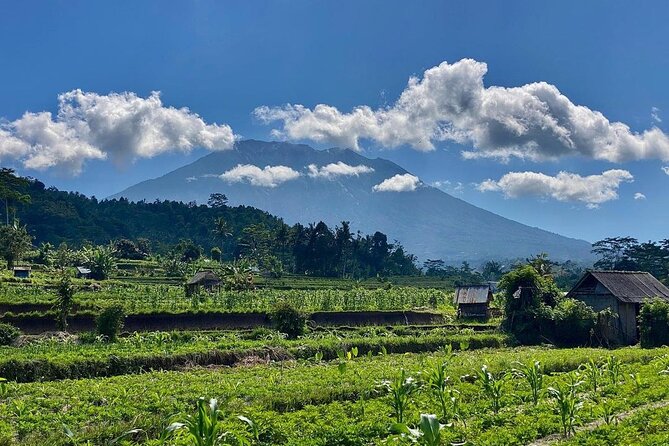
- Mount Agung views: The route points toward Bali’s great volcano and offers wide views across the terraces when conditions are clear.
- Local guides with village ties: Guides named Adi, Darya, Daria, and Wayan are praised for explaining farming, religion, history, and village life.
- A gentle two-hour outing: The walk covers roughly 4 kilometers according to one account, with frequent stops for photos and conversation.
- A practical transport issue: Start at Pasar Sidemen and finish at Warung Ume Anyar in Ogang Village, about 3 kilometers apart by road.
- Good value at $13.75: Bottled water is included, while tips and hotel transport are not.
Why Sidemen makes a better walk than a viewpoint stop
Many people see Bali’s rice terraces from a roadside lookout, take a few photos, and move on. Sidemen gives you a more grounded view. You walk beside the fields, watch how water reaches them, and pass through places where farming and religious life still shape the day.
That difference matters. The scenery is attractive, but the guide adds the real value. You learn how rice is grown, what happens after harvest, which other crops are planted, and how ingredients such as chilies fit into local food. The walk also brings up changes in Bali and the pressure created by rapid tourism growth.
I would choose this experience if you want a gentle introduction to rural Bali rather than a long hike. It is also a good fit if you prefer conversation and local context over a simple photo stop.
The activity has a 5 out of 5 rating from 94 ratings, with 99 percent recommending it. Those figures point to a consistently well-received experience, but they do not change the basic physical demands: you still need to watch your footing.
More walks and treks around Ubud:
- Mount Batur Sunrise Hike and Natural Hot Spring Option
★ 5.0 · 1,927 reviews - Mount Batur Sunrise Hike with Breakfast
★ 5.0 · 1,757 reviews - Mount Batur Sunrise Trekking Private All Inclusive
★ 5.0 · 906 reviews
Starting at Pasar Sidemen before the fields
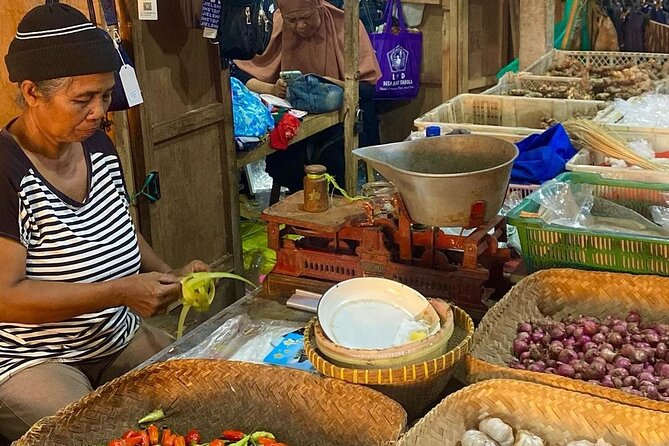
The meeting point is Pasar Sidemen, the traditional market on Jl. Sidemen. Look for the shop marked Upa Boga. This detail is worth saving on your phone, since a market area can be confusing if you arrive in a car and expect a large tour desk.
If you book a morning session, you can visit the market before the walk. Pasar Sidemen is open from 5:00 AM to 10:00 AM, so an early start gives you time to see local buying and selling before the trek begins. The tour itself does not include hotel pickup, so you need to arrange transport to the market.
If you stay in Sidemen, ask your hotel to arrange the ride. The operator does not recommend Grab for hotel pickup because some Sidemen hotels allow Grab drivers to drop off visitors but not collect them. This is a small logistical point, but it can save you an awkward wait at the start.
The group maximum is 10 people. That is small enough for questions and easier movement along narrow paths, though the exact number in your group can vary.
From village lanes to rice terraces
The walk begins through the traditional village and then climbs toward the rice paddies. There is no clear, paved step-by-step trail through every section. You follow local routes toward Mount Agung, with the guide choosing the practical line through the fields.
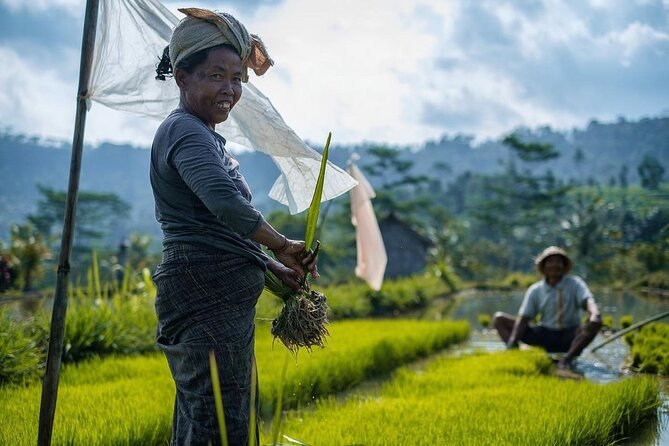
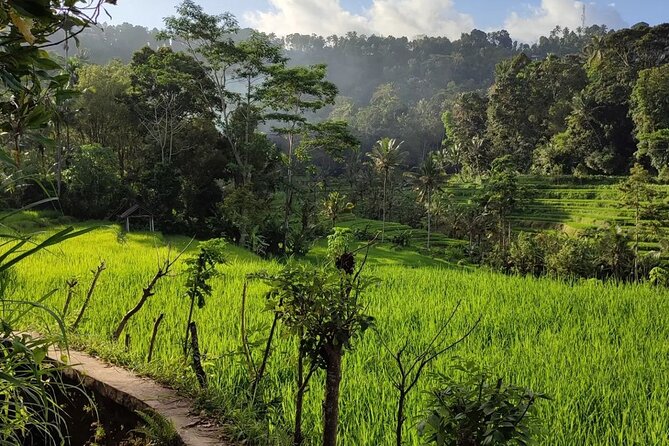
This is where the experience earns its title. You are not simply looking across a terrace from a road. You are walking on the same kind of narrow paths used by farmers, sometimes with a raised paddy edge on one side and an irrigation channel on the other.
The route goes up and down streets before reaching the fields. It is not described as steep or strenuous, and several accounts call it an easy walk. Still, easy does not mean effortless for every person. Balance matters more than endurance, especially where the paddy edges are narrow.
Wear hiking shoes or sturdy walking shoes with good grip. Bring a sun hat, sunscreen, and sunglasses. Expect the possibility of dirt or mud on your footwear, particularly after rain. One useful way to think about the route is this: it is physically light, but it demands attention.
Following the irrigation water toward Mount Agung

The irrigation system is one of the most interesting parts of the outing. Rather than treating the rice fields as a pretty backdrop, the walk follows the water that feeds them. Your guide can explain how farming depends on this flow and how rice fits into everyday life.
The direction toward Mount Agung adds a strong sense of place. On a clear day, the volcano forms a powerful background to the terraces. The views change as you move, which is more rewarding than stopping at one fixed lookout.
Weather matters here. Clouds or rain can affect both visibility and footing. The activity requires good weather, and the provider may offer another date or a full refund if poor weather forces cancellation.
You will also see more than rice. Accounts of the route include other crops, flowers used in religious offerings, and chili fields. December can fall after some rice has been harvested, so the fields may not all be bright green. That is not a flaw, but it does mean the scene changes with the farming calendar.
More walking tours in Ubud:
- Ubud Guided Walking Tour
★ 5.0 · 79 reviews - Ubud Countryside Tour: Campuhan Ridge Walk and Rice Terrace
★ 5.0 · 72 reviews - Tetebatu Walking Tour – Rice Terraces, Waterfall & Monkey Forest
★ 5.0 · 349 reviews - Small-Group Walking and Food Tour by Night in Yogyakarta
★ 5.0 · 313 reviews
Crossing the wooden bridge and passing local temples
A hanging wooden bridge forms one of the route’s memorable details. It is suitable for motorbikes and people, so it is part of ordinary local transport rather than a purpose-built attraction. Crossing it gives the walk a practical, lived-in feel.
You also pass a village temple used by local people for prayer. This is an important reminder that the route moves through an active community, not an open-air show arranged only for visitors. Your guide can explain how Balinese Hindu practice connects with farming, offerings, family life, and the daily rhythm of the village.
Be respectful around the temple and private homes. The provided information does not specify a dress code, so follow your guide’s instructions and avoid treating places of worship as mere photo props.
The walk includes local roads as well as field paths. That mix helps you understand how the village fits together, but anyone expecting two straight hours on remote trails may find the street sections less exciting.
What the guides add to the walk
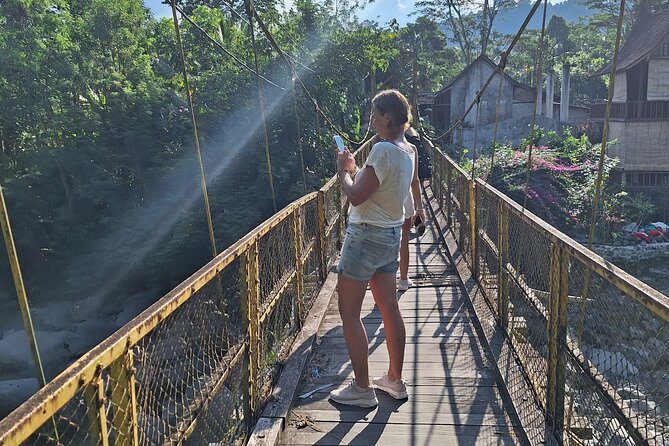
The strongest part of the experience is the guide’s local knowledge and personality. Several guides are named in the accounts: Adi, Adidas, Darya, Daria, and Wayan. The names may reflect different guides or different spellings, so you should not assume a particular person will lead your departure unless the provider confirms it.
The guides are described as friendly, funny, patient, and easy to talk with. They explain the rice-making process, farming methods, local cuisine, religious beliefs, and the history of the area. Some know the people working in the fields and the residents passed along the way, which can make the walk feel less scripted.
A good guide also changes the pace. The route includes stops for photos and questions, so you are not racing to cover ground. One account describes nearly 4 kilometers in two hours, but the distance is less important than the terrain and the stops.
This is an especially good choice if you like asking questions. You can learn how crops are used, how agriculture has changed, and how local life is tied to the land. If you only want exercise, the tour may feel too slow.
How difficult is this two-hour trek?
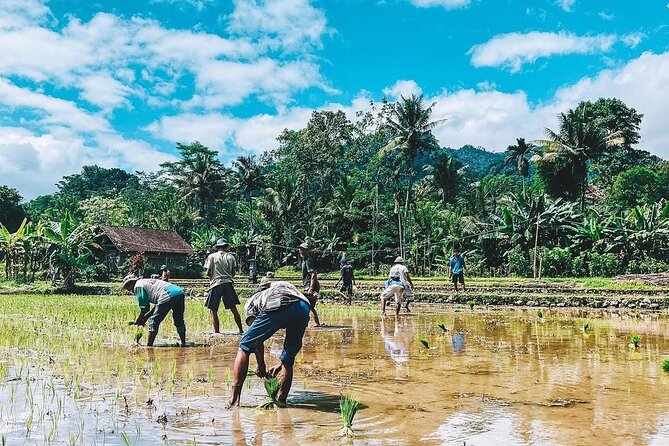
The word trekking may set the wrong expectation. This is best described as an easy to moderate village walk with uneven sections. It does not appear designed for serious hikers, and one account specifically notes that anyone seeking a hard hike is choosing the wrong activity.
The challenge comes from the surface:
- Narrow elevated paths beside rice paddies
- Irrigation channels near the walking line
- Uneven ground through fields and villages
- Possible mud and slippery patches
- Short uphill and downhill sections
You should have a moderate level of fitness, but balance and agility are the bigger concerns. The walk may not suit someone who is unsteady on narrow paths, even if they can comfortably walk for two hours on a normal road.
Good shoes are not optional advice here. Sandals and smooth-soled sneakers could make the wet or sloping sections harder. Carry water, though bottled water is provided, and protect yourself from the sun.
The route ends at Warung Ume Anyar Restaurant in Ogang Village. This is a useful finish because you can relax with a drink or meal after the walk. It also means you are not returned to the market automatically.
The finish at Warung Ume Anyar and the ride home

Arrange pickup before the walk. Tell your driver to meet you at Warung Ume Anyar about two to two and a half hours after the start. Allow extra time if you have a flight, a scheduled transfer, or another fixed activity.
Grab is available in the area, but there are only a few drivers. Some may request offline payment or an extra fee. Prearranging a driver is the sensible choice, especially if you are traveling with luggage or a group.
If needed, you can walk back to the starting point. The distance is about 3 kilometers, or 30 to 40 minutes along the main road. That option is practical only if you still have energy and do not mind adding road walking after the field route.
Hotel pickup and drop-off are not included. Bottled water is included, while tips are not. These costs are easy to manage, but the transport detail affects the true price and convenience of the experience.
Is $13.75 good value?
At $13.75 per person, this is inexpensive for a two-hour guided activity. You are paying for route-finding, local interpretation, a small group limit, and access to paths you might not confidently locate on your own. Bottled water is included as well.
The strongest value comes from the explanation, not the distance. You could walk along public roads for free, but you would miss much of the farming detail and may not find the narrow routes through the paddies. You also would not necessarily know which paths are safe or where the best views are.
The price becomes less attractive if you need to arrange a costly private transfer from another part of Bali. The activity is based in Sidemen, and no hotel transport is provided. It makes the most financial sense if you are already staying nearby or have a driver touring the area.
Group discounts are available. With a maximum of 10 people, the outing should remain fairly manageable, though a private booking may offer a quieter pace if that option is available for your date.
Who should book this Sidemen walk?
I would recommend it to you if you want:
- A short introduction to rural Bali
- A local guide rather than a self-guided field walk
- Stories about rice farming, crops, religion, and village customs
- Mount Agung views and changing terrace scenery
- A relaxed activity between longer sightseeing days
- A small group rather than a large coach outing
It suits couples, solo visitors, and families with older children who can manage uneven ground. The moderate fitness requirement is clear, and the route rewards curiosity more than athletic ability.
I would think twice if you want a strenuous hike, a fully paved route, or hotel-to-hotel convenience. I would also avoid booking it immediately before a time-sensitive departure, since the walk can take two to two and a half hours and transport from the finish requires planning.
You can cancel for a full refund up to 24 hours before the local start time. Changes made inside that window are not accepted, and poor weather may lead to a new date or a full refund.
Should you book it?
Book this Sidemen walk if you want to understand what the rice terraces mean, not just photograph them. The combination of farmer paths, irrigation channels, village temples, local crops, and Mount Agung gives you a useful look at Bali beyond the southern resort strip.
The decision comes down to your feet and your expectations. Bring proper shoes, accept that a little mud is part of the deal, and arrange your ride from Warung Ume Anyar in advance. If you do that, $13.75 buys a personable, informative morning and a side of Bali that is easy to miss from the main road.
FAQ
Where does the Sidemen trekking tour start?
The walk starts at Pasar Sidemen, the Sidemen Traditional Market, on Jl. Sidemen. Meet at the shop with the sign Upa Boga.
Where does the tour finish?
The walk ends at Warung Ume Anyar Restaurant in Ogang Village, on Jl. Raya Sidemen Ogang.
How long does the activity take?
The walk lasts approximately two hours. You should allow two to two and a half hours from the start for the full activity.
How much does the tour cost?
The listed price is $13.75 per person. Group discounts are available.
Is hotel pickup included?
No. Hotel pickup and drop-off are not included. You must arrange transport to Pasar Sidemen and from Warung Ume Anyar.
What should I bring?
Bring a sun hat, hiking boots or sturdy walking shoes, sunscreen, and sunglasses. Bottled water is included.
Is the walk difficult?
The walk is generally easy, but you need moderate physical fitness and good balance. Some rice-field paths are narrow, raised, uneven, or slippery.
Can I visit the market before the walk?
Yes. Pasar Sidemen is open from 5:00 AM to 10:00 AM. A morning booking is recommended if you want to explore the market before the walk.
Can I return to the starting point on foot?
Yes. The walk back is about 3 kilometers, or 30 to 40 minutes along the main road.
What happens if the weather is poor?
The activity requires good weather. If it is canceled because of poor weather, you will be offered another date or a full refund. You can also cancel for a full refund up to 24 hours before the start time.
Just added around Ubud
- Bali ATV Quad Bike and White Water Rafting – All Inclusive★ 5.0 · 7 reviews
- Bali ATV Ride with Jungle Swing and Rice Terrace Tour★ 5.0 · 50 reviews
- Combo Bali ATV Ride with Ayung River Rafting All Inclusive★ 4.5 · 12 reviews
- Bali ATV Ride Adventure★ 4.0 · 22 reviews
- Melukat – The Purification Ceremony at Tirta Empul Temple★ 5.0 · 6 reviews
- Bali ATV Quad Bike with Ubud Day Tour All Inclusive★ 5.0 · 19 reviews
- Bali ATV Ride Adventure and Bali Swing Packages – All Inclusive★ 5.0 · 14 reviews
- Ubud: ATV Quad Bike, Jungle, Waterfall, Tunnel and Rafting Trip★ 5.0 · 5 reviews
Ubud Tours, compared.
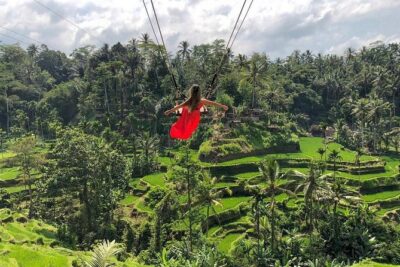
Monkey Forest, Jungle Swing, Rice Terrace, and Water Temple
Read our review →


Uluwatu Sunset, Kecak Dance, and Dinner Jimbaran Beach
Read our review →
Tanah Lot and North Bali Tour: Scenic Journey
Read our review →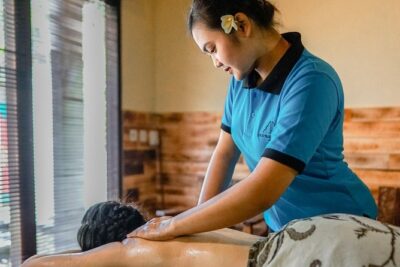
Body Massage Experience in Ubud Traditional Spa
Read our review →Browse the lists this tour appears in