
Reviewed · NUSA PENIDA TOURS
Reef Rehabilitation Course and Snorkeling
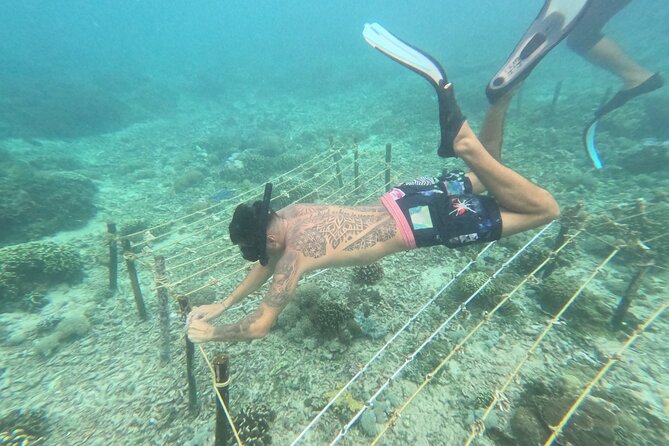
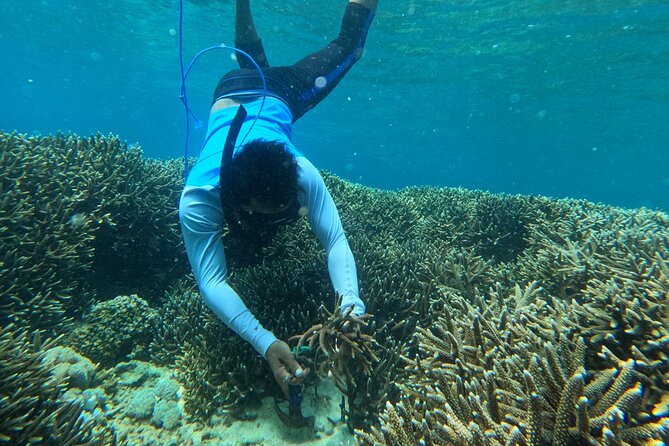
The most meaningful part of this Nusa Penida outing is the hands-on work. You do not simply look at a reef or pay for a symbolic coral adoption. You learn how the nursery works, prepare fragments, tie them to ropes, and plant 70 corals across 4 square meters of seabed.
I like the direct connection between lesson and action, and I like the small maximum of 10 people, which should leave more room for questions and careful instruction. The local lunch, knot-tying lesson, three guided snorkeling sessions, and school visit on Saturdays add real community value. The main consideration is physical: you need to swim comfortably and manage a moderate level of activity in the water.
Key points to know
- 70 corals per person: Your work covers about 4 square meters of reef.
- Three water sessions: You visit the nursery, collect coral fragments, and plant them.
- Local guidance: Nyoman, Festi, and their team lead the conservation work.
- Small group size: No more than 10 people take part.
- Saturday bonus: The program may include English teaching and conservation work at a local school.
- Practical value: The $62.61 price includes lunch, snorkeling gear, restoration materials, and a gift for local children.
Why this reef course is different from coral adoption
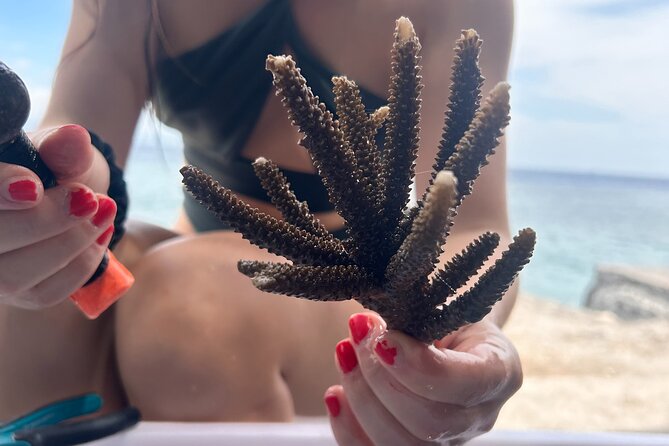
Many conservation outings stop at a talk, a photo, or a donation. Here, you handle the work yourself. The course explains coral biology and ocean conditions, then takes you through the practical steps needed to restore a damaged reef.
That matters because you can see how the pieces fit together. Healthy coral is not just a pretty surface under the water. It provides habitat for marine life and helps support the wider reef system. By learning how fragments are grown and attached, you get a clearer sense of the time and care needed to rebuild a reef.
The claimed output is unusually specific: each person plants 70 corals over roughly 4 square meters. I would treat that figure as a measure of your work for the day, not as a promise of how many corals will survive. Coral restoration depends on ocean conditions, placement, and long-term care. Still, the activity gives you a concrete role rather than a vague conservation message.
The seven-year local effort also adds useful context. This is presented as an ongoing community project, not a one-day program created only for visitors. That local connection is one of the strongest reasons to choose it over a standard snorkeling trip.
More snorkelling spots near Nusa Penida:
- ️Nusa Penida by Private Boat – Snorkeling 4 spots, Swim with Mantas + Land Tour
★ 5.0 · 6,424 reviews - Nusa Penida day trip: boat, 4 snorkeling, Manta rays & Land tour
★ 5.0 · 2,033 reviews - Nusa Penida Snorkeling Adventure (Private & All-Inclusive)
★ 5.0 · 1,197 reviews
Meeting the team at Ecotourism Nusa Penida
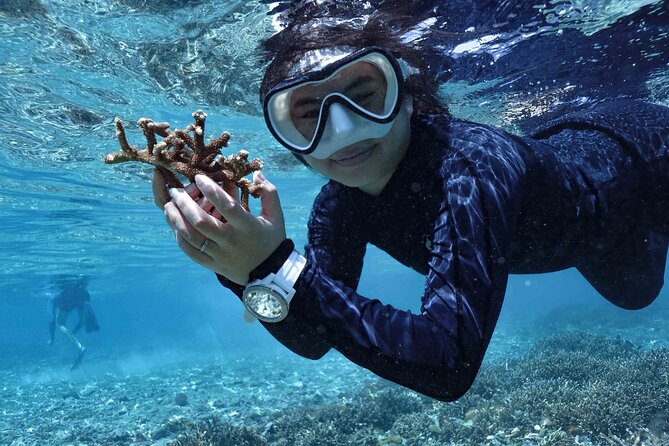
You begin at Ecotourism Nusa PenidaBuyuk on Jalan in Ped, Nusa Penida. The activity lasts about six hours and returns to the same meeting point, so you do not need to arrange a separate end location.
Nyoman and Festi are named members of the team, along with the wider local staff. Their role is more than guiding you from one stop to the next. They explain the reef work, help with the restoration materials, and lead the snorkeling portions.
The group limit of 10 is important. Coral planting requires attention, especially when you are handling small fragments and working around a nursery or seabed structure. A small group should make it easier to follow instructions and ask about coral care without being lost in a large crowd.
You receive confirmation when booking, and the mobile ticket is convenient for a day when you may not want to carry paper. The meeting point is fixed, so check your route to Ped before booking. No transport to or from the meeting point is listed.
Starting with coral biology and ocean conditions
The first teaching session covers coral biology, the value of reef ecosystems, and the ocean conditions that affect them. This foundation is useful because it puts the practical work into context.
You learn how damaged ecosystems can be brought back through nursery work and careful planting. The lesson should help you understand why the team does not simply place coral fragments anywhere. Current, water conditions, and the condition of the reef all affect restoration work.
I like this part because it gives you something to watch for during the later snorkeling sessions. Instead of seeing only rocks and coral shapes, you can look for nursery structures, attached fragments, and signs of the work being carried out.
The presentation is not described as a formal classroom course, so expect a practical introduction rather than an academic qualification. If you want detailed marine science or professional restoration training, this is probably too short. If you want a clear working explanation before handling coral, it should fit well.
Seeing how the coral nursery works
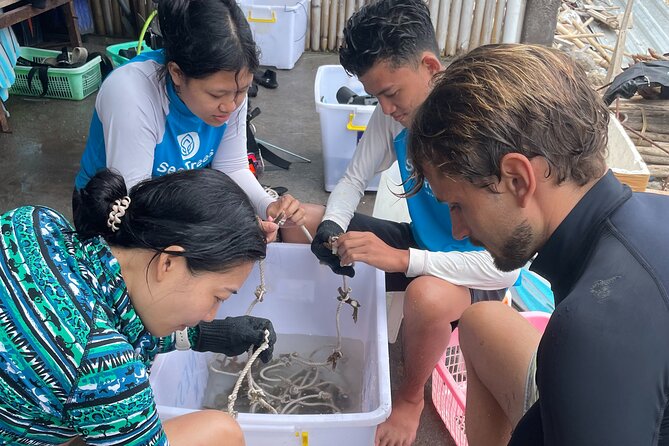
Next, you visit the coral nursery and learn how the team cultivates fragments. This is one of the most valuable stops because a nursery shows the stage between damaged reef and new planting.
You get to see where coral fragments are raised before being placed on the seabed. The activity then moves from observation to participation, as you harvest fragments for your own restoration work.
That order matters. You first see the system, then handle the material. I prefer this approach to being handed equipment and sent straight into the water because you understand what you are doing and why the fragments matter.
The nursery visit is also a good reason to bring patience. Coral work is careful rather than fast. You should expect instruction, preparation, and repeated steps instead of nonstop snorkeling.
More Nusa Penida island days:
- Nusa Penida All-Inclusive Day Trip
★ 5.0 · 3,489 reviews - Bali Nusa Penida West Private All-Inclusive Tour
★ 5.0 · 1,277 reviews - Open Water Course in Nusa Lembongan – Get Certified on remote island (next Bali)
★ 5.0 · 864 reviews - Nusa Penida One Day Trip with All-inclusive
★ 4.5 · 743 reviews
Harvesting fragments during the first snorkeling session
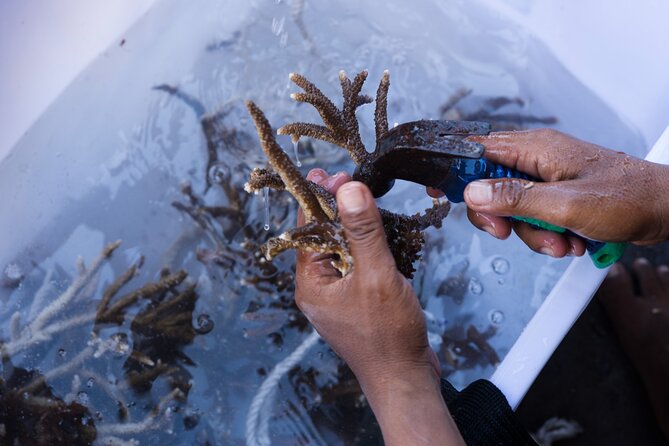
The first guided snorkeling section focuses on collecting coral fragments. Snorkeling equipment is included, as are the materials used for restoration.
You need to be comfortable in the water and able to swim. The course is not designed for someone who is only happy standing in shallow water or holding onto a flotation aid. The information provided does not give water depth, current strength, or the exact distance covered, so ask the team about those conditions if they matter to you.
The work also calls for care. Coral can be fragile, and the point of the session is to collect suitable fragments for cultivation and planting. Listen closely to the team and avoid touching anything that is not part of the instruction.
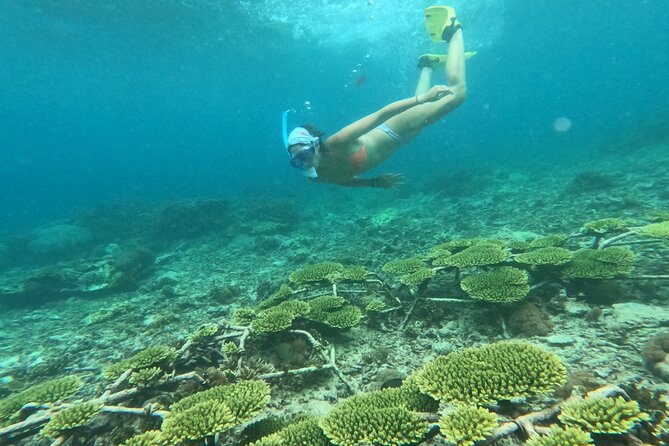
This is one of three guided snorkeling experiences during the day. The three-part format breaks the water time into clear tasks: see the nursery, collect material, and plant the corals. It also gives you a chance to pause between sessions.
Lunch at Coral Cafe
A local lunch at Coral Cafe is included. This is a welcome practical feature in a six-hour activity, especially when the day includes repeated time in the water and hands-on work.
The meal is more than a convenience. Eating at a local cafe keeps the schedule connected to the community rather than treating the reef as a separate attraction. It gives you a chance to rest, dry off, and talk with the team before the next stage.
The menu is not specified, so do not book this expecting a particular dish or special diet unless you confirm it ahead of time. Personal expenses are not included, which means you should budget separately for anything beyond the listed lunch and equipment.
Learning to tie knots underwater
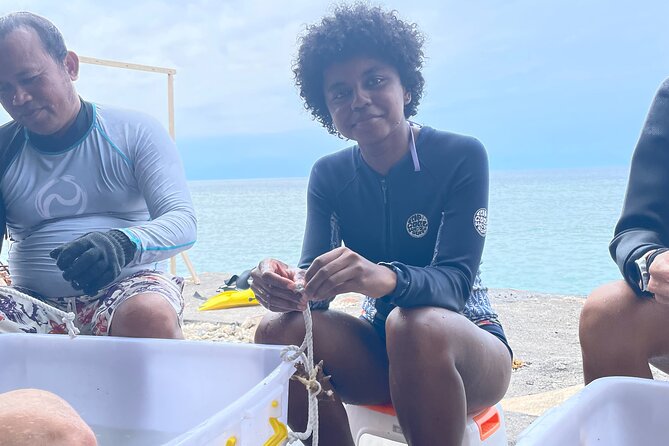
The knot-tying lesson is a small detail, but it is one of the most distinctive parts of the program. You learn how to prepare the ropes and handle the coral fragments before planting them.
Doing this underwater adds a practical challenge. Snorkeling equipment, water movement, and limited hand control can make a simple knot less simple. The lesson helps you understand the physical work behind reef restoration, rather than treating planting as a ceremonial gesture.
After collecting the fragments, you prepare the ropes with the coral. The team then guides you through attaching them to the restoration area. This is where the course becomes most hands-on, and where careful listening matters most.
You do not need to arrive with knot-tying skills. The lesson is part of the activity. Still, anyone who dislikes getting wet, working slowly, or following detailed instructions may find this portion less enjoyable than ordinary reef sightseeing.
Planting 70 corals over 4 square meters
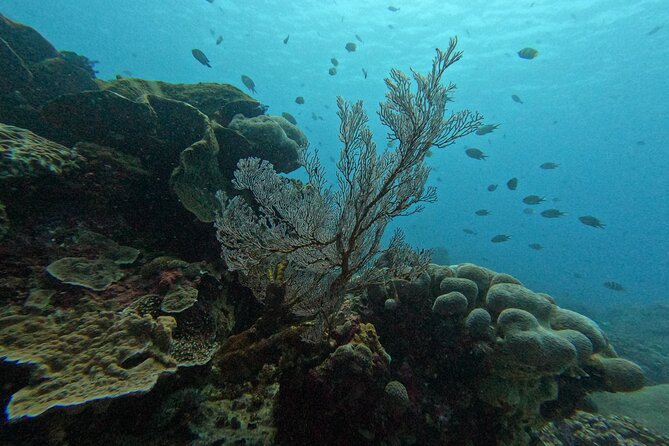
The main task is planting 70 corals per person across about 4 square meters. That is a substantial amount of work for one outing, and it gives the day a clear finish line.
The number also helps you understand the scale of the project. One person’s contribution is modest beside a whole reef, but a steady program with many participants can add up. The value comes from joining an established process and helping with real materials, not from believing one morning will repair an entire ecosystem.
The final planting session is likely to feel slower than a normal snorkeling stop. You must position the rope, secure the fragments, and work with care around the restoration area. That may be less exciting than swimming freely, but it is the reason this course has more substance than a standard marine excursion.
You should also keep your expectations realistic. Coral restoration is a long-term effort, and the activity does not promise that every fragment will survive. What you receive is a chance to take part in the work and understand the process.
Saturday school activities and local connection
On Saturdays, the program includes a visit to a local school. The day may involve teaching English and conservation activities such as a beach cleanup with children.
This makes Saturday a particularly appealing day to book if community contact is important to you. You may see how environmental education connects with everyday life on the island, and the course includes a gift for the local kids and school.
The school portion is listed specifically for Saturdays, so do not assume it is part of every departure. If this is the main reason you want to book, confirm the schedule before paying.
The activity also asks you to connect with local culture and community conservation efforts. That promise is supported by the school work, local lunch, and locally led reef program. It is a stronger community angle than a tour that simply arrives at a snorkeling site and leaves again.
What the $62.61 price includes
At $62.61 per person, this is not the cheapest way to spend six hours around Nusa Penida. A basic snorkeling trip may cost less because it does not include teaching, restoration materials, or supervised coral planting.
The better comparison is with a conservation workshop. Your price includes:
- Coral conservation instruction
- Three guided snorkeling sessions
- Snorkeling equipment
- Coral restoration materials
- Lunch at Coral Cafe
- The work of planting 70 corals
- A gift for local children and the school
Typical nonprofit coral adoption programs can cost hundreds of dollars, according to the operator. You should not read that as a guarantee of financial equivalence, but it does show why the price is notable. You receive a physical activity, meals, equipment, and a direct role in the restoration process.
I see the strongest value in the combination of education and action. If you only want to swim over a reef, part of your money is going toward a course you may not use. If you want to spend time learning and helping, the price is fair for a small-group, six-hour program with materials included.
Who should book this Nusa Penida activity
I would recommend it to you if you can swim comfortably, enjoy structured outdoor activities, and want your time in Bali to include a conservation purpose. It suits people who prefer a local project to a polished sightseeing product.
It is also a good fit for families with older children or teenagers if everyone can manage the water work and follow instructions. The Saturday school visit may be especially worthwhile for people interested in community programs, English teaching, or beach cleanup work.
You may want to choose a different outing if you want a relaxed beach day, a private boat, extensive free swimming, or a short activity. Six hours is a serious block of time, and the schedule includes physical work rather than only sightseeing.
A moderate fitness level is required. You should be able to swim comfortably, and you should be ready for several water sessions. Service animals are allowed, though the combination of snorkeling, underwater knot work, and reef planting may still require a careful discussion with the provider.
Booking, cancellation, and useful planning notes
This activity is booked about 38 days ahead on average, which suggests you should not leave it until the last moment if your Nusa Penida schedule is fixed. The small group limit also gives you a reason to reserve early.
Free cancellation is available until 24 hours before the local start time. Cancellations or changes made inside that 24-hour window are not accepted for a refund.
Personal expenses are separate from the included lunch, equipment, and restoration supplies. Since the meeting point is in Ped and no transfer is listed, plan your own way there and back. The activity ends where it starts.
Should you book the reef rehabilitation course?
Book it if you want more than a coral-viewing trip. You will learn the basics of reef restoration, visit a nursery, collect fragments, practice underwater knots, and plant 70 corals with a local team. Nyoman, Festi, and their staff give the day a clear community connection, especially on Saturdays.
Skip it if you cannot swim comfortably, want an unstructured day, or are mainly seeking long stretches of free snorkeling. At $62.61, the value is strongest when you take part in every stage rather than treating the activity as a standard reef tour.
For an active, small-group conservation day in Nusa Penida, I would book it. Choose Saturday if the school and beach cleanup work appeal to you, and leave enough time in your schedule for the full six-hour program.
FAQ
Where does the reef rehabilitation course begin and end?
It begins at Ecotourism Nusa PenidaBuyuk on Jalan, Ped, Nusa Penida, Klungkung Regency, Bali 80771, Indonesia. The activity ends back at the same meeting point.
How long does the activity last?
The course lasts approximately six hours.
How many corals does each person plant?
Each person plants 70 corals over approximately 4 square meters of reef.
Is snorkeling equipment included?
Yes. Snorkeling equipment is included in the price.
Is lunch included?
Yes. Lunch at Coral Cafe is included.
What conservation work takes place?
You learn about coral biology and reef ecosystems, visit a coral nursery, harvest fragments, prepare ropes, tie knots underwater, and plant coral fragments on the seabed.
Is there a school visit?
On Saturdays, the program includes a visit to a local school, with English teaching and conservation activities such as beach cleanups with children.
How fit do I need to be?
You need a moderate level of physical fitness and should be able to swim comfortably.
What is the cancellation policy?
You can cancel at least 24 hours before the local start time for a full refund. Cancellations or changes made less than 24 hours before the start time are not accepted for a refund.
Just added around Nusa Penida
- Bali 2 Days and 1 Nights of Nusa Penida and Lembongan Tour★ 5.0 · 13 reviews
- All Inclusive Nusa Penida Tour Package★ 5.0 · 10 reviews
- All Inclusive Nusa Penida Private Tour★ 5.0 · 15 reviews
- Bali: Nusa Lembongan Snorkeling-Island Tour Daytrip-All Inclusive★ 5.0 · 3 reviews
- Snorkeling 4 Spots, Manta Rays, Tembeling Pool & Kelingking Beach★ 4.5 · 15 reviews
- West And East Nusa Penida Tour,Depart From The Island of Bali★ 5.0 · 20 reviews
- West Nusa Penida Island Snorkeling Tour – From Bali Island★ 4.0 · 5 reviews
- Best Seller West Nusa Penida Island Private Guided Tour★ 4.5 · 57 reviews
Nusa Penida Tours, compared.
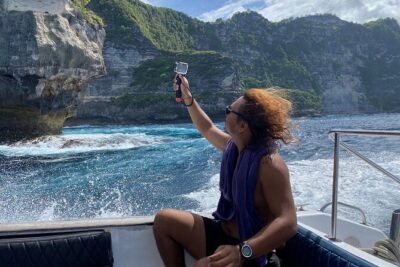
️Nusa Penida by Private Boat – Snorkeling 4 spots, Swim with Mantas + Land Tour
Read our review →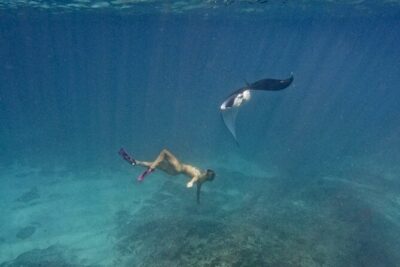
Nusa Penida day trip: boat, 4 snorkeling, Manta rays & Land tour
Read our review →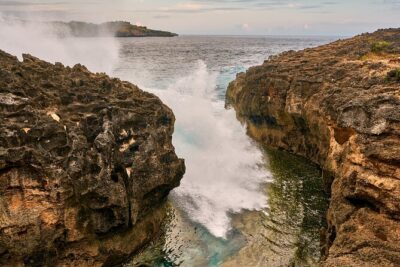
Bali Nusa Penida West Private All-Inclusive Tour
Read our review →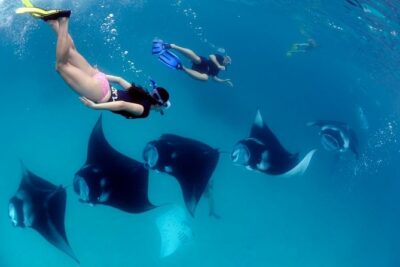
Nusa Penida Snorkeling Adventure (Private & All-Inclusive)
Read our review →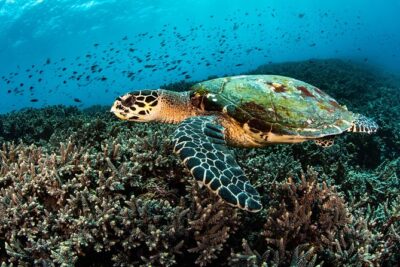
Open Water Course in Nusa Lembongan – Get Certified on remote island (next Bali)
Read our review →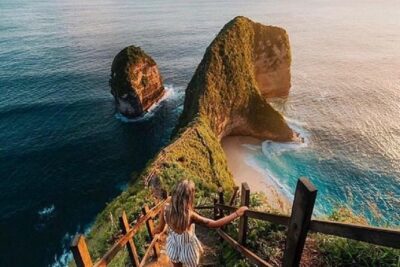
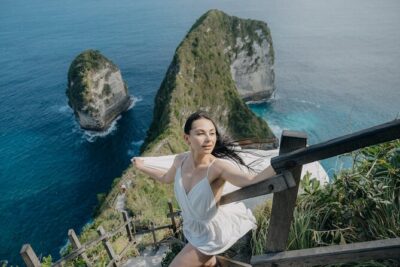
️ Nusa Penida Instagram Tour: The Most Famous Spots (Private All-Inclusive)
Read our review →Browse the lists this tour appears in