Reviewed · KUTA TOURS
PADI Open Water Course
The best part of this three-day PADI course is the clear path from classroom learning to pool practice and then four open-water sessions in Padang Bai and Tulamben. By the end, you can qualify to explore independently to a maximum depth of 18 meters, subject to PADI rules and your instructor’s approval.
I like the patient teaching style reported for instructors such as Gede Ariawan, Muli, Sia, and Julian, and I like that transport, meals, drinks, and equipment support are built into the price. The small maximum group size of three also gives the course a personal feel.
The main consideration is time. Three full days can feel demanding, and you must complete a health questionnaire before entering the water. If you have a medical condition, a current cold, or a flight soon after the course, check the rules carefully before booking.
Key points to know before booking
- Four open-water sessions: Your sea training takes place in Padang Bai and Tulamben after you complete pool work.
- Maximum depth of 18 meters: The certification prepares you for standard recreational scuba activities within this limit.
- Small groups: The advertised maximum is three participants, useful when you need close help with skills or buoyancy.
- Transport and meals included: Hotel pickup and drop-off, an air-conditioned minivan, lunch, snacks, bottled water, coffee, and tea are covered.
- A three-day commitment: The course combines theory, pool training, and sea work, so plan your Bali schedule around it.
- Strong instructor feedback: Gede Ariawan, Muli, Sia, and Julian are among the instructors and guides praised for patience and careful teaching.
From Kuta to a real scuba qualification
This is not a one-hour tryout in a swimming pool. It is a full PADI Open Water Course, designed to give you the basic skills and understanding needed for a lifetime of safe recreational scuba use.
The course has three main parts: knowledge development, pool training, and four open-water sessions. That structure matters. You learn the principles first, practice the physical skills in a controlled setting, and only then use them in the sea.
You finish as a certified Open Water Diver, able to plan and take part in recreational scuba activities to a maximum depth of 18 meters. Certification does not mean you can ignore conditions or instructor advice, but it gives you a recognized foundation for future courses and guided outings.
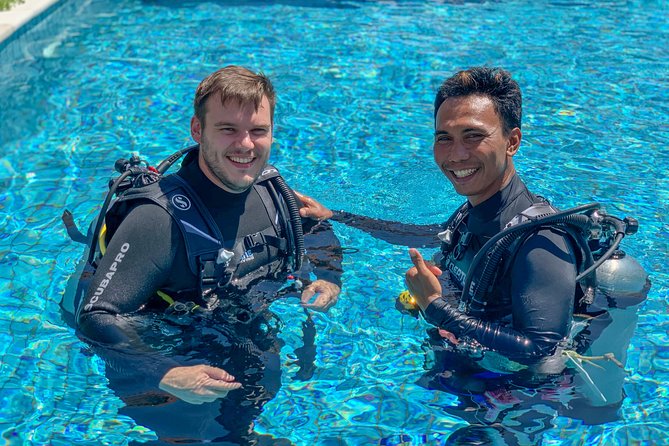
From Kuta, the course is run through Neptune Scuba Diving at its base on Jalan Suka Merta in Sanur Kauh, Denpasar Selatan. Hotel pickup and drop-off are included, which is helpful because the training locations are outside the immediate Kuta area.
A few more Kuta half-days to weigh up
- Nusa Penida day trip: boat, 4 snorkeling, Manta rays & Land tour
★ 5.0 · 2,033 reviews - Bali Nusa Penida West Private All-Inclusive Tour
★ 5.0 · 1,277 reviews - Mount Batur Sunrise Trekking Private Tour with Breakfast and Hotel Transfer
★ 5.0 · 885 reviews
Day one: learning the basics before entering the sea
The first stage is knowledge development. You learn the basic ideas behind scuba equipment, underwater safety, pressure, breathing, and planning. The supplied details do not give a fixed lesson timetable, so the exact balance between study and practical work may depend on your instructor and starting level.
That flexibility can help if you are new to scuba. It also means you should not assume that the first day will be a light introduction. The theory is part of the certification, not filler between more exciting activities.
If you have never used scuba equipment, pay close attention to the explanations about air supply, buoyancy, and what to do if something feels wrong underwater. The skills may seem simple when explained on land, but they become much more useful when you understand why they matter.
Some participants have arrived with little swimming confidence or no previous scuba background. The instructors praised most often for this course, including Gede and Muli, are described as patient and encouraging with beginners. That is especially important during the first day, when many new students are still getting used to breathing through a regulator.
Pool training gives you room to make mistakes
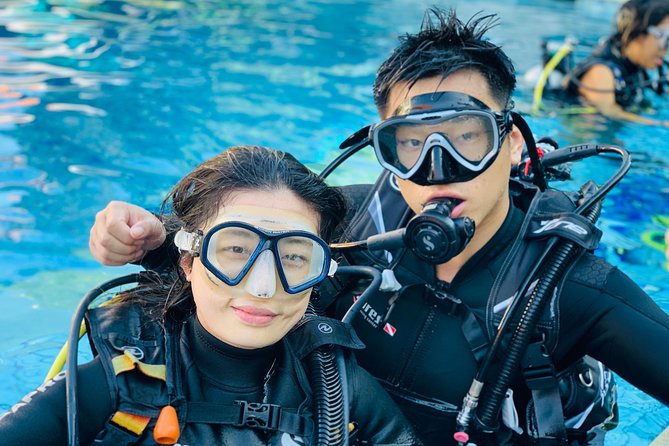
After the theory comes pool training. This is where you practice the core actions needed underwater before dealing with waves, changing visibility, or a busy sea floor.
You will work through the skills required by the PADI course under professional supervision. The exact exercises are not listed in the supplied information, so the safest way to think about this stage is as a controlled test of your comfort, equipment use, and response to common problems.
The pool is valuable because it lets you stop, ask questions, and repeat a skill. That is much easier than trying to solve the same issue for the first time in open water.
I would tell nervous beginners to treat this part as the heart of the course, not a box to tick before the exciting sessions. If you need help with buoyancy, breathing, or basic equipment handling, say so early. One participant specifically praised Muli for helping improve buoyancy control, a skill that often takes more than one attempt to feel natural.
The small group limit helps here. With no more than three participants, an instructor can watch your technique more closely than in a large class. It does not guarantee that every session will feel private, but it gives the course a more personal scale.
Padang Bai brings your first sea sessions
The open-water phase takes place in Padang Bai and Tulamben. Padang Bai is one of the two key locations named for the course, and it is where you may begin to connect pool skills with the real conditions of the sea.
The available information does not specify the exact sites, depths, marine life, or order of the sessions. You should therefore avoid booking this course for one particular animal or underwater landmark. The purpose is certification and skill practice, not a guaranteed wildlife encounter.
What makes Padang Bai useful is the change in setting. You move from a controlled pool to an actual coastal environment while still working with an instructor and guide. You will need to manage your breathing, position, and equipment with more awareness than in the pool.
This is also where good instruction matters most. Sia and Agus are among the team members praised for patient guidance and careful support across the course and later outings. If you feel rushed, cold, anxious, or unsure about a skill, speak up rather than trying to keep pace with someone else.
The four open-water sessions are a major reason this course takes three days. You are not simply being shown how to descend and return. You are building enough repetition to use the basic skills with greater control.
Same base, a completely different kind of day:
- Individual Bali Day Trip with Private Driver and Free WiFi
★ 5.0 · 755 reviews - Waterbom Bali Tickets – Single Day Pass
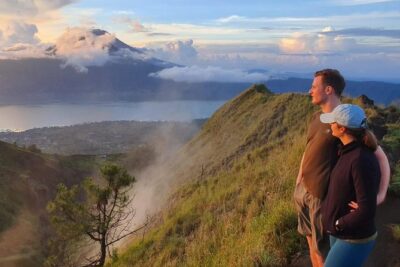
★ 4.5 · 620 reviews - Private Tour Mount Batur Sunrise Trekking and Natural Hot Spring
★ 5.0 · 431 reviews - Private Tour Bali Beaches and Uluwatu Temple with Dinner
★ 5.0 · 363 reviews
Tulamben adds another full open-water setting
Tulamben is the second named site. Like Padang Bai, it gives you a sea setting in which to complete the required open-water work.
Tulamben is also mentioned by participants who continued with extra recreational sessions after certification. That makes it a useful location within a wider Bali scuba plan, although this course itself includes four open-water sessions rather than an unlimited number of outings.
Do not read the inclusion of Tulamben as a promise of a specific wreck, reef, fish species, or water condition. Those details are not provided, and sea activities can vary. What you can count on is that the course uses both Padang Bai and Tulamben for practical open-water training.
The change between locations can also help you gain experience in more than one setting. You will be working on the same core safety and control skills, but the environment may feel different from the pool and from your first sea session.
What the $530 price really covers
At $530 per person, this is a substantial activity cost, but you are paying for a certification course rather than a single recreational outing.
The price includes all taxes, fees, and handling charges, along with professional instruction, a driver or guide, hotel pickup and drop-off, and transport in an air-conditioned minivan. Lunch, bottled water, snacks, coffee, and tea are also included.
That package reduces the small expenses that can add up during three active days. You do not need to arrange your own ride to the meeting point if hotel pickup works for your location, and you can expect basic food and drinks during the course.
The real value lies in the four open-water sessions and the instruction. A low-cost course would not be a bargain if you left uncertain about the skills. Here, the reported teaching strengths are patience, personal attention, and help with buoyancy, which are precisely the qualities a beginner needs.
Souvenir photos are not included. They may be available to purchase, so treat underwater photos as an optional extra rather than part of the package.
Transport makes the schedule easier
The listed meeting point is Neptune Scuba Diving Bali at Jalan Suka Merta, Sanur Kauh, Denpasar Selatan, Bali 80228. The activity ends back at the meeting point, but hotel pickup and drop-off are included.
That combination is worth checking before your first day. Confirm that your accommodation falls within the pickup area and ask for the pickup time after booking. The advertised operating hours are 7:00 AM to 6:00 PM daily, but the course schedule may require early starts because the sea locations are away from the base.
The air-conditioned minivan is a practical inclusion. Road travel in Bali can take time, and having transport arranged is simpler than trying to reach training sites independently with scuba equipment.
The course is available to a maximum of three participants. This is one of its strongest practical features, especially if you are learning as a couple or small group. Solo participants may be paired with another student, as happened to one beginner who received support from Gede while training with a buddy.
Who will get the most from this course
This course suits you if you want an actual PADI qualification and can give three days to the process. It is aimed at beginners, and the minimum age is 10, subject to the required health checks and course rules.
It can also suit a young person in a family group. A 15-year-old completed the course with Gede, whose patient and thorough instruction was praised. That said, age alone does not determine readiness. Comfort in water, maturity, health, and the instructor’s assessment all matter.
You do not need to arrive as an expert swimmer, but you should take the health requirements seriously. The supplied conditions say that your respiratory and circulatory systems, as well as your body air spaces, must be in good health.
People with coronary disease, a current cold or congestion, epilepsy, or a severe medical problem should not take part. Asthma and heart conditions may also affect eligibility, so consult a doctor before booking if you have any concern.
Alcohol and drugs are not compatible with the activity. You will complete a health questionnaire before entering the water, and you should answer it honestly.
Timing around flights matters
Do not schedule a flight within 18 hours after your final underwater session. The course information specifically warns against flying within that period.
This rule can affect your Bali itinerary more than you might expect. If you are leaving Indonesia soon after the course, place the course earlier in your trip and keep the final day clear. It is better to leave breathing room than to force an airport transfer too soon after the last session.
The same advice applies to any change in your plans. Three days is the stated duration, but weather, health, or operational details can affect timing. Keep some flexibility around the course if your wider holiday schedule allows it.
What the instructor support adds
The strongest pattern in the available feedback is not a particular meal or transport detail. It is the teaching.
Gede Ariawan is repeatedly associated with patience, personal attention, and encouragement. Muli is praised for helping with buoyancy control and for supporting students who lacked confidence in the water. Sia and Agus are described as patient and professional, while Julian is linked with a positive experience for a couple completing the course.
Instructor assignments can change, so you should not book on the assumption that one specific person is guaranteed. Still, these names give you a useful sense of the team’s teaching approach.
For a first certification, calm instruction is more important than flashy presentation. You need someone who will repeat an explanation, watch your technique, and let you build confidence at a safe pace. This course appears particularly suited to that kind of learner.
Booking, cancellation, and practical planning
Confirmation is received at the time of booking, and the activity is available with a mobile ticket. You can cancel for a full refund if you do so at least 24 hours before the local start time.
Cancellations made less than 24 hours before the start are not refunded, and changes inside that period are not accepted. Keep those terms in mind if your health or flight plans are uncertain.
Bring a willingness to study, listen, and repeat skills. The included lunch, drinks, snacks, and transport make the days easier, but they do not make the course casual. You are working toward a safety qualification.
Should you book the Neptune PADI course?
I would book this course if you want a proper entry-level qualification, value close instruction, and can spare three days before flying. The small group limit, four open-water sessions, transport, meals, and strong praise for instructors such as Gede and Muli make the $530 price reasonable for a full certification package.
I would pause if you are looking only for a quick introduction, have a tight Bali schedule, or cannot meet the medical and post-course flight requirements. This is a serious course with a holiday setting, not a simple half-day activity.
For a beginner who wants patient support and enough practice to leave Bali as a certified open-water diver, Neptune offers a practical route from pool training to the sea.
FAQ
Where does the PADI Open Water Course take place?
The course is operated from Neptune Scuba Diving Bali in Sanur Kauh, Denpasar Selatan, with open-water sessions in Padang Bai and Tulamben.
How long does the course last?
The course lasts approximately three days and includes knowledge development, pool training, and four open-water sessions.
What is the maximum depth after certification?
The PADI Open Water certification prepares you to take part in recreational scuba activities to a maximum depth of 18 meters.
Is hotel pickup included?
Yes. Hotel pickup and drop-off are included, along with transport in an air-conditioned minivan.
Are meals and drinks included?
Yes. The package includes lunch, bottled water, snacks, coffee, and tea.
What is the maximum group size?
The activity has a maximum of three participants.
What is the minimum age?
The minimum age is 10 years.
Do I need to complete a health questionnaire?
Yes. All participants must complete a health questionnaire before entering the water.
Can I fly immediately after the course?
No. Diving within 18 hours of flying is not recommended, so plan your final course session accordingly.
Are souvenir photos included?
No. Souvenir photos are not included, but they may be available to purchase.
Where does the activity end?
The activity ends back at the Neptune Scuba Diving meeting point unless the arranged transfer returns you to your hotel.
Just added around Kuta
- Your Fragrance Selection: Bali Perfume Workshop and Creations★ 5.0 · 3 reviews
- Ubud Highlights Rice Terraces, Temple, Waterfall & Monkeys forest★ 5.0 · 23 reviews
- Bali Atv Riding through Cave and Waterfall★ 5.0 · 18 reviews
- Experience West Nusa Penida Private Tour★ 4.5 · 14 reviews
- Indonesia: Waterbom Bali Entry Ticket★ 4.5 · 6 reviews
- Nusa Penida 4 Spot Snorkeling with Manta and Island Tour★ 4.5 · 11 reviews
- Premium White Water Rafting and Jungle Buggies in Bali★ 4.0 · 15 reviews
- Waterbom Bali Tickets with Private Transfers★ 4.5 · 39 reviews
Kuta Tours, compared.
Nusa Penida day trip: boat, 4 snorkeling, Manta rays & Land tour
Read our review →
Bali Nusa Penida West Private All-Inclusive Tour
Read our review →
Mount Batur Sunrise Trekking Private Tour with Breakfast and Hotel Transfer
Read our review →
Individual Bali Day Trip with Private Driver and Free WiFi
Read our review →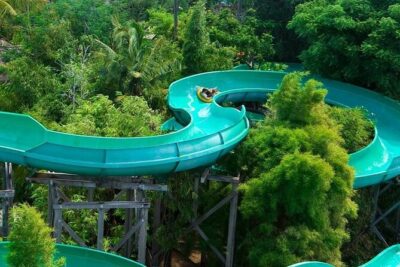
Private Tour Mount Batur Sunrise Trekking and Natural Hot Spring
Read our review →