
Reviewed · KUTA TOURS
Mount Ijen Crater Trekking Tour from Bali
Mount Ijen’s blue fire is the reason to make this long overnight trip. In the dark, electric-blue flames can appear where sulphur gases burn inside the crater. I like the rare chance to see this natural event and the direct look at the hard work of sulphur miners carrying huge loads up the mountain. I also like that transport, a local trekking guide, breakfast, lunch, and hotel transfers are bundled together.
The catch is simple: this is a tough 23-hour outing, not a casual sightseeing trip. You leave South Bali around 5:00 pm, cross to Java by ferry, hike uphill for one to two hours, and return to Bali in the afternoon. The journey is long, the sleep is minimal, and the crater conditions can be difficult.
Key points to know before booking
- Blue fire before dawn: The flames are visible only in darkness and depend on weather and site conditions.
- A 3-kilometre uphill trek: Expect one to two hours of walking over uphill and flatter sections.
- Sulphur miners on the trail: You may see miners carrying 60 to 80 kilograms in bamboo pole baskets.
- Small group, maximum 10 people: This allows closer attention from the guides, though the group may wait for slower members.
- Bali to Java by ferry: The crossing adds real travel time but makes this a practical way to visit Ijen from Bali.
- Strong fitness required: The tour is not suitable for children aged 15 and under, older people, or anyone with serious medical conditions.
Why Mount Ijen is worth the overnight effort
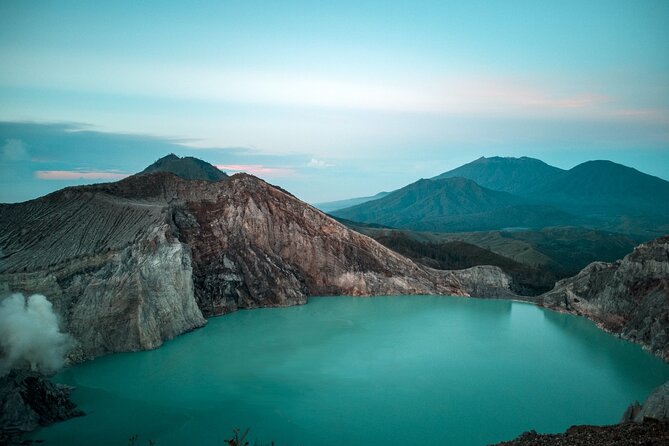
Ijen is one of those places where the timing shapes the entire experience. You are not simply walking to a viewpoint during daylight. You are heading up a dark mountain in the early morning to see a rare sulphur-fire effect, then returning to the crater rim as daylight reveals the enormous acid lake.
The blue fire is created by burning sulphur gases. It is not guaranteed, since weather conditions affect access and visibility, but the possibility gives the first part of the trek a real sense of purpose. You will need to use a flashlight and gas mask, both supplied for the trek.
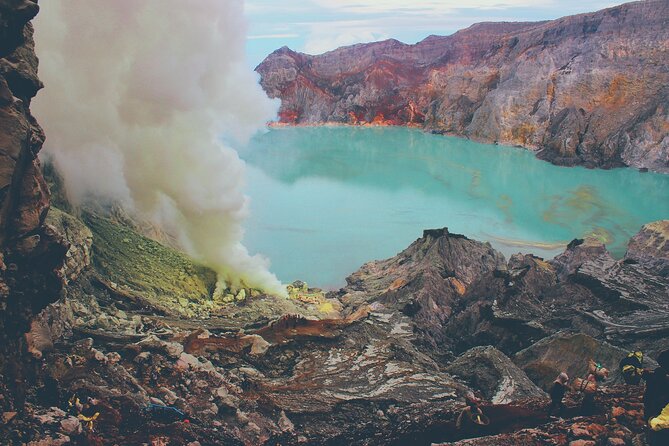
The mountain also gives you a close look at traditional sulphur mining. Miners work with iron rods and carry blocks of yellow sulphur in baskets suspended from bamboo poles across their shoulders. The stated loads are about 60 to 80 kilograms, or 132 to 176 pounds. That detail changes the way you see the climb. The path is demanding for you, but it is part of a repeated working route for people carrying extraordinary weights without modern safety equipment.
I appreciate that this is not only a photo stop. You see a natural phenomenon, but you also encounter the human cost of working in such an intense environment. Be respectful, keep out of the way, and follow your guide’s instructions around the mining activity.
More Mount Bromo sunrise starts:
- Ijen Crater Tour From Bali 1 Day
★ 4.5 · 11 reviews - Mount Bromo Sunrise Tour from Surabaya or Malang – 1 Day
★ 5.0 · 1,759 reviews - 1 Day Amazing Bromo Sunrise tour from Malang Surabaya 7 spots
★ 5.0 · 879 reviews
The 5:00 pm departure from South Bali
Pickup is offered from selected hotels in Kuta, Legian, Seminyak, Jimbaran, and Nusa Dua. The listed start time is 5:00 pm, but your exact pickup time is confirmed after reconfirmation. You should be ready for a late afternoon departure and keep dinner plans flexible, since dinner is not included.
The Bali driver functions as both driver and tour coordinator during the journey to Banyuwangi in East Java. That matters on a route involving roads, a ferry, and a late-night arrival. A courteous driver can make the long transfer feel much easier, and the transport arrangement removes the need to organize separate connections yourself.
The first major leg takes you to Gilimanuk Harbor in West Bali. From there, you cross by ferry to East Java and arrive around midnight. This is a proper inter-island journey, not a quick transfer. The ferry crossing adds atmosphere and gives you a clear sense that Ijen is a different trip from the usual Bali day tour, but it also contributes to the fatigue.
Once you reach Java, you are driven directly to the mountain trek starting point. There is an unexpected waiting period at a house or building if the group arrives at different times. The reason is that the group may wait for other participants before setting off together. I would plan for this possibility rather than assuming you will start walking immediately after the drive.
The nighttime trek to Ijen Crater
Before walking, you receive a safety briefing and equipment that includes a flashlight and gas mask. Wear long trousers, sports shoes or proper hiking shoes, a warm sweater or jacket, gloves, and a hat. The mountain can feel cold before sunrise, while the sulphur area brings a separate set of concerns.
The route to the summit is about 3 kilometres, or roughly 1 mile, and takes around one to two hours. It combines uphill walking with flatter stretches. The distance may look modest on paper, but the nighttime timing, uneven conditions, cold air, and steep sections make stamina more important than the number of kilometres.
I would treat the climb as a serious hike. The supplied information recommends exercise or physical activity the day before, which is sensible advice. You need enough strength for both the ascent and the later descent. One review described the ascent and descent into the crater as challenging, with difficult conditions but spectacular scenery. That is the right way to think about it: the reward is memorable, but the mountain does not make the reward easy.
Your local guide leads the trek and gives instructions along the route. The staff are expected to focus on safety and advise you according to conditions. The group size is capped at 10, which should help the guide keep track of people and offer more direct attention than a large coach group.
Still, a small group does not mean the pace is fully private. If people arrive at different times or walk at different speeds, you may pause while the group comes together. For me, that is a reasonable tradeoff for staying together on a dark mountain.
Meeting sulphur miners on their working route
One of the most meaningful parts of the trek is seeing the miners at work. They use iron rods to break sulphur and carry the yellow blocks in bamboo baskets. The weight involved is astonishing, and the work is performed in an environment where gas and steep terrain create obvious risks.
You are not visiting a staged demonstration. The mining activity is part of the mountain’s daily reality. That makes this encounter more valuable than a simple scenic stop, but it also calls for good manners. Do not block the path, do not treat the workers as props, and listen when your guide tells you where to stand.
The gas mask is an important part of the equipment. I would still bring any personal medicine you need and follow the health restrictions closely. The tour is not recommended for anyone with heart complaints, asthma, or other serious medical conditions.
A doctor’s health certificate is required, with a maximum validity of three days before the Ijen tour. If you do not have one, the operator may take you to the nearest doctor. That possibility is useful, but it can add another step and more time, so arranging the certificate before departure is the safer plan.
More walks and treks around Kuta:
- Mount Batur Sunrise Trekking Private Tour with Breakfast and Hotel Transfer
★ 5.0 · 885 reviews - Private Tour Mount Batur Sunrise Trekking and Natural Hot Spring
★ 5.0 · 431 reviews - Mount Batur Sunrise Trekking Open Trip All-Inclusive
★ 4.5 · 63 reviews - Mount Batur Volcano – Sunrise Trekking with White Water Rafting
★ 5.0 · 52 reviews
Seeing the blue fire before sunrise
You reach the summit before dawn, when the blue fire may be visible. Weather conditions determine whether you can see it, and no responsible tour can promise the flames every time. The experience is best approached as a chance to witness a rare natural effect, not as a guaranteed show.
The darkness makes the blue colour easier to see. You may also notice the strong sulphur setting around the crater, which is why the gas mask and guide instructions matter. Conditions can be uncomfortable, and the descent into the crater area may be difficult.
The activity notes that access is limited to a maximum of 500 metres from the crater. Follow the local rules carefully. Sportswear, hiking shoes, a mask, jacket, gloves, and personal medicine are required items, while littering, throwing seeds, smoking, and lighting fires are forbidden.
Photography is part of the appeal, but I would not let the camera take over. The blue fire is unusual, yet the setting and the miners are just as important. Bring a camera if you like, but keep it protected and make safety your first concern.
Daylight views of the acid lake
After the blue-fire attempt, you stop for a light breakfast on the mountaintop. This is a welcome pause after the nighttime climb, though it is not a full meal. Bring a sensible attitude toward food and timing, since dinner is not included and the breakfast is described as light.
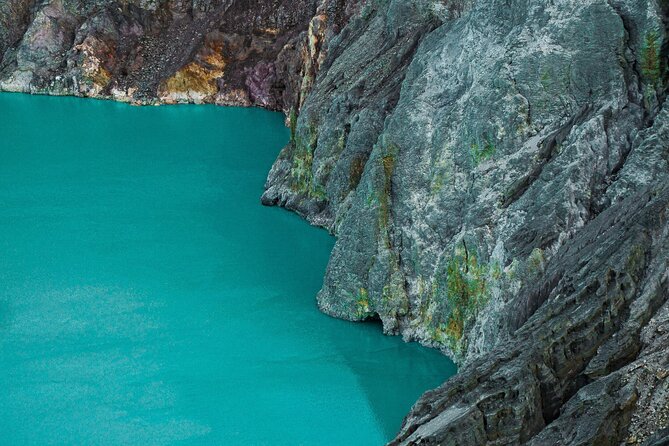
You are then guided back down and shown the crater from the viewpoint. In daylight, Ijen’s scale becomes clearer. The crater contains Java’s largest acid lake, and the view offers the main scenic payoff after the dark trek.
The descent is not simply an easy walk back. One account described the descent into the crater as challenging, with difficult conditions and spectacular scenery. You need to protect your knees, watch your footing, and save enough energy for the return route. Good shoes matter far more here than fashionable holiday clothing.
The contrast between the two parts of the visit is what makes the schedule work. Before dawn, you focus on sulphur gases and blue fire. Later, daylight gives you the broad crater view and the colours of the lake. You see Ijen first as a place of heat and fumes, then as a huge volcanic setting.
Returning to Bali by ferry
After the mountain visit, the vehicle takes you to Banyuwangi Harbor for the late morning ferry back to Bali. The return crossing is another reminder that this is an overnight expedition rather than a short excursion from a Bali resort.
Lunch at a local restaurant comes after the descent and ferry arrangements. Balinese food is included, while drinks are not, so budget for beverages. Lunch is useful both as a meal and as a proper pause before the final drive.
Hotel drop-off takes place in the afternoon at the end of the long loop. From pickup to return, the tour lasts about 23 hours. I would avoid scheduling anything important that evening. You may be tired from the hike, the overnight transport, and the lack of normal sleep.
Is the $153.85 price fair?
At $153.85 per person, the tour costs more than a simple Bali day trip, but the comparison is not really fair. The price covers hotel pickup and drop-off in selected South Bali areas, the drive to East Java, ferry travel, a local mountain guide, trekking equipment including a flashlight and gas mask, breakfast, lunch, and taxes and handling charges.
The ferry and long-distance road transport are a large part of the value. You are paying to avoid arranging the Bali to Java connection, finding a late-night mountain transfer, hiring a local guide, and managing the return journey yourself. For a small group capped at 10, the price is reasonable if you value convenience and guided support.
The weak point is comfort. You are spending nearly a full day on the move and walking before dawn. Dinner, drinks, and possibly a medical certificate are extra. If you are only interested in a relaxed volcano viewpoint, this is not good value because the physical cost is high.
For someone determined to see Ijen from Bali, the bundled transport and guide support make the price easier to justify. The experience is expensive in time and energy, not only in money.
Who should book this Ijen trek?
I would recommend this tour to fit adults aged 16 and above who can handle a steep nighttime hike, limited sleep, ferry travel, and a long return day. It suits you if you want a strong outdoor experience and are willing to accept uncertain weather conditions in exchange for the chance to see blue fire.
It is not suitable for children aged 15 and under, older people who may struggle with the terrain, or anyone with heart complaints, asthma, or another serious medical condition. The requirement for strong physical fitness is not just formal wording. The ascent, crater approach, and descent all demand real effort.
You should also be comfortable with basic group-tour limits. The group is small, but you may wait for other people before setting out or move at a shared pace. The local guide is an important part of the experience, though the quality of guiding can feel uneven, so ask questions and pay close attention to safety instructions.
Mount Ijen closes on the first Friday of each month for cleaning. Check your date before booking. Free cancellation is available if you cancel at least 24 hours before the start time, and poor weather may lead to a different date or a full refund.
Should you book it?
Book this tour if blue fire, sulphur mining, and a major volcanic trek sound worth a hard night and a long ferry journey. The strongest parts are the extraordinary crater setting, the chance to see miners at work, the safety equipment, and the practical all-in-one transport from South Bali.
Skip it if you want comfort, a normal night’s sleep, or an easy scenic outing. Ijen is physically demanding and weather-dependent. If you prepare with proper shoes, warm clothing, gloves, personal medicine, and enough stamina, this tour gives you a rare look at East Java’s volcanic world without forcing you to arrange the complicated Bali connection yourself.
FAQ
How long does the Mount Ijen tour take?
The complete experience lasts approximately 23 hours, including hotel pickup in South Bali, the ferry to East Java, the trek, the return ferry, lunch, and hotel drop-off.
What time does the tour start?
The listed start time is 5:00 pm. Your exact pickup time is provided after reconfirmation.
Which Bali areas offer hotel pickup?
Pickup and drop-off are offered from selected hotels in Kuta, Legian, Seminyak, Jimbaran, and Nusa Dua.
Is the blue fire guaranteed?
No. The blue fire can be seen depending on weather conditions.
How long is the trek to the summit?
The route is approximately 3 kilometres, or about 1 mile, and normally takes one to two hours.
What equipment is provided?
The tour provides a flashlight and gas mask for the guided Mount Ijen trek.
Is food included?
A light breakfast and lunch are included. Drinks and dinner are not included.
Is the tour suitable for children?
The tour has a minimum age of 16. It is not recommended for children aged 15 and under, older people, or anyone with serious medical conditions.
Just added around Kuta
- Your Fragrance Selection: Bali Perfume Workshop and Creations★ 5.0 · 3 reviews
- Ubud Highlights Rice Terraces, Temple, Waterfall & Monkeys forest★ 5.0 · 23 reviews
- Bali Atv Riding through Cave and Waterfall★ 5.0 · 18 reviews
- Experience West Nusa Penida Private Tour★ 4.5 · 14 reviews
- Indonesia: Waterbom Bali Entry Ticket★ 4.5 · 6 reviews
- Nusa Penida 4 Spot Snorkeling with Manta and Island Tour★ 4.5 · 11 reviews
- Premium White Water Rafting and Jungle Buggies in Bali★ 4.0 · 15 reviews
- Waterbom Bali Tickets with Private Transfers★ 4.5 · 39 reviews
Kuta Tours, compared.
Nusa Penida day trip: boat, 4 snorkeling, Manta rays & Land tour
Read our review →
Bali Nusa Penida West Private All-Inclusive Tour
Read our review →
Mount Batur Sunrise Trekking Private Tour with Breakfast and Hotel Transfer
Read our review →
Individual Bali Day Trip with Private Driver and Free WiFi
Read our review →
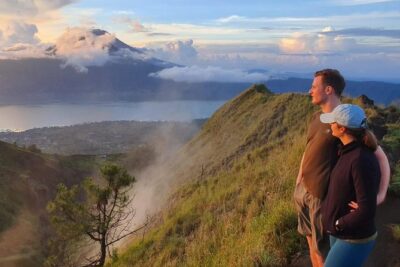
Private Tour Mount Batur Sunrise Trekking and Natural Hot Spring
Read our review →
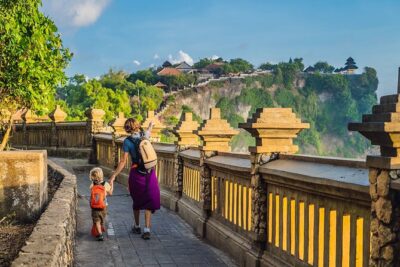
Private Tour Bali Beaches and Uluwatu Temple with Dinner
Read our review →Browse the lists this tour appears in