
Reviewed · UBUD TOURS
Mount Agung Sunrise Trekking Private Tours
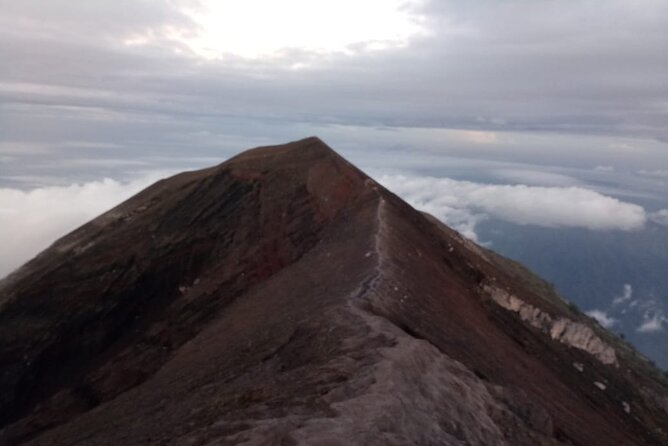
Mount Agung is Bali’s highest mountain, and this private night climb is a serious test of stamina rather than a casual sunrise outing. You start in darkness, work up steep forest and loose rock, then wait for dawn high above Bali with views toward Lombok’s Mount Rinjani.
I like the small private format, since your guide can match your pace and help when the trail turns slippery. I also like the practical gear and food provided: trekking poles, a flashlight, raincoat, water, bread, eggs, fruit, biscuits, and hot tea or coffee. Guides such as Gede Darta have earned particular praise for calm, careful support.
The catch is simple: this is a hard mountain climb. Some hikers reach the upper route early and wait in the cold for sunrise, while others turn back before the top. You need strong fitness, good footwear, warm clothing, and the patience to handle a long descent.
Key points before you book
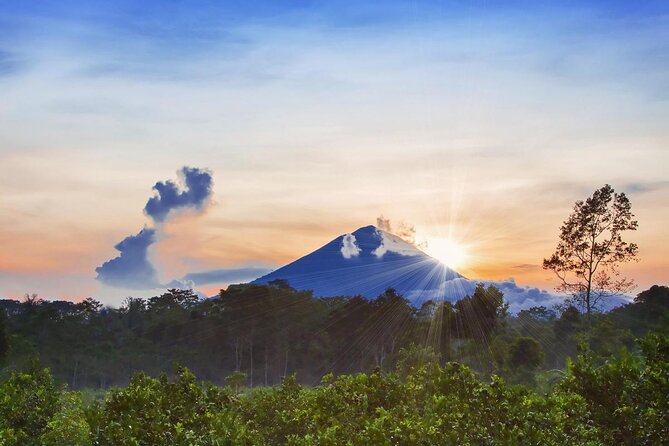
- Sunrise from Bali’s highest peak: The view can include Bali, Lombok, Mount Rinjani, the sea, and Agung’s own shadow.
- A true night trek: Expect a midnight pickup or start, several hours of uphill walking, and a total outing of about 12 to 16 hours.
- Private guide and transport: Only your group takes part, with pickup and drop-off available from Ubud, south Bali, Amed, Lovina, and Candidasa.
- Harder than Mount Batur: The route is steep, rocky, narrow in places, and slippery on the way down.
- Basic trail support included: You receive poles, a flashlight, raincoat, breakfast, and drinking water, but not warm layers or hiking shoes.
- Besakih route and temple setting: The trek begins near Pura Pengubengan and may pass the Besakih temple area, Bali’s largest Hindu temple complex.
Mount Agung is a mountain challenge, not just a sunrise tour
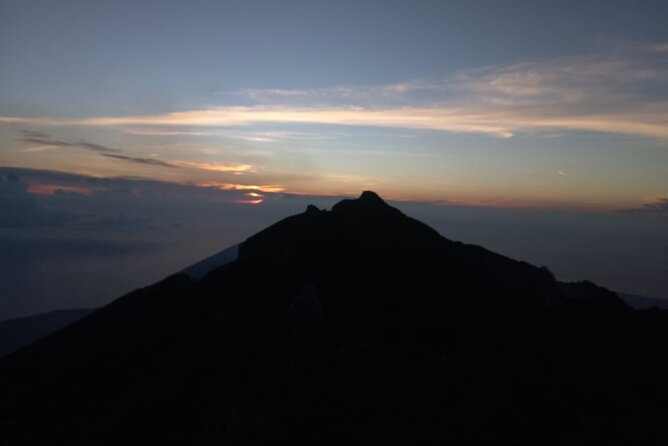
Many Bali sunrise trips are built around a short climb and a quick view. Mount Agung is different. At 9,944 feet, or 3,031 meters, it demands a long night of steady effort, with roughly four hours of climbing in some itineraries and a descent that can take another four hours.
The route begins near Pura Pengubengan Besakih in Rendang, Karangasem. This is the Besakih side of the mountain, a meaningful starting point because Pura Besakih is Bali’s largest Hindu temple complex. You may pass the temple area before or around the start of the climb, depending on the exact route and timing.
The mountain is sacred to Balinese Hindus, so this is not simply a high point with a nice view. The setting carries religious importance, and the dark forest, volcanic rock, and wide views give the trek a much stronger sense of place than a standard road-based excursion.
I would compare this with Mount Batur only to make the difficulty clear. Mount Batur is the easier choice if sunrise is your main goal. Mount Agung suits you if the climb itself matters and you want a demanding physical achievement with fewer people on the trail.
More Mount Batur Sunrise Treks in Ubud
- Mount Batur Sunrise Hike and Natural Hot Spring Option
★ 5.0 · 1,927 reviews - Mount Batur Sunrise Hike with Breakfast
★ 5.0 · 1,757 reviews - Mount Batur Sunrise Jeep Tour with Optional Activities
★ 5.0 · 1,555 reviews
The midnight transfer sets the rhythm
The experience usually begins late in the evening. Pickups can be arranged from Ubud, Canggu and other parts of south Bali, Amed, Lovina, and Candidasa, though the exact pickup time depends on your location. Some departures described by participants began around 9 or 10 p.m., followed by a drive of about an hour and 20 minutes from Ubud or roughly two hours from south Bali locations.
You then meet your mountain guide at the starting point. The hike commonly begins around 11:20 p.m. to midnight, though start times can vary. The whole outing lasts approximately 12 to 16 hours, so you should treat the next day as a recovery day rather than packing in another major activity.
The private arrangement has real value here. You are not trying to keep up with a large group, and the guide can stop when you need a break. A driver and guide are usually separate people. Drivers named in particularly strong accounts include Ketut Bude and Rodih, both praised for punctual pickups and calm driving.
The long transfer is part of the cost calculation. At $55 per person, the price includes a private driver, mountain guide, basic gear, food, and water. That is a fair package if you are sharing the vehicle with one or more companions and want door-to-door support. The value is less obvious for a solo hiker, but the guide is still useful on a steep, confusing, and slippery route.
Flashlights lead you into the forest
The first part of the climb takes place in darkness. Your flashlight and the guide’s light show only a small patch of trail at a time, which makes the early section feel quiet and focused. The lower path begins more gently, but the gradient increases as you continue.
The forest can feel warm and humid at first. You may sweat during this section, even though the summit will later be cold and windy. The trail is not a smooth staircase. It is closer to a rough mountain path, with roots, mud, stones, and uneven footing.
This is where trekking poles help. They provide balance on the uphill and become even more useful on the way down. The supplied flashlight is useful, but a headlamp gives you a better view of the ground while keeping both hands free. One participant carried a headlamp even though the guide had extra lights.
The guide’s role is practical rather than theatrical. Some guides speak limited English and may not provide much commentary about the mountain. The strongest guides, including Gede Darta, are praised for staying calm, matching pace, carrying a tired hiker’s bag when needed, and making sensible safety decisions.
That distinction matters. If you want a detailed geology or cultural talk during the climb, confirm what your guide can offer. If you mainly need route-finding, encouragement, and help over difficult sections, the private format works well.
The upper trail turns steep and rocky
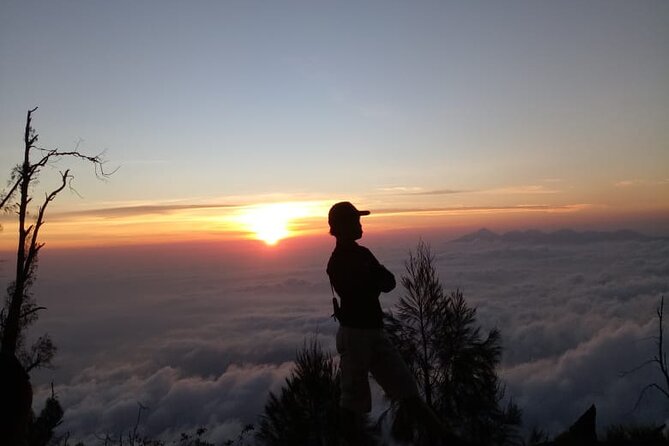
After the forest, the route becomes colder and more exposed. The trail changes to volcanic rock and loose gravel, with a constant uphill grade. One account described about 4,000 feet of elevation gain over three miles, while another referred to about 2,000 meters over approximately six kilometers. Exact figures vary by route and how the climb is measured, but the message is consistent: the upper mountain is demanding.
Near the top, you may need to use your hands on some sections. The trail can feel narrow, and loose rock makes every step important. This is not the place for sandals, smooth-soled sneakers, or worn running shoes.
Breaks are part of the plan. Some groups reach the high section earlier than needed and wait for sunrise for up to two hours. Guides may build a small fire from wood collected lower on the mountain, allowing you to warm yourself before breakfast. That wait can be memorable, but it can also be uncomfortable if you arrive in thin clothing.
The best approach is to pace yourself from the start. Do not race the first forest section simply because you feel fresh. A guide may slow you down or stop you early to protect your energy for the rockier upper climb.
More Mount Batur sunrise starts:
- Mount Batur Jeep Adventure
★ 5.0 · 1,420 reviews - Mount Batur Sunrise Jeep Tour
★ 5.0 · 1,247 reviews - Mount Batur Sunrise Jeep Tour
★ 5.0 · 1,198 reviews - Mount Batur Sunrise Trekking Private All Inclusive
★ 5.0 · 906 reviews
Sunrise rewards the work
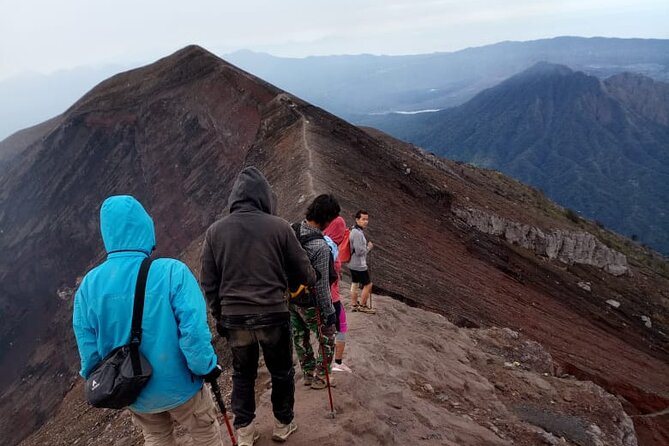
The goal is the crater rim or summit area, reached in time for sunrise. From high on Agung, you can look across Bali and toward Lombok’s three peaks of Mount Rinjani. On a clear morning, the sea and surrounding mountains add to the view. You may also see Mount Agung’s shadow stretching across the clouds.
Sunrise itself can last only a short time, especially if clouds move in. That does not make the climb pointless. The changing light reveals the route you walked in darkness, and daylight gives you a much better sense of the mountain’s steepness.
Breakfast is simple but welcome after several hours of effort. Expect bread, a hard-boiled egg, seasonal fruit, biscuits, and tea or coffee. It is not a full meal, so bring extra snacks if you know you eat frequently during long hikes.
The summit section can be intimidating. One hiker described feeling dizzy, nauseated, and nervous near the top, while another chose to stop short and still enjoyed the cloud sea, Agung’s shadow, and the surrounding peaks. That is a useful reminder: reaching the absolute highest point is not the only successful outcome.
A responsible guide should accept your decision to stop. Gede Darta was specifically praised for suggesting breakfast and sunrise at a lower point when a hiker felt frightened, without pressuring the person to continue. That kind of judgment is more important than speed.
The descent is where good shoes earn their keep
The walk down is not an easy cooldown. In many ways, it is harder. Daylight reveals narrow sections and loose slopes that were hidden at night, while wet forest soil and fine volcanic particles can make the trail slippery.
The volcanic rock often provides grip, but loose stones can roll beneath your feet. Rain is not required for poor conditions. The forest may remain muddy from earlier weather, and even a dry hiking day can leave the descent slick.
Wear shoes with a firm tread. Proper hiking shoes are the safest choice among the equipment specifically discussed by participants. Running shoes may be manageable for strong hikers, but several people found them a poor choice on the descent. Sandals are not suitable.
Take the downhill slowly. Use the poles, keep your weight controlled, and let the guide choose the safest line. A private guide is particularly useful here because the group does not have to move at one fixed speed.
The forest looks beautiful in daylight, but you may not have much attention left for scenery. After a long night, fatigue can affect balance and judgment. The hike may finish around 9 or 10 a.m., followed by the drive back to your hotel or the agreed meeting point.
Pack for heat, cold, mud, and a long night
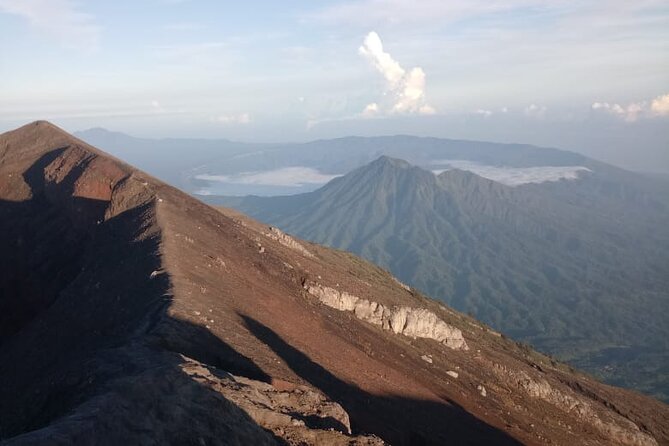
The supplied raincoat is helpful, but it does not replace proper clothing. The temperature changes sharply from the humid lower forest to the cold, windy upper slopes. Pack a warm jacket, gloves if you have them, and layers you can remove during the first climb.
The tour does not include warm jackets, shoes, or other personal needs. The guides may sometimes lend gloves or extra covering, but you should not rely on that. Bring your own cold-weather clothing.
Water deserves special attention. The package includes water during the hike, but one participant advised carrying at least three liters per person. That is sensible for a long uphill and downhill effort, especially in the warm lower section.
I would pack:
- Three liters of water per person
- Extra snacks beyond the provided breakfast
- Warm layers, gloves, and a hat
- Shoes with strong tread
- A headlamp or backup flashlight
- A rain cover for personal items
- Small personal medicines and basic needs
Your backpack should stay light. The guide may help carry it if you struggle, but it is better to begin with only what you truly need.
Guides make the biggest difference
The guide can determine whether this feels like a controlled challenge or a badly managed night. The most praised guides are attentive, safety-conscious, calm, and willing to adjust pace. Gede Darta is repeatedly singled out for these qualities, including his ability to support nervous hikers and carry a bag when necessary.
Other accounts describe guides as caring and experienced but quiet, with limited English and little explanation along the route. One complaint concerned reaching the upper section too early, then waiting for two hours in the cold without enough communication about timing.
You can reduce this risk by asking clear questions before starting. Find out how long each break will last, how far you are from the top, where breakfast will happen, and what the plan is if you feel unwell. Good communication makes a hard hike feel more manageable.
A private tour also means you can speak up more easily. Tell the guide if you need a slower pace, a longer break, or a decision to turn back. The point is not to prove anything at the expense of safety.
The overall rating is 4.7 out of 5, with 94 percent recommending the experience. That strong result fits the pattern: the mountain itself earns the praise, and the best guides add genuine value. The lower ratings focus mainly on guide communication, pacing, or cold waiting time rather than on the scenery.
Who should book Mount Agung?
You should book this if you already enjoy demanding hikes and want a major physical challenge in Bali. You should also be comfortable walking in darkness, sleeping little, dealing with cold temperatures, and descending loose ground after sunrise.
This is a good match for:
- Fit hikers with mountain experience
- People who prefer private guiding
- Anyone seeking a quieter alternative to Mount Batur
- Hikers who value a sunrise reached through effort
- Small groups willing to move at their own pace
Think twice if you want a simple sunrise outing, dislike steep exposed paths, or have no suitable shoes and warm clothing. The activity requires moderate physical fitness according to the operator, but the detailed experience described by participants points to something tougher than that wording may suggest.
The activity is not recommended for people traveling during menstruation, according to the stated conditions. You should also avoid treating the $55 price as a reason to underprepare. The guide and equipment are affordable additions, but no tour can remove the physical demands of the mountain.
Should you book this sunrise climb?
Book it if the climb is part of the appeal. You get private transport, a guide, basic equipment, breakfast, and the chance to watch sunrise from Bali’s highest mountain for $55 per person. The view toward Lombok and Rinjani can be extraordinary, and the quiet night approach feels far removed from Bali’s beach and café circuit.
Do not book it simply because you want a pretty sunrise. Mount Batur is the more sensible choice for that. Mount Agung asks for stamina, careful preparation, and a willingness to accept that you may stop below the highest point.
For the best chance of enjoying it, request a calm guide such as Darta if available, carry plenty of water, wear grippy shoes, and pack for freezing conditions at the top. Free cancellation is available up to 24 hours before the start time, which gives you some room to reconsider the weather, your health, or your fitness.
FAQ
How much does the Mount Agung Sunrise Trekking tour cost?
The tour costs $55 per person. Group discounts are available.
How long does the Mount Agung sunrise trek take?
The full activity takes approximately 12 to 16 hours. The uphill hike can take around four hours, and the descent may take about four hours, depending on pace and conditions.
Where does the trek start?
The stated meeting point is Pura Pengubengan Besakih in Rendang, Karangasem Regency, Bali.
Is hotel pickup available?
Pickup and drop-off are offered from south Bali, Ubud, Amed, Lovina, and Candidasa. Specific pickup times depend on your location.
What equipment is included?
The tour includes trekking poles, a flashlight, and a raincoat. Warm jackets, shoes, and personal items are not included.
Is breakfast included?
Yes. Breakfast includes bread, a hard-boiled egg, seasonal fruit, biscuits, and tea or coffee. Water is also provided during the hike.
Is this a private tour?
Yes. Only your group takes part in the activity, with a private driver and guide.
What level of fitness do I need?
You should have at least a moderate level of physical fitness. The climb is steep, rocky, and demanding, and the descent can be slippery.
Can I cancel for a full refund?
Yes, if you cancel at least 24 hours before the experience start time. Cancellations or changes made less than 24 hours beforehand are not refunded or accepted.
More Morning in Ubud
- Mt Batur Sunrise, Breakfast & Natural Hot Springs
★ 5.0 · 458 reviews - Mount Batur Jeep Sunrise Tour
★ 5.0 · 452 reviews - Mount Batur Sunrise Hike, Breakfast & Hot Spring
★ 5.0 · 316 reviews - Mt Batur Sunrise Trekking Tour
★ 5.0 · 305 reviews
More Hiking in Ubud
- Private Mount Batur Sunrise Trekking Tour
★ 5.0 · 634 reviews - Mount Batur Sunrise Trekking (Private Tour and Breakfast at Restaurant)
★ 5.0 · 598 reviews - Private Tour : Mount Batur Sunrise Trekking With Private Guide
★ 5.0 · 422 reviews - Mount Batur Sunset Trekking
★ 5.0 · 353 reviews
Just added around Ubud
- Bali ATV Quad Bike and White Water Rafting – All Inclusive★ 5.0 · 7 reviews
- Bali ATV Ride with Jungle Swing and Rice Terrace Tour★ 5.0 · 50 reviews
- Bali ATV Ride Adventure★ 4.0 · 22 reviews
- Combo Bali ATV Ride with Ayung River Rafting All Inclusive★ 4.5 · 12 reviews
- Melukat – The Purification Ceremony at Tirta Empul Temple★ 5.0 · 6 reviews
- Bali ATV Quad Bike with Ubud Day Tour All Inclusive★ 5.0 · 19 reviews
- Bali ATV Ride Adventure and Bali Swing Packages – All Inclusive★ 5.0 · 14 reviews
- Bali ATV Combined with Mumbul Lake And Sangeh Monkey Forest★ 5.0 · 34 reviews
Ubud Tours, compared.
Monkey Forest, Jungle Swing, Rice Terrace, and Water Temple
Read our review →
Uluwatu Sunset, Kecak Dance, and Dinner Jimbaran Beach
Read our review →
Tanah Lot and North Bali Tour: Scenic Journey
Read our review →
Body Massage Experience in Ubud Traditional Spa
Read our review →Browse the lists this tour appears in