
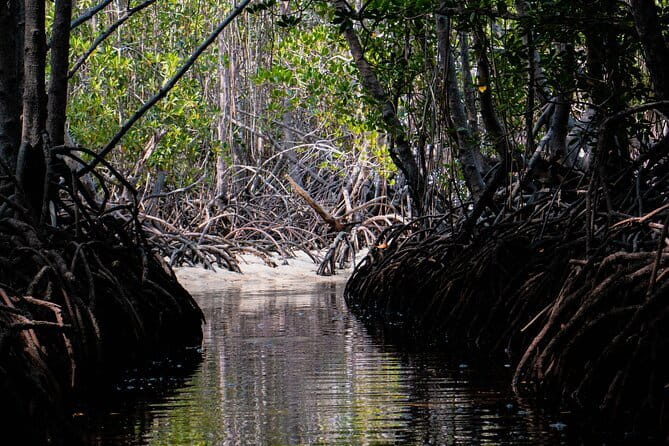
Reviewed · NUSA PENIDA TOURS
Mangrove Reforestation and Exploration around the Nusa Islands
The best part of this experience is that you do more than look at the mangroves. You plant 10 young trees, help prepare seedlings for the next group, and learn how these coastal forests protect shorelines, store carbon, and support wildlife. The work gives your visit to the Nusa Islands a useful purpose.
I like the hands-on nursery work and the small group limit of 10, which should make it easier to ask questions and get practical help. I also like the balance between conservation and sightseeing: you get lunch on Nusa Ceningan, time around Nusa Lembongan and Nusa Ceningan, and a final trip through the mangroves by canoe or boat. The main consideration is access. The tour is not recommended for people with mobility challenges, and planting mangroves means getting close to wet, muddy ground.
Key points to know before booking
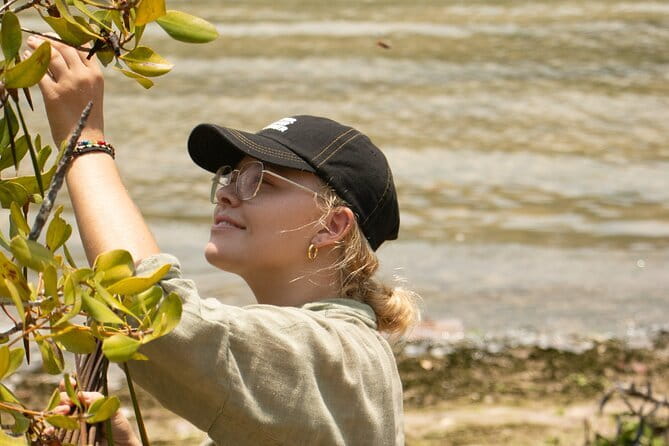
- Plant 10 mangrove trees: Your contribution is specific and easy to understand, rather than being a vague promise of conservation.
- Prepare seedlings for the next group: The nursery work lets you support future planting days as well as your own.
- Learn before you work: The ecological briefing explains coastal protection, carbon storage, biodiversity, and threats to mangrove forests.
- Lunch on Nusa Ceningan: A local meal with ocean views breaks up the practical work.
- Explore two Nusa Islands: The day includes time around Nusa Lembongan and Nusa Ceningan, not only the planting site.
- Small group, about 10 people: A useful size for a practical activity where you may need guidance with seedlings and planting.
Why this mangrove day feels different
Many island excursions ask you to look, photograph, and move on. This one asks you to do a small piece of useful work first. That changes the mood of the day. When you plant 10 trees, the mangrove forest is no longer just scenery. You have a clear connection to one small section of it.
The project is also tied to a nine-year local conservation effort. That matters because the activity is presented as part of an ongoing community program, not a one-off photo opportunity. You learn about the work, take part in it, and help prepare seedlings for the next group.
I like that the experience keeps the task manageable. Ten trees is enough to feel involved without turning a seven-hour outing into a full day of hard labor. You should still expect physical work, though. Collecting and preparing seedlings, handling young plants, and planting along the forest edge all call for some bending and movement.
The educational part gives the work a wider purpose. You’ll hear about the role of mangroves in protecting coastlines, storing carbon, and supporting biodiversity. You’ll also learn how these habitats are threatened and why restoration takes repeated effort. One of the strongest features is that the teaching is designed to work for different ages. A family with children aged 10 and 12 found the explanations easy to follow, while a participant with a biology background still found the subject matter useful.
More Nusa Penida island days:
- ️Nusa Penida by Private Boat – Snorkeling 4 spots, Swim with Mantas + Land Tour
★ 5.0 · 6,424 reviews - Nusa Penida All-Inclusive Day Trip
★ 5.0 · 3,489 reviews - Nusa Penida day trip: boat, 4 snorkeling, Manta rays & Land tour
★ 5.0 · 2,033 reviews
Starting at Ecotourism Nusa PenidaBuyuk
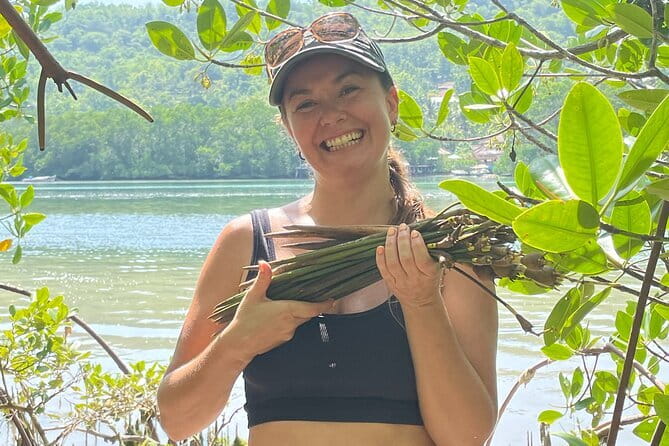
The day begins at Ecotourism Nusa PenidaBuyuk on Jalan Ped in Nusa Penida. Private transportation is included, and the activity finishes back at this same meeting point. Since the full experience lasts about seven hours, check your plans for the rest of the day before booking.
The small maximum group of 10 is a real practical benefit. Conservation work can become awkward in a large crowd, with people waiting for tools or standing around while someone else gets instructions. A smaller group should allow the local team to keep the activity moving and give more direct help when you are handling seedlings or planting.
The operator is Ecotourism Nusa Penida, a local provider with a nine-year connection to the conservation work described for this activity. No guide names are provided, so you should not book expecting a particular named guide. What is clear is the local focus: the team describes itself as island native and uses that familiarity to help you move around the Nusa Islands.
Confirmation is provided when you book. A mobile ticket is available, which is handy if you are keeping your plans on your phone. Service animals are allowed, and the meeting point is near public transportation.
Learning why mangroves matter
Before you begin planting, the day includes an explanation of mangrove ecology. This is not filler before the main event. It tells you why the work is worth doing and helps you understand what you are looking at when you later move through the forest.
Mangroves are coastal plants with an important job. Their roots help hold shorelines together, while the forest provides habitat for many forms of life. The trees also store carbon. You do not need a science background to follow the session, and the teaching has been described as clear enough for children while still offering useful information to someone trained in biology.
The briefing also covers the pressures facing mangrove areas. That context is valuable because planting a seedling is only one part of restoration. The nursery, preparation work, planting, and continued care all belong to a longer process. You get a better sense of that process by preparing plants for the group that comes after you.
I would pay attention during this section even if you mainly booked for the outdoor activity. The rest of the day makes more sense when you understand why the team works at the forest edge and why young seedlings need careful preparation.
Getting your hands dirty in the nursery
The nursery portion gives you a practical task before you head to the planting area. You collect and prepare mangrove seedlings for planting, as well as for a future group. This is a small but worthwhile detail. It means your work is not limited to the trees you personally put in the ground.
The nursery can also be the most revealing part of the day. A mature mangrove forest can look like a maze of roots and branches, but the nursery shows the early stages of restoration. You see that the forest’s future depends on many small plants being prepared and placed in suitable areas.
You should wear clothing and footwear that can handle outdoor work, although the supplied information does not specify a required dress code. Because the tour is not recommended for people with mobility challenges, consider how comfortable you are with bending, walking, and working near a forest edge before you reserve.
The task is suited to people who want an active conservation experience, but it is not a formal volunteer placement lasting several days. You make a defined contribution during one half-day outing, then continue with island exploration and a mangrove trip.
Same base, a completely different kind of day:
- Bali Nusa Penida West Private All-Inclusive Tour
★ 5.0 · 1,277 reviews - Nusa Penida Snorkeling Adventure (Private & All-Inclusive)
★ 5.0 · 1,197 reviews - Open Water Course in Nusa Lembongan – Get Certified on remote island (next Bali)
★ 5.0 · 864 reviews - Nusa Penida One Day Trip with All-inclusive
★ 4.5 · 743 reviews
Planting 10 trees along the forest edge
The central activity is planting 10 young mangroves along the edge of the forest. The number gives you a clear measure of what you are doing. You are not simply told that part of your booking supports conservation. You take part in planting the trees yourself.
The forest edge is a fitting place to focus on restoration. It connects the land and water environments that mangroves help protect, and it makes the relationship between coastal health and human communities easier to see. The setting also keeps the work connected to the forest you later explore by boat or canoe.
Planting is likely to be the messiest part of the day, which is also part of its appeal. You will handle soil and young plants, and the work may be less polished than a standard sightseeing stop. That is a good trade if you want an activity that feels real rather than staged.
You may find that the practical work takes more effort than expected, especially in tropical heat. The experience includes snacks and lunch, but no special advice is given about water, sun protection, or clothing. It is sensible to plan for outdoor conditions without assuming the operator supplies every personal item you might want.
Lunch on Nusa Ceningan with time to reset
After the conservation work, you have lunch on Nusa Ceningan. The meal is included, along with snacks, and the setting has ocean views. This is a useful pause after handling seedlings and planting trees, especially because it gives you a chance to sit down before continuing around the islands.
The meal is described as local, which fits the community focus of the day. You should expect a straightforward island lunch rather than a restaurant-centered dining experience. The supplied details do not specify the menu or dietary options, so contact the operator ahead of time if you need confirmation about special dietary requirements.
I like the placement of lunch in the schedule. The day is not just a conservation task followed by a rushed transfer. The break on Nusa Ceningan gives the experience a social, local feel and lets you enjoy the island setting without needing to arrange another meal.
The ocean view is a bonus, but it should not be the main reason you book. The strongest value comes from the combination of conservation work, learning, island exploration, and the mangrove trip later in the day.
Exploring Nusa Lembongan and Nusa Ceningan
The experience includes exploration around both Nusa Lembongan and Nusa Ceningan. That makes the $76.60 price easier to assess. You are paying for more than planting supplies and a lesson. Private transportation, lunch, snacks, all fees and taxes, and a canoe or boat are included as well.
The island portion is not described as a set of named viewpoints, so you should keep your expectations flexible. You may see scenic coastal areas and lesser-known corners, but the exact stops are not specified. The stated stop is Mangrove Point at Nusa Lembongan, while the broader plan includes time around both islands.
This flexibility can work well if you prefer a local guide’s judgment over a rigid checklist. It also means you should not book this expecting a complete tour of every famous sight on the Nusa Islands. The conservation project remains the heart of the day, and the island touring supports that theme.
The experience is a good choice if you have already seen some of the islands’ better-known attractions and want a different angle. It is also useful for first-time visitors who want nature, a local meal, and a practical activity in one booking. If your only goal is a fast sightseeing circuit, a dedicated sightseeing trip may be a better fit.
Mangrove Point by canoe or boat
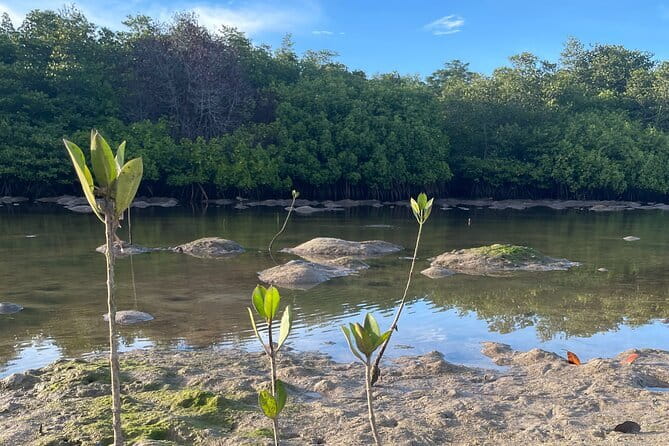
The final part takes you through the thriving section of the mangrove forest by canoe or boat. This is where the earlier lessons become easier to picture. From the water, you can see how the forest occupies the coastal zone and why its roots and channels matter.
The choice of canoe or boat gives the activity some flexibility. The details do not say which option each group receives or whether you choose between them, so confirm that point if it matters to you. Either way, the trip provides a quieter way to see the forest after the more active planting session.
This is also the part most likely to suit people who enjoy nature photography or slow exploration. You are not simply passing through on the way to another attraction. The mangrove forest is the main subject, and the water-based visit gives you time to observe it at close range.
The final forest visit also helps tie the day together. You learn why mangroves matter, prepare seedlings, plant 10 trees, and then see a functioning forest. That sequence makes the conservation message more concrete than a talk alone.
Is the $76.60 price good value?
At $76.60 per person, this is not the cheapest way to spend seven hours on the Nusa Islands. Its value depends on how many parts of the package you would otherwise arrange separately.
The price includes private transportation, lunch, snacks, all fees and taxes, and a canoe or boat. It also covers the instruction, nursery work, planting activity, and local assistance around Nusa Lembongan and Nusa Ceningan. For someone who wants a conservation activity plus island exploration, that is a solid package.
The value is strongest for you if you would otherwise pay for transport, a meal, and a separate mangrove trip. It is also stronger if you care about supporting a local project and want a direct role in the work. Planting 10 trees gives the booking a clear purpose.
The value is weaker if you want a full sightseeing tour with many named attractions, or if you dislike getting dirty and doing physical work. You are paying partly for participation, not simply for access to a scenic site. That distinction is important.
Who should book this experience?
I would recommend it to adults, families with older children, solo visitors, and small groups who want to connect with the Nusa Islands in a more useful way. The activity has worked well for children aged 10 and 12 because the ecological explanations can be made simple and practical.
It also suits solo visitors. The group limit of 10 gives you a better chance to meet people without being swallowed by a large tour. A solo participant who wants more than a standard beach day should find the mix of work, lunch, and exploration appealing.
People with a strong interest in ecology will get plenty from the educational side. You do not need specialist training, though. The teaching covers basic reasons mangroves matter, how they are threatened, and how restoration helps.
I would hesitate if you have mobility challenges, since the operator specifically says the activity is not recommended for you. I would also choose another tour if you need a tightly scheduled list of famous sights, a luxury meal, or a passive day with no physical work.
Practical details, timing, and cancellation
The activity lasts about seven hours and ends back at the starting point at Ecotourism Nusa PenidaBuyuk, Jalan Ped, Nusa Penida, Klungkung Regency, Bali 80771. Private transportation is included, but the supplied details do not state the exact departure time or transfer route, so confirm those points before the day.
The group maximum is 10 people. Most people can participate, and service animals are allowed. The tour is near public transportation, although the activity itself includes private transport.
You can cancel for a full refund up to 24 hours before the local start time. Cancellations made less than 24 hours ahead are not refunded, and changes inside that 24-hour window are not accepted. The activity needs a minimum number of participants. If that minimum is not reached and the operator cancels, you can receive a full refund or choose another date or experience.
Should you book the mangrove reforestation experience?
Book it if you want your Nusa Islands day to have a clear purpose. You will learn about mangroves, prepare seedlings, plant 10 trees, eat a local lunch on Nusa Ceningan, explore two islands, and travel through the forest by canoe or boat. That is a well-balanced seven hours for anyone who values nature and local conservation.
Skip it if you want a purely scenic tour, have difficulty with mobility, or prefer a polished resort-style outing. The work is part of the point, and the experience will be best when you are ready to get involved.
At $76.60, I see this as good value for a small group that wants transport, food, education, hands-on restoration, and mangrove exploration in one day. The trees are the lasting contribution, but the better souvenir may be a clearer understanding of why these coastal forests deserve protection.
FAQ
How long does the mangrove reforestation experience last?
The activity lasts approximately seven hours.
Where does the activity start?
It starts at Ecotourism Nusa PenidaBuyuk, Jalan Ped, Nusa Penida, Klungkung Regency, Bali 80771, Indonesia.
Where does the activity end?
The experience ends back at the meeting point.
How many mangrove trees will I plant?
You will plant 10 young mangrove trees along the forest edge.
Will I help prepare additional seedlings?
Yes. You will collect and prepare mangrove seedlings for the next group.
Is lunch included?
Yes. A local lunch on Nusa Ceningan is included, along with snacks.
Is transportation included?
Yes. Private transportation is included, as well as all fees and taxes.
Can I cancel for a full refund?
Yes. You can cancel at least 24 hours before the experience start time for a full refund. Cancellations made less than 24 hours before the start are not refunded.
Just added around Nusa Penida
- Bali 2 Days and 1 Nights of Nusa Penida and Lembongan Tour★ 5.0 · 13 reviews
- All Inclusive Nusa Penida Tour Package★ 5.0 · 10 reviews
- All Inclusive Nusa Penida Private Tour★ 5.0 · 15 reviews
- Bali: Nusa Lembongan Snorkeling-Island Tour Daytrip-All Inclusive★ 5.0 · 3 reviews
- Snorkeling 4 Spots, Manta Rays, Tembeling Pool & Kelingking Beach★ 4.5 · 15 reviews
- West And East Nusa Penida Tour,Depart From The Island of Bali★ 5.0 · 20 reviews
- West Nusa Penida Island Snorkeling Tour – From Bali Island★ 4.0 · 5 reviews
- Best Seller West Nusa Penida Island Private Guided Tour★ 4.5 · 57 reviews
Nusa Penida Tours, compared.
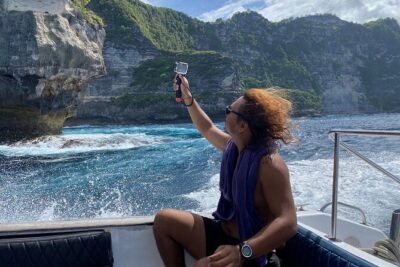
️Nusa Penida by Private Boat – Snorkeling 4 spots, Swim with Mantas + Land Tour
Read our review →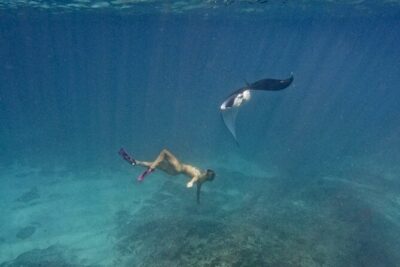
Nusa Penida day trip: boat, 4 snorkeling, Manta rays & Land tour
Read our review →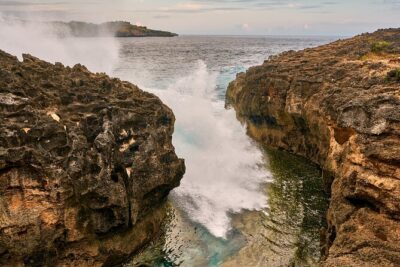
Bali Nusa Penida West Private All-Inclusive Tour
Read our review →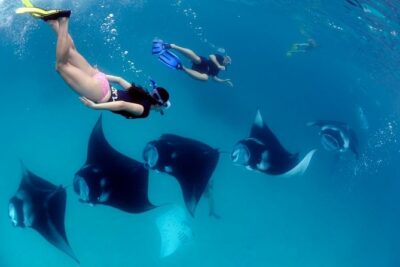
Nusa Penida Snorkeling Adventure (Private & All-Inclusive)
Read our review →
Open Water Course in Nusa Lembongan – Get Certified on remote island (next Bali)
Read our review →
️ Nusa Penida Instagram Tour: The Most Famous Spots (Private All-Inclusive)
Read our review →Browse the lists this tour appears in