
Reviewed · JAKARTA TOURS
Private Tour: Half Day Jakarta Old City Tour
Jakarta’s past comes into sharp focus on this five-hour private tour, which links Glodok Chinatown with the colonial streets of Kota Tua and the working waterfront at Sunda Kelapa. You move from a 17th-century Chinese temple to leather puppets, old city records, and wooden sailing ships in one morning.
I like the door-to-door transport, since Jakarta traffic and heat can make independent sightseeing tiring. I also like the mix of places: this is not only a museum visit, but a look at Chinese-Jakarta life, Dutch colonial rule, Indonesian theater, and an old port still handling cargo by hand.
The main concern is that the tour depends on opening hours and site conditions. One past booking was badly affected because the guide had not confirmed whether attractions were open, so I would check the day’s access before setting out.
Key points to know before booking
- Glodok begins the morning: Explore Jakarta’s oldest Chinatown, including Petak Sembilan Chinese temple, built around 1650.
- A private guide shapes the visit: Only your group takes part, with an English-speaking guide and time to ask questions.
- Wayang is more than a display: You see leather puppets, wooden golek figures, masks, and a short puppet performance in English.
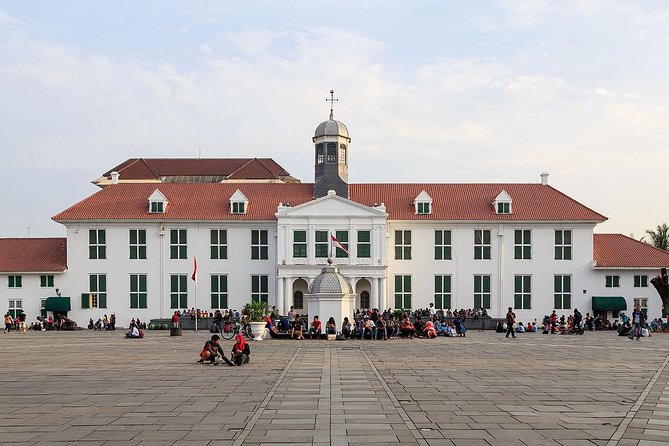
- The museums add colonial context: The Jakarta History Museum occupies the former Dutch city hall, built in 1707.
- The final stops are outdoors: Kota Intan Bridge and Sunda Kelapa Harbour are free to enter but exposed to heat, traffic, and port conditions.
- The price buys convenience: At $75 per person, the value rests mainly on private transport, a guide, and the amount covered in five hours.
Why this half-day route works in Jakarta
Jakarta is enormous, and its oldest districts sit well away from many modern hotel areas. This private outing solves a basic problem: you can see several hard-to-link sights without spending the morning arranging rides between them.
The schedule begins at about 9am with pickup from your centrally located hotel lobby. You ride in a private air-conditioned vehicle, and the same arrangement brings you back at the end. Mineral water, government tax, and service charges are included.
Five hours is enough for an introduction, not a slow study of every site. The listed timing gives about one hour in Glodok, one hour at the Wayang Museum, one hour at the Jakarta History Museum, 30 minutes at Kota Intan Bridge, and 30 minutes at Sunda Kelapa Harbour. Travel between stops fits into the remaining time.
That rhythm suits you if you want a strong first look at old Jakarta without giving up an entire day. It is less suitable if you prefer to linger over museum labels, shop at length, or spend hours photographing the port.
Because this is a private activity, your group alone participates. That matters in Glodok, where narrow lanes and small shops are easier to handle with a guide than with a large tour group. It also gives you a better chance to pause for questions or adjust the pace, although the fixed five-hour window still limits how far you can wander.
A few more Jakarta half-days to weigh up
- Jakarta: Volcano, Tea/Rice Fields, Hot Spring, Local Food
★ 4.9 · 515 reviews - Active Volcano, Rice Field, Hot Spring, Fruit market, Tea Plantation with Lunch
★ 5.0 · 513 reviews - Private Full-Day Guided Tour: Explore Jakarta’s Top Highlights
★ 5.0 · 338 reviews
Glodok Chinatown and the Petak Sembilan temple
Glodok is presented as Jakarta’s oldest Chinatown, and the route starts with the district’s everyday street life rather than a polished museum. Expect open markets, small shops, narrow alleys, older Chinese-style buildings, and walls showing the wear of time.
For photography, this is likely the most visually varied section of the morning. The appeal comes from details: cracked facades, crowded shopfronts, temple decoration, and the close quarters of the lanes. You are seeing a neighborhood, not a reconstructed historical set.
The main religious stop is Petak Sembilan Chinese temple, dedicated to Kuan Yin, the Buddhist goddess of mercy. The temple was built around 1650, making it one of the oldest points on a tour already centered on Jakarta’s early communities.
Admission is listed as free, but the tour does not promise a long temple visit or a specific ceremony. Dress and behavior should be respectful at any religious site. The provided information does not state a formal dress code, so your safest choice is ordinary modest clothing and a quiet manner.
The one-hour allocation includes the surrounding Chinatown area, not just the temple. That is useful because Glodok’s character is found in the walk between places. Still, you should not expect a full market-shopping session. The guide’s role is to place the streets and buildings in context while keeping the morning moving.
This first stop also gives the tour a wider frame. Jakarta’s story is not only Dutch colonial architecture. Chinese communities have shaped the city for centuries, and Glodok lets you see that part of Jakarta before the route turns toward Kota Tua.
Wayang Museum and a short puppet performance
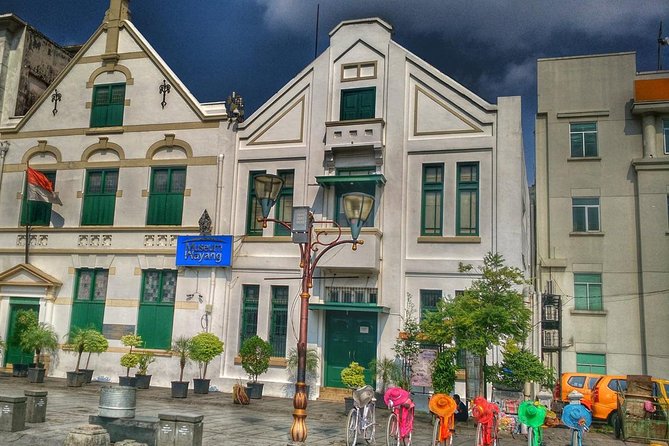
The Wayang Museum occupies an old Dutch colonial house and focuses on Indonesian puppetry. Its collection includes Javanese leather wayang puppets, wooden golek puppets, masks, and examples from other parts of the world.
You will see the figures up close, which helps explain how Indonesian puppet theater works as a visual art. The leather pieces are cut and decorated for shadow play, while the wooden figures have a different shape and presence. Masks add another layer to the display.
The visit also includes a short puppet show in English. A dalang, or puppet player, handles the performance. Since the show is described as brief, treat it as an introduction rather than a full theater production. You get a taste of the form, the movement, and the storytelling method without spending half the morning in a performance hall.
After the show, you may also learn how a puppet is made. That detail gives the museum visit a practical edge. Instead of seeing puppets only behind glass, you can connect the finished object with the handwork involved in producing it.
The museum grounds also contain the former graveyard of Dutch governor generals. This adds a small but useful link between the puppet collection and the colonial setting. The stop is not only about theater. It shows how older Dutch buildings and Indonesian cultural traditions now share the same urban district.
An hour is a sensible amount of time here. You can see the main collection, attend the short performance, and hear an explanation without rushing from room to room. If you have a strong interest in puppetry, you may want more time than the schedule allows, but the private format lets you ask the guide for extra explanation when the program permits.
Jakarta History Museum in the former city hall
Next comes the Jakarta History Museum, also called the Fatahillah Museum. The Dutch built the building in 1707 as Jakarta’s city hall, or stad huis. That original civic role gives the visit weight: you are not simply viewing old objects in a modern gallery, but entering a building tied to the administration of colonial Jakarta.
The collection includes antique furnishings, porcelain, old maps, portraits, and objects used by former Dutch governor generals. These pieces help you read the city through government, trade, and daily administration.
The under-water jail is another notable feature. Its presence points to the harsher side of the old city system, beyond the formal rooms and official furniture. The supplied details do not say how long the jail visit lasts or what condition it is in, so your guide’s explanation will matter here.
The museum receives one hour in the schedule. That is enough for a guided introduction to the major rooms and objects, but not enough for a slow, label-by-label visit. I would stay close to the guide at the start, note which sections interest you most, and use any remaining minutes for those areas.
One practical warning matters more than the timetable: site access can change. A past booking was undermined because the guide had not checked whether the planned places were open. Since this tour’s value depends heavily on the museums, confirm current opening conditions before your morning begins, especially if your travel dates are fixed.
Same base, a completely different kind of day:
- Jakarta Half-Day Guided Tour with a Private Fun Local Host
★ 5.0 · 292 reviews - Jakarta Bogor Botanical Garden, Waterfall and Rice terrace, Lunch
★ 5.0 · 157 reviews - Jakarta Heritage of Old Batavia Private City Tour (Historical)
★ 5.0 · 143 reviews - Jakarta Half-Day Sightseeing Tour To Modern City and Old Town
★ 5.0 · 137 reviews
Kota Intan Bridge and the old Kali Besar waterfront
The route then moves outdoors to Kota Intan Drawbridge, at the north end of Kali Besar. This small Dutch drawbridge dates to the 17th century and is described as the last drawbridge remaining in Jakarta.
The stop lasts about 30 minutes and has no admission charge. It is a short photo and history break rather than a large attraction with indoor exhibits. The bridge’s value comes from its age, its compact form, and its place in the old waterway district.
Do not expect a long crossing or a major engineering display. The information provided does not say that the bridge operates as a working drawbridge today. Your guide can explain its former role, while you take in the surrounding old-town setting.
This is also a useful pause between two museum visits and the harbor. After several indoor rooms, you get open air and a chance to reset. Jakarta’s heat can be strong, so carry the included water, use sun protection, and keep your expectations focused on a brief stop.
Sunda Kelapa Harbour and the pinisi schooners
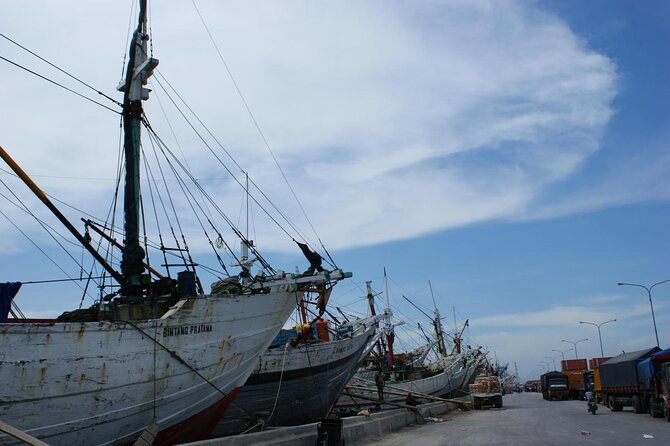
The final stop is Sunda Kelapa Harbour, about one kilometer north of Taman Fatahillah. This is the tour’s most active working site. The old port is known for its large Makassar schooners, called pinisi, and for porters who unload cargo by hand and trolley.
The scene connects directly with the port’s long commercial role. Instead of only seeing preserved buildings, you watch a waterfront where traditional sailing vessels and manual cargo work remain part of the picture.
The harbor is also the tour’s least polished stop. The port is rundown, and its water is described as heavily polluted. That contrast is important. You get a real working harbor, but not a clean waterfront designed for sightseeing.
The scheduled visit lasts 30 minutes and admission is free. That should be enough to see the schooners and watch some dock activity, but not to explore the port in depth. The tour does not include food or drinks, and no harbor activity beyond viewing the area is promised.
I consider this a worthwhile final stop because it keeps the morning grounded in present-day Jakarta. The museums explain the past, while Sunda Kelapa shows how an old port district continues to function. The conditions may be uncomfortable, but they are part of what you are seeing.
What $75 per person really covers
At $75 per person, this is not a low-cost museum shuttle. You are paying for a private, five-hour arrangement with hotel pickup and return, an air-conditioned vehicle, an English-speaking guide, admission to the Wayang Museum and Jakarta History Museum, bottled water, and included taxes and service charges.
The price makes the most sense for two or more people who value time and privacy. You avoid arranging several local rides, finding each site, and working out the order yourself. Group discounts are offered, so the per-person cost may improve for a larger private party.
The value is weaker if you are comfortable using public transport or arranging taxis on your own. The tour is designed around convenience and interpretation, not the cheapest possible route.
Food, drinks, personal spending, and anything not named in the program are extra. No meal stop is listed, so eat before pickup or plan food after the tour. The tour begins at 9am, which makes breakfast a simple part of your preparation.
The experience is booked an average of eight days ahead. That is a useful planning clue, but not a guarantee of availability. Confirmation is received at booking, and you should still verify the opening status of the attractions before the day begins.
Who should choose this tour
I would recommend this outing to a first-time Jakarta visitor who wants old Jakarta explained in one compact morning. It also suits families or small groups who prefer a private vehicle, travelers with limited time, and anyone interested in the overlap between Chinese, Dutch, Indonesian, and maritime history.
The private format is especially useful if your group wants to ask questions or avoid a large coach. Pickup and return also remove some of the strain of navigating Jakarta’s traffic.
You should think twice if you want a relaxed museum day. The schedule gives each major museum only one hour, and the whole route covers five distinct settings. It also may not suit you if outdoor heat, uneven streets, narrow alleys, or the rough condition of an active port will be difficult. A moderate level of physical fitness is advised.
The tour has a 3.8 rating from four submitted ratings, a small sample that gives only limited evidence. The most important practical lesson is the complaint about unconfirmed closures. The route itself is appealing, but reliable site access is essential, so make that check part of your booking routine.
Should you book the Jakarta Old City tour?
Book it if you want a private introduction to old Jakarta with transport handled for you. The strongest feature is the route: Glodok, a temple, Indonesian puppetry, the former colonial city hall, a surviving drawbridge, and Sunda Kelapa Harbour all appear in five hours.
I would not book it blindly around a strict schedule. Confirm that the Wayang Museum and Jakarta History Museum will be open, then decide if $75 is fair for your group. For someone with one free morning and little interest in arranging city transport, the convenience can justify the cost. For an independent budget visitor with a full day, separate visits may offer more time and flexibility.
Free cancellation is available if you cancel at least 24 hours before the local start time. Changes or cancellations inside that window are not refunded, so keep your plans firm once the deadline passes.
FAQ
What time does the tour start?
Pickup is scheduled for around 9am from your centrally located Jakarta hotel lobby.
How long does the tour last?
The experience lasts approximately five hours.
Is this a private tour?
Yes. Only your group participates in the activity.
Is hotel pickup included?
Yes. Round-trip transportation from your centrally located hotel is included in a private air-conditioned vehicle.
Is an English-speaking guide included?
Yes. A professional English-speaking tour guide is included.
Are museum admission fees included?
Admission to the Wayang Museum and Jakarta History Museum is included. The Glodok Chinatown, Kota Intan Bridge, and Sunda Kelapa Harbour stops are listed as free admission.
Is food included?
No. Food and drinks are not included, and personal expenses are also excluded.
Can I cancel for a full refund?
Yes, if you cancel at least 24 hours before the experience starts. Cancellations or changes made less than 24 hours before the start time are not refunded or accepted.
Just added around Jakarta
- Volcano and Domas Crater of Hot Stony Bubble from Jakarta Lunch★ 5.0 · 23 reviews
- Situ Gunung Waterfall & Suspension Bridge Sukabumi start Jakarta★ 4.5 · 13 reviews
- Soekarno Hatta International Airport by Plaza Premium Lounge★ 4.0 · 46 reviews
- Jakarta Indonesian Culture in half Day★ 5.0 · 50 reviews
- Jakarta Scooter Lessons and Motorcycle Lessons★ 5.0 · 9 reviews
- The Secret Society of Batavia – Walking Tour★ 5.0 · 4 reviews
- Batik Heritage Introduction Class with Lunch & Souvenir★ 5.0 · 8 reviews
- Jakarta City Tour: Shopping & Culinary Experience★ 4.5 · 15 reviews
Jakarta Tours, compared.
Volcano, Tea/Rice Fields, Hot Spring, Local Food
Read our review →
Active Volcano, Rice Field, Hot Spring, Fruit market, Tea Plantation with Lunch
Read our review →
Private Full-Day Guided Tour: Explore Jakarta’s Top Highlights
Read our review →
Jakarta Half-Day Guided Tour with a Private Fun Local Host
Read our review →
Jakarta Bogor Botanical Garden, Waterfall and Rice terrace, Lunch
Read our review →
Jakarta Heritage of Old Batavia Private City Tour (Historical)
Read our review →
Jakarta Half-Day Sightseeing Tour To Modern City and Old Town
Read our review →
Jakarta Night Tour : Enjoyable Night time in Jakarta (Hotel Pick-up)
Read our review →Browse the lists this tour appears in