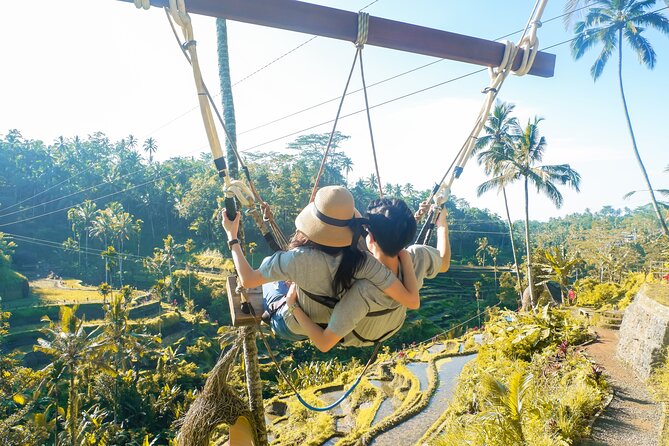
Reviewed · SEMINYAK TOURS
Ubud Cultural Day Tour: A Day for Balinese Cultural Experience
Ubud’s culture comes at you in many forms on this long day: a masked Barong and Fire Dance, temple carvings, royal architecture, rice terraces, monkeys, village workshops, and coffee made from civet-processed beans. The private format lets you ask questions, linger at a temple, or skip a shopping stop more easily than you could on a large coach tour.
I like the way the day pairs famous sights with places that explain how Balinese life works. I also like the included hotel pickup, bottled water, and driver-guide, especially since Bali’s roads can make self-driving tiring. The tradeoff is simple: this is a packed day, often lasting 9 to 12 hours, and the art and coffee stops can feel commercial if you are not interested in buying anything.
Key points to know before booking

- The private vehicle matters: Only your group takes part, so the driver can adjust the pace and route.
- The Barong Dance sets the tone: Expect a one-hour performance about Barong, a force for good, battling the witch Rangda.
- Temple time is brief but worthwhile: Batuan Temple gets about 30 minutes, while Goa Gajah gets about an hour.
- Shopping is built into the day: Celuk, Batuan, or Mas Village may feature silver, paintings, woodwork, textiles, or other Balinese crafts.
- Lunch is not included: You pay for lunch at a local eatery, and the stop may be paired with a scenic view.
- The guide makes or breaks the day: Putu Mertayasa is one guide associated with this experience, and the strongest praise centers on clear explanations, flexibility, and prompt driving.
From Seminyak to Bali’s cultural center
The day begins around 8:00 a.m., with pickup from your hotel in Seminyak. You receive bottled water, and your driver also serves as your guide. Since the tour is private, you ride only with your own group rather than sharing the vehicle with strangers.
That private setup is the biggest practical advantage here. You can ask about ceremonies, temple rules, family customs, or the meaning of a carving without worrying about holding up a busload of people. You can also discuss the order of stops, particularly if you are staying in Ubud and want to avoid repeating a place you plan to see independently.
The distance from Seminyak to the Ubud area means road time is part of the experience. Bali traffic can stretch a day, so do not think of this as seven short sightseeing stops connected by effortless drives. The early start helps, but you should still expect a full outing.
The route is not limited to central Ubud. It moves through the southern art villages, temple sites, the forest sanctuary, rice country, and the eastern side of Ubud. That broad reach explains the 9 to 12 hour duration.
A few more Seminyak half-days to weigh up
- Bali Full-Day Traditional Village Sightseeing Trip All Inclusive
★ 5.0 · 3,069 reviews - Experts Bali Driver : Best Bali Private Driver for Tour in Bali
★ 5.0 · 1,339 reviews - Bali Hai Sunset Dinner Cruise
★ 5.0 · 1,173 reviews
Barong and Fire Dance: a strong cultural opening
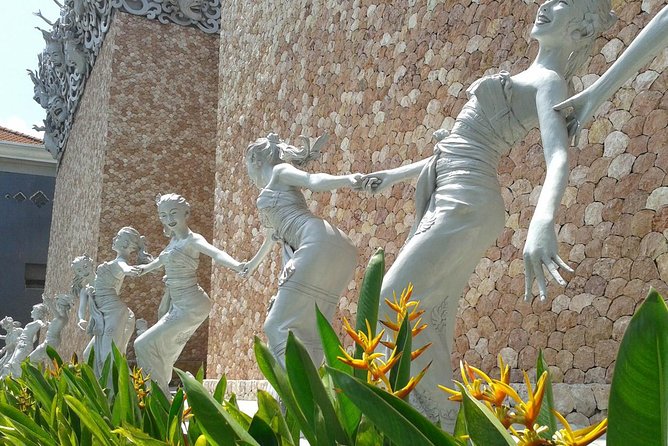
The first scheduled stop is the Sahadewa Barong Dance and Fire Dance, with about an hour for the performance. The Barong story presents the struggle between Barong, a protective force, and Rangda, an evil witch. Barong figures often resemble ornate Chinese lions, with large eyes and elaborate costumes.
This is not a minor folk display squeezed between sightseeing stops. It gives you a useful key to Balinese ideas about opposing forces, protection, ritual, and performance. The fire element adds drama, while the masks and movements make the story easier to follow than a lecture on religion would be.
Ask your guide to explain the characters before the show begins. The performance can be visually striking even if you do not catch every part of the story. Your one-hour allotment is enough for the main presentation, but it does not leave room for a long wander around the surrounding area.
A practical caution: dance performances are staged for visitors, so this is cultural presentation rather than a private village ceremony. That does not make it worthless. It simply means you should enjoy it as an accessible introduction, then pay closer attention to the temples and daily life later in the day.
Balinese art villages and the shopping question
The tour may stop at Celuk, Batuan, or Mas Village for about an hour. These communities are associated with local craft production, and the visit can include silver and gold work, paintings, wood carving, batik, hand weaving, or other Balinese art.
This is one of the more useful parts of the route if you want to understand how decorative objects are made. You get a chance to see the creative work behind pieces that otherwise look like anonymous souvenirs in a shop. If you are looking for a special purchase, this is a better setting than grabbing the first item you see near a major attraction.
Still, shopping stops require clear communication. Tell your guide at the start if you want to browse seriously, look only, or spend as little time as possible in sales areas. The private format helps here. You are not forced to follow a fixed group through every display.
The itinerary names several possible villages rather than promising one exact workshop. That means the art stop may change according to the day’s route or local conditions. You should expect Balinese handicrafts, but not assume a particular artist, material, or demonstration.
Batuan Temple and the details carved in stone
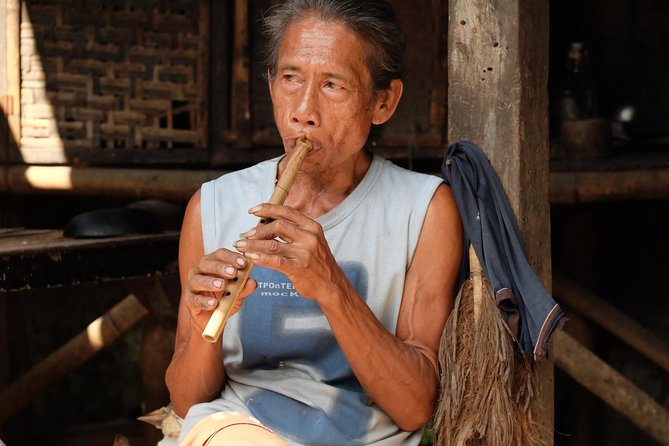
Puseh Batuan Temple is described as an ancient temple dating from the 10th century. You get roughly 30 minutes here, enough to see the architecture, gateways, courtyards, and carved scenes along the temple walls.
The carvings draw on the Ramayana and Mahabharata, two major Hindu epics. Your guide can help you read the visual clues, since the figures and stories may not be obvious at first glance. Look closely at the stonework rather than rushing through for a single photograph.
Batuan is also a place to see how a temple functions as more than an old monument. Religious preparation and local festivals may be visible, depending on the date. The setting can feel more connected to community life than a palace or commercial attraction.
Thirty minutes is short. You will get an introduction, not a full study of the temple. Wear clothing suitable for a Hindu temple and follow the guide’s instructions about dress and conduct. The supplied information does not specify a clothing rental or fee, so ask before the day begins if you have concerns about temple entry requirements.
Same base, a completely different kind of day:
- Private Arrival Transfer: Bali Airport to Hotel
★ 4.5 · 739 reviews - Ubud Hot Springs and Waterfall Private Guided Tour
★ 5.0 · 719 reviews - Bali Secret Waterfall Tour – Private and All-Inclusive
★ 5.0 · 688 reviews - Bali Instagram Tour: The Most Scenic Spots
★ 5.0 · 634 reviews
Ubud Monkey Forest and Pura Dalem
The Sacred Monkey Forest Sanctuary gives you about an hour among a small forest reserve with more than 500 long-tailed monkeys. The forest also protects Pura Dalem, and local belief holds that the monkey colony guards the temple.
The attraction works on two levels. You get an easy chance to see macaques at close range, and you also see how nature, temple grounds, and local belief overlap in Bali. The forest setting is a useful change after the formal dance and carved temple buildings.
Keep your belongings secure and follow the sanctuary rules. The monkeys are described as friendly, but they are still wild animals. Do not treat the visit like a petting zoo, and listen carefully when your guide explains how to behave around them.
An hour gives you time to walk through the main area without making this the entire day. If monkeys are your main reason for booking, this is a good stop. If you dislike animal encounters or crowded attractions, you may prefer to keep this visit brief.
Ubud Palace and the royal connection
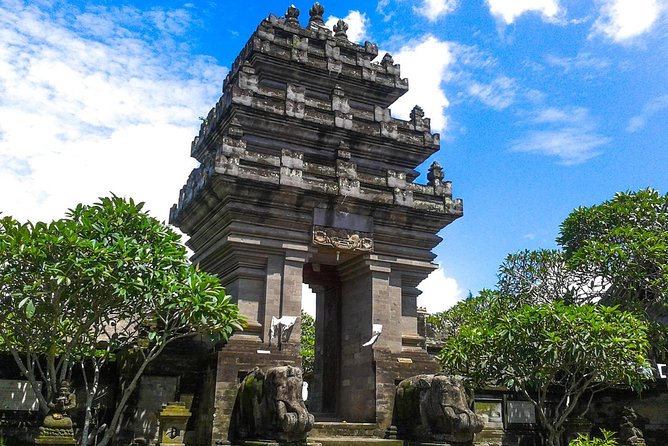
Ubud Palace takes about 30 minutes. The compound was once the home of the Ubud royal family and now serves as a place for cultural shows and preservation of Balinese traditions.
The palace helps explain why Ubud became such an important cultural center. Its value is not just the decorative architecture. The royal family continues to be linked with efforts to protect Balinese culture, and the site connects present-day performances with older court traditions.
Half an hour is enough to see the main spaces and hear the basic story. It is not enough for a slow architectural study or a long independent visit. If you are staying in Ubud later, you can return to the palace area on your own and explore at a less hurried pace.
The order of the palace stop may vary. That is useful if you want to avoid the busiest part of the day, but it also means you should not plan around a precise arrival time.
Tegalalang Rice Terrace and the cost of a quick stop

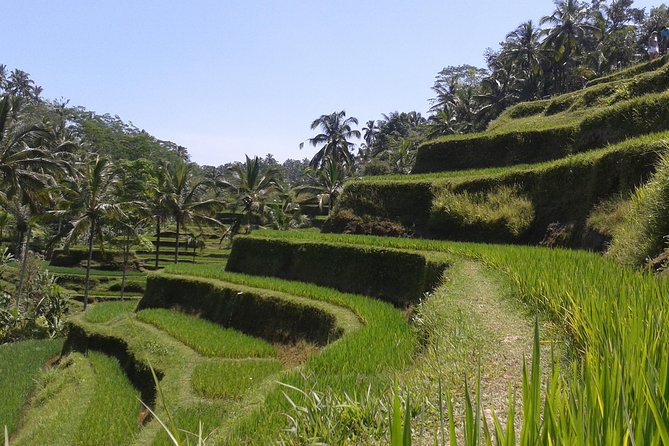
Tegalalang Rice Terrace is one of the day’s best photo stops. The terraces were shaped by generations of farmers, and the stepped paddies follow the contours above the river. Tropical greenery and moving air make this a pleasant break from the town roads.
You get around 30 minutes, so expect views and photographs rather than a long walk through the fields. The short visit suits people who want a classic Bali image without committing to a lengthy trek. It will feel too brief if you hoped to study farming methods or walk through several levels of the terrace.
Use your guide here. A good driver can point out where the view opens up and explain how irrigation and farming fit into Balinese village life. The terrace is more interesting when you see it as working farmland, not simply as a scenic backdrop.
The area can include commercial elements, and optional activities or purchases may be offered. The tour price does not include every possible extra, so ask before agreeing to anything beyond the scheduled visit.
Goa Gajah, the Elephant Cave without elephants
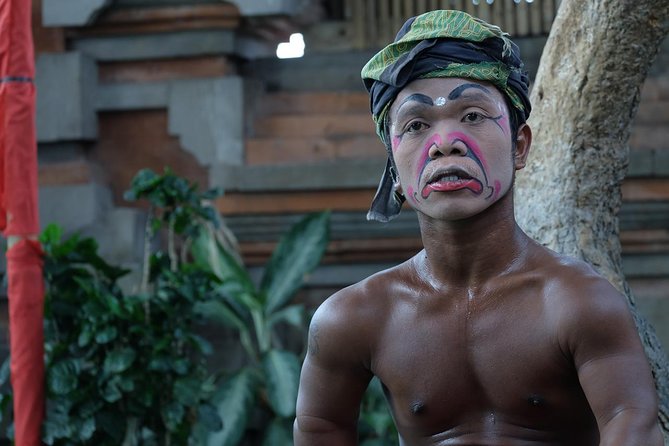
Goa Gajah, or Elephant Cave, dates from the 9th century and served as a sanctuary. Its most memorable feature is the cave entrance, carved with threatening creatures and demons. The name can mislead you: there are no elephants inside the cave itself.
Allow about an hour here. That gives you time to examine the entrance, explore the sanctuary area, and listen to the explanation behind the carvings. The name and the unusual façade make this a good place to ask questions rather than simply take a photograph and leave.
The site is valuable because it shows a different side of Balinese sacred architecture. Batuan emphasizes temple buildings and epic scenes, while Goa Gajah brings you face to face with an older rock-carved entrance and sanctuary setting.
The ground around historic religious sites may be uneven, but the tour information says most people can participate. If you need a specific access arrangement, contact the operator before booking rather than assuming the route will suit every mobility need.
Coffee, lunch, and the flexible parts of the day
The day also includes Bali Pulina Coffee Plantation, where you learn how civet coffee is produced. This is an agricultural stop, not just a tasting counter. The point is to understand the process behind one of Bali’s best-known coffee products.
Civet coffee can be a sensitive subject, so use this stop to ask direct questions about production and animal treatment. The supplied tour details do not provide welfare standards or a detailed tasting list, so do not assume every coffee product or practice is included in the $75 price.
Lunch is not included. You stop at a local eatery, and one account of the day describes lunch near a dormant volcano with a broad view, although the volcano view can be blocked by clouds. Treat the lunch setting as variable rather than guaranteed.
Budget separately for the meal and any drinks or shopping. The lack of an included lunch keeps the base price lower and lets you choose what you want to eat, but it also means the final cost will be more than $75.
What the $75 price really buys
At $75, the value comes from the combination of private transport, hotel pickup and drop-off, a driver-guide, bottled water, and a full day covering several parts of Bali. You are not paying for a single Ubud attraction. You are paying for the vehicle, local driving, route planning, and cultural interpretation across a wide area.
That is a fair arrangement if you have only one day for Ubud and want a broad introduction. Hiring separate transport and arranging each temple, dance, forest, terrace, and cave yourself could take more planning, especially if you are unfamiliar with Bali’s roads.
The price is less compelling if you dislike shopping stops, want long visits at each site, or already have transport and plan to explore Ubud slowly. The itinerary covers a lot, but its strength is variety rather than depth.
Group discounts may be available, and the private format can improve the value for couples, families, or a small group sharing one vehicle. Ask about the total price for your party before booking, since the usefulness of a private tour grows when several people split the transport cost.
How to make the long day work better
Start by telling the guide what matters most to you. If temples are your priority, ask for more explanation at Batuan and Goa Gajah. If shopping is not your goal, ask to keep the art village stop short. If you are staying in Ubud, say so, since you may want to avoid repeating the market or palace area later.
The guide is central to the experience. Putu Mertayasa is associated with this tour, and the most useful guide qualities described for this experience are prompt pickup, strong English communication, cultural explanations, and flexibility. You can ask for the guide by name, but availability is not guaranteed.
Bring modest clothing for temple visits, comfortable shoes, sun protection, and a small amount of spending money. Lunch is extra, and some stops are designed for browsing or purchases. Keep valuables secure at the Monkey Forest and follow all instructions around the animals.
Free cancellation is available if you cancel at least 24 hours before the 8:00 a.m. start time. Changes made less than 24 hours in advance are not accepted, and the local cutoff time applies.
Who should book this Ubud day tour
I would choose this tour if you are based in Seminyak, have one day for Ubud, and want someone else to handle the driving. It suits first-time visitors who want a clear introduction to Balinese dance, Hindu temples, royal culture, craft villages, coffee production, rice farming, and wildlife in one outing.
It also suits couples and families who value a private vehicle and the freedom to ask questions. The guide can make the difference between a string of photo stops and a day that explains what you are seeing.
I would be more cautious if you prefer slow travel. Seven major stops, plus driving, lunch, and possible shopping, can feel rushed. You may get more from booking a shorter private tour focused only on temples and Ubud if you already know you do not want art shops or coffee tasting.
Should you book it?
Book this tour if you want breadth, private transport, and cultural context in a single day from Seminyak. The strongest part is the driver-guide relationship, supported by a route that includes both famous sights and meaningful temple sites.
Skip it if you want every stop to be unhurried or if shopping-oriented visits annoy you. Before you go, confirm the pickup time, tell the guide your priorities, and set a clear budget for lunch and purchases. With those expectations in place, $75 is a sensible price for a busy first look at Ubud and its surrounding culture.
FAQ
Where does the Ubud Cultural Day Tour start?
The tour starts with hotel pickup in Seminyak. The listed start time is 8:00 a.m., but you should contact the operator for your specific pickup time.
How long does the tour last?
The experience lasts approximately 9 to 12 hours. Traffic and the day’s route can affect the total time.
Is this a private tour?
Yes. Only your group participates in the activity, and the tour includes a private driver-guide arrangement.
Is hotel pickup and drop-off included?
Yes. Hotel pickup and drop-off are included in the tour.
Is lunch included in the price?
No. Lunch is not included. You stop at a local eatery and pay for your own meal.
What does the tour cost?
The listed price is $75. Group discounts may be available.
Which attractions are included?
The planned attractions include the Barong and Fire Dance, a Balinese art village, Batuan Temple, Sacred Monkey Forest Sanctuary, Ubud Palace, Tegalalang Rice Terrace, and Goa Gajah, also called Elephant Cave.
Does the tour include the Ubud Market?
The supplied tour details do not list Ubud Market as a fixed stop. Ask the operator or guide about the exact route if the market is important to you.
Is the coffee plantation visit included?
The tour includes a stop at Bali Pulina Coffee Plantation, where you learn how civet coffee is produced.
Can I cancel for a full refund?
Yes, if you cancel at least 24 hours before the experience start time. Cancellations made less than 24 hours before the start are not refunded, and late changes are not accepted.
Just added around Seminyak
- Ubud Private Tour★ 5.0 · 36 reviews
- Kuta Seminyak Scooter Lessons★ 5.0 · 40 reviews
- Bali Airport Transfers | Bali Airport Welcome pick up | Bali Airport Taxi★ 4.0 · 27 reviews
- Wonderful Bali In 3 Days Private Tour★ 5.0 · 56 reviews
- Zero Gravity Flotation Therapy in Canggu Bali by Solace Float★ 5.0 · 36 reviews
- Best of North Bali: Banyumala Waterfall, Handara Gate and Temple★ 5.0 · 4 reviews
- Ubud Tubing Adventure Holy Spring Temple Private Guided Tour★ 5.0 · 49 reviews
- Surf lesson | Energy surfschool krui★ 5.0 · 3 reviews
Seminyak Tours, compared.
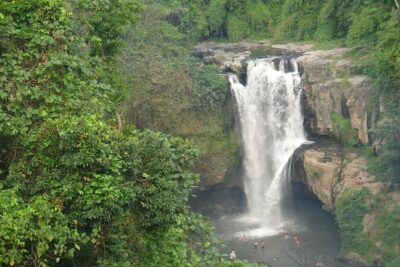
Bali Full-Day Traditional Village Sightseeing Trip All Inclusive
Read our review →

Ubud Hot Springs and Waterfall Private Guided Tour
Read our review →
Bali Secret Waterfall Tour – Private and All-Inclusive
Read our review →

Uluwatu Sunset Tour: Kecak and Fire Dance with Jimbaran Dinner
Read our review →
Bali Blue Lagoon Snorkeling – Lunch and Transport All Inclusive
Read our review →