
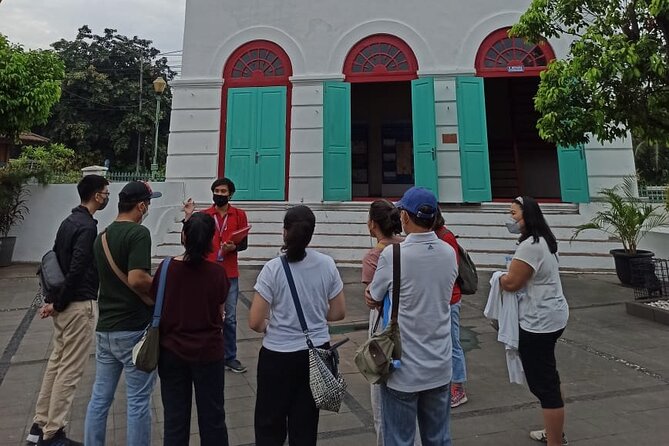
Reviewed · JAKARTA TOURS
Queen of the East (Old Batavia) Walking Tour
Old Batavia makes most sense on foot. The three-hour route follows the old VOC district from the former spice warehouses near Sunda Kelapa Harbour to Fatahillah Museum, linking working port history with colonial streets, surviving walls, and a nearly 400-year-old drawbridge. It is a compact way to see why Jakarta once carried the grand nickname Queen of the East.
I like the private format, which lets your guide shape the conversation around your interests, and I like that entrance fees, mineral water, a pocket map, and a batik cloth fan are included. The main caution is the 4 to 4.5-kilometer walk. One section between the port and the better-known sights can feel long, with little to see along the way, so this tour suits you best if you are comfortable walking in Jakarta’s heat and humidity.
Key points to know before you book
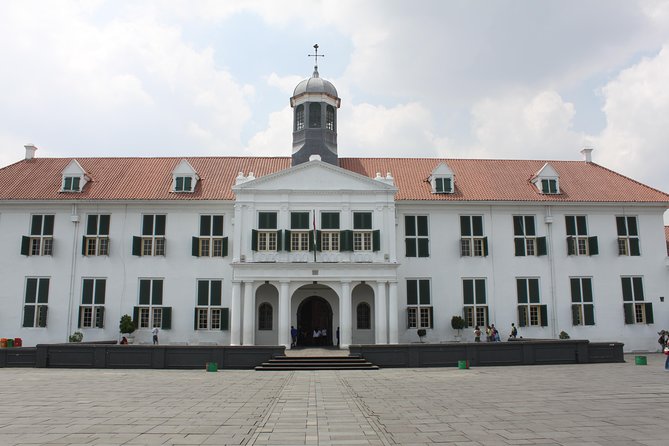
- The route runs from the Maritime Museum to Fatahillah Museum, so you finish in the heart of Kota Tua rather than returning to your starting point.
- A private English-speaking guide leads the tour, for a group of one to 15 people.
- The Maritime Museum and Sunda Kelapa Harbour take about 50 minutes, combining warehouse history with harbour views.
- Kota Intan Bridge is nearly 400 years old, and the route also includes surviving city walls and the former Governor General’s mansion, Toko Merah.
- The walk covers 4 to 4.5 kilometers, mostly outdoors, in warm and humid conditions.
- Monday is not available, since the museums are closed. The tour runs in sun or rain, so bring an umbrella in the October to April rainy season.
Walking through the old VOC port
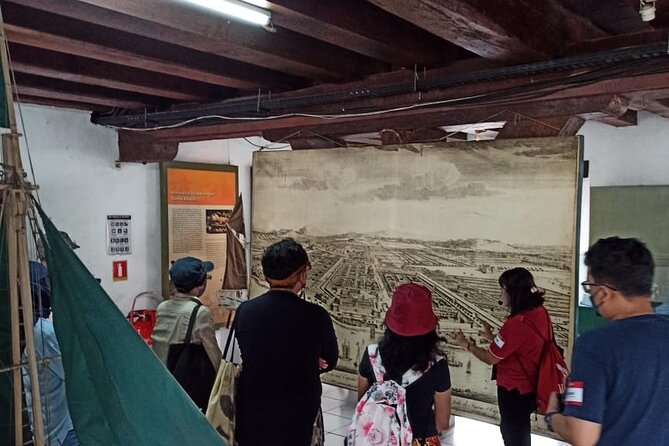
The tour begins at the Maritime Museum, also known as Museum Bahari, on Jalan Pakin. This is a useful starting point because Old Batavia was not simply a collection of handsome Dutch buildings. It was a port city built around trade, storage, administration, and control.
Inside the museum, you visit former VOC spice warehouses. The Dutch East India Company used Batavia as its Asian headquarters, and these warehouses helped support the company’s trade network. The museum gives the tour its economic setting before you move into the streets and public buildings farther inland.
You can expect roughly 50 minutes here, including time to take in the harbour area. The route also includes a view of Sunda Kelapa Harbour from above the old control post. That perspective helps you connect the museum’s stored goods and shipping stories with the port itself.
The Maritime Museum is an important stop, but it may not be the strongest part of the outing for every visitor. If your main interest is architecture, photography, or Jakarta’s civic history, the later stops may hold more appeal. One practical criticism of the route is that the Maritime Museum could be shortened or skipped in favor of more time around the port and central Kota Tua.
Still, I would not dismiss it too quickly. Starting with the warehouses gives you a clear reason for the city’s existence under Dutch rule. You are not looking at old buildings as isolated relics. You are seeing the storage system behind the colonial trade machine.
More walking tours in Jakarta:
- Jakarta Walking Tour with Public Transportation Visiting Sites
★ 5.0 · 14 reviews - The Secret Society of Batavia – Walking Tour
★ 5.0 · 4 reviews - Jakarta Private Custom Walking Tour with A Guide
★ 5.0 · 3 reviews
Sunda Kelapa Harbour and the long walk inland
The harbour portion adds a useful contrast. Old Batavia’s story began with ships, spices, warehouses, and movement, while the Fatahillah area later presents the administrative face of colonial power. The route lets you see both ends of that system in one morning or afternoon.
The catch is the walk between the port and the central Old Town area. The total distance is listed as 4 to 4.5 kilometers, and one section has limited points of interest. You may spend time walking without a major building, museum, or viewpoint to break up the route.
That matters in Jakarta’s climate. The weather is warm and humid all year, and the tour continues in both sunny and rainy conditions. Wear comfortable shoes and light, practical clothing. During the rainy season, especially from October through April, carry an umbrella rather than relying on clear skies.
A trishaw could make sense for that less interesting stretch, but the standard experience is a walking tour. If you prefer to move at a relaxed pace and stop for photographs, tell your guide at the start. A private tour gives you more room to discuss the route, though the full distance still needs to be considered.
The surviving city walls near the Eastern Warehouse
After the port, the tour visits a remaining section of Batavia’s old city wall near the Eastern Warehouse. Only part of the old defensive system survives, which is exactly why this stop is useful. It gives you a physical reminder that Batavia was planned as a fortified colonial settlement, not just a trading neighborhood.
The stop lasts about 15 minutes and has no separate admission fee. Do not expect a large fort complex or a long museum visit. This is a brief outdoor look at what remains, best understood through your guide’s explanation of how the old city was organized.
I like short stops such as this when they connect separate parts of a city’s story. After seeing the warehouses, you encounter the barriers and boundaries that protected the colonial center. The stop is modest, but it gives the walk a stronger sense of place.
Because this is an outdoor section, the weather will affect how enjoyable it feels. On a hot day, the shade and pacing matter. On a wet day, the tour’s all-weather policy means you should be ready for slippery or damp conditions and keep your camera protected.
Crossing Kota Intan Bridge
Kota Intan Bridge is one of the route’s most distinctive sights. The drawbridge is nearly 400 years old and is described as the oldest wooden drawbridge remaining in Batavia. It is a small structure, not a grand monument, but it carries the atmosphere of the old canal-side city.
The visit takes around 15 minutes. That may sound brief, yet the bridge works well as a photographic stop and as a reminder of how water shaped the old district. It also breaks up the longer walk with a clear, memorable object to see.
This is the sort of detail I appreciate on a city tour. You do not need another large museum to understand the place. A bridge, a wall, a warehouse, and a colonial street plan can say plenty when they are explained in sequence.
Your guide can also help you place the bridge within the wider Dutch urban plan. The point is not only that the bridge is old. It is that it belonged to a working city of canals, trade routes, warehouses, and official buildings.
A few more Jakarta half-days to weigh up
- Jakarta: Volcano, Tea/Rice Fields, Hot Spring, Local Food
★ 4.9 · 515 reviews - Active Volcano, Rice Field, Hot Spring, Fruit market, Tea Plantation with Lunch
★ 5.0 · 513 reviews - Private Full-Day Guided Tour: Explore Jakarta’s Top Highlights
★ 5.0 · 338 reviews - Jakarta Half-Day Guided Tour with a Private Fun Local Host
★ 5.0 · 292 reviews
Toko Merah and Old Batavia’s street plan
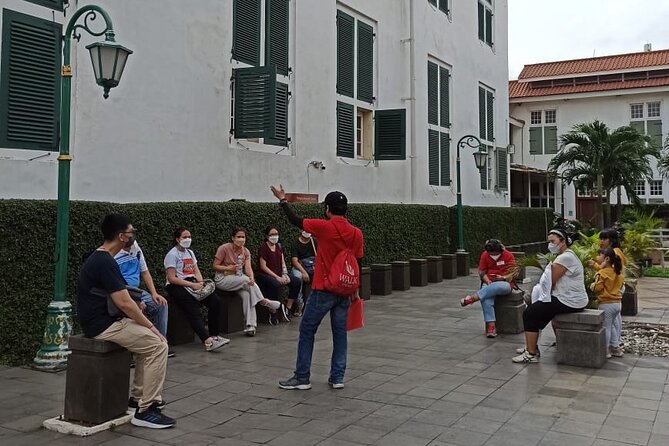
The route then moves through the Dutch colonial urban planning and architecture of the 17th and 18th centuries. This is where the walking format earns its keep. From street level, you can compare the arrangement of buildings and routes rather than viewing each site as a separate attraction.
One notable building is Toko Merah, the former Governor General’s mansion. Its name refers to its red exterior, and it is among the recognizable colonial buildings in the Old Town area. The tour does not list a separate admission visit here, so treat it as an exterior stop and a chance to hear about the building’s role in Batavia.
The architecture is not presented as a simple collection of beautiful old façades. These buildings were part of a colonial system that controlled trade and government. A good guide should help you hold both ideas at once: the buildings can be visually appealing, while the history behind them includes unequal power and exploitation.
This section is likely to appeal most to you if you enjoy urban history, old buildings, and street photography. It also gives the tour a more personal rhythm after the warehouse and harbour material. You can pause for photos and ask questions without keeping up with a large mixed group.
Fatahillah Museum and the underground dungeon
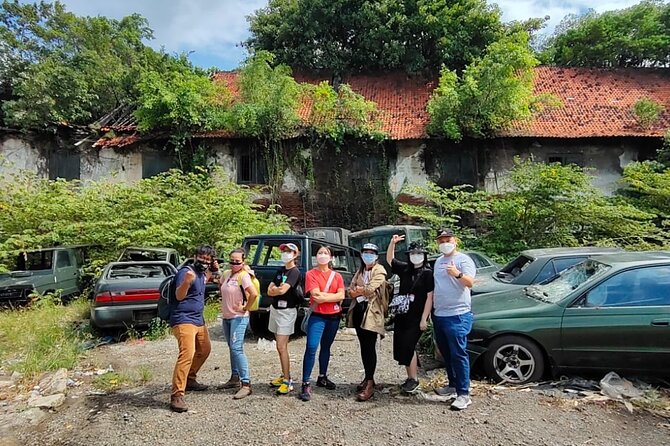
The final major stop is Jakarta History Museum, usually called Fatahillah Museum, on Taman Fatahillah. The building itself is one of the most imposing sights in Kota Tua, and its collection covers antiques from the 17th through the 19th centuries.
You have about 40 minutes here, with admission included. The museum gives you a chance to see objects linked to Jakarta’s earlier periods and to place the buildings you have passed into a broader timeline. The visit also includes the underground dungeon, which adds a darker side to the formal colonial setting.
This was one of the stronger parts of the experience for me in terms of value. The museum is not just a quick photo stop. It gives you indoor time, historical objects, and a clear endpoint after the outdoor walk. If the heat has begun to wear you down, that final museum visit is welcome.
The tour ends here, at Taman Fatahillah No. 1. That is convenient if you want to continue exploring Kota Tua on your own after the guide leaves. It also means you should plan your transportation with the end point in mind, since hotel pickup and drop-off are not included.
What the $67.66 price covers
At $67.66 per person, this is not the cheapest way to see Old Batavia. The value comes from the private tour setup, not from the number of attractions alone. You are paying for an English-speaking guide, entrance fees, water, a pocket map, and a batik cloth fan, with only your own group taking part.
For one person or a very small party, the price may feel high compared with joining a larger walking group. For several people, group discounts can improve the value. The maximum group size is 15, though a private group of that size could still feel less intimate than a party of two or four.
The included admissions remove small costs and make the morning easier to budget. Meals are not included, and neither are travel insurance, tips, optional activities, or transport to and from your hotel. Since the tour starts at the Maritime Museum and ends at Fatahillah Museum, you need to reach the first point independently.
The strongest financial reason to choose this experience is the guide’s role. Old Batavia can be visually interesting but historically scattered. Without explanation, a warehouse, bridge, wall, and mansion may seem like unrelated stops. The guide ties them to the VOC and the colonial city plan.
That value depends on your interests. If you only want quick photographs of Kota Tua, you could find the price hard to justify. If you want context, a private conversation, and all the museum admissions handled, the cost is more reasonable.
Timing, weather, and walking comfort
The tour lasts about three hours, but allow extra time for getting to the meeting point and for your onward plans after Fatahillah Museum. The walking distance is 4 to 4.5 kilometers, with several outdoor sections and no hotel pickup.
You meet at Museum Bahari, also identified as Musium Oud Uitkijkpost Bahari, on Jalan Pakin in North Jakarta. The end point is Jakarta History Museum in West Jakarta. Both points are near public transportation, but the tour does not include transfers between them or to your accommodation.
Monday is unavailable because the museums are closed. The tour operates in sunny and rainy weather, so your preparation matters. Bring an umbrella in the rainy season, wear comfortable shoes, and choose clothing suited to Jakarta’s heat and humidity.
Most people can take part, but the distance should not be treated as a minor detail. The route includes outdoor walking, uneven urban conditions may be possible, and the long port-to-town section can feel tiring. If you have limited walking stamina, ask about pacing before you begin, but do not assume that a vehicle transfer is part of the standard tour.
Children are allowed, and children from three to 12 years old pay the same fare as adults. Children must be accompanied by an adult. That equal pricing makes the tour less attractive for families with young children, especially when the walking distance and heat are added to the calculation.
The private format and guide experience
The experience is fully private for groups of one to 15 people. No guide names are supplied, so you cannot select a particular guide in advance. You can, however, use the private arrangement to set the tone of the visit.
Tell your guide if you want more time at Fatahillah Museum, stronger attention to architecture, or extra explanation of the VOC. You may also want to ask for a slower pace during the port-to-town walk. The private format makes those requests more realistic than they would be in a large scheduled group.
The included pocket map is a small but useful touch. It can help you understand the route after the tour and may be handy if you continue around Kota Tua independently. The batik cloth fan is practical in the heat and gives you a modest local souvenir without adding another shopping stop.
The experience has an overall rating of 4.4 from seven reviews, which suggests a generally positive but not flawless outing. The clearest praise centers on the bank, Jakarta History Museum, and port sections. The clearest weakness is the Maritime Museum and the long walk back from the port, where there may be less to see or discuss.
That balance is important. This is not a tightly packed sightseeing sprint. It is a history walk with a few short stops, a substantial amount of time on foot, and a final museum visit that may carry much of the day’s appeal.
Who should book the Queen of the East tour
I would choose this tour if you want a guided introduction to Jakarta’s Old Town and prefer a private conversation over a large group. It suits you especially well if you are interested in colonial history, old urban planning, warehouses, museums, and the connection between a port and the city behind it.
Photographers may enjoy the bridge, Toko Merah, the harbour, old walls, and Fatahillah square. Families can participate, but the adult-rate pricing for children and the 4 to 4.5-kilometer walk deserve careful thought.
I would be cautious if you dislike heat, long walks, or short exterior stops. I would also think twice if your main goal is simply to see the central Kota Tua buildings, since part of the route takes place away from the most concentrated sights.
The non-refundable policy is another practical point. Once booked, the experience cannot be changed or refunded for any reason. Because weather does not stop the tour, check your schedule and comfort with rain before paying.
Should you book it?
Book the Queen of the East tour if you want Old Batavia explained as a working colonial port and administrative city, not just photographed as an old quarter. The private guide, included museum admissions, harbour visit, Kota Intan Bridge, and Fatahillah Museum make a worthwhile three-hour introduction.
Skip it if you want a short, highly efficient circuit of the central sights. The port section and the walk inland require stamina, and the Maritime Museum may not hold your attention as strongly as the history museum or colonial architecture.
For the best experience, arrive ready to walk, carry an umbrella, wear cool clothing and sturdy shoes, and tell your guide what interests you most. The route has a few slow patches, but it also gives you a clear story of how Batavia was built, supplied, defended, and governed.
FAQ
How long is the Queen of the East walking tour?
The tour lasts approximately three hours. The walking distance is about 4 to 4.5 kilometers.
Where does the tour begin and end?
It begins at the Maritime Museum, Museum Bahari, on Jalan Pakin. It ends at Jakarta History Museum, also known as Fatahillah Museum, at Taman Fatahillah.
Is this a private tour?
Yes. Only your group takes part. The tour accepts from one to 15 people.
Are museum entrance fees included?
Yes. Entrance fees are included, along with an English-speaking guide, mineral water, a pocket map, and a batik cloth fan.
Does the tour operate in rainy weather?
Yes. The tour runs in sunny or rainy conditions. An umbrella is recommended, especially during the rainy season from October through April.
Is the tour available on Monday?
No. There is no tour on Monday because the museums are closed.
Just added around Jakarta
- Volcano and Domas Crater of Hot Stony Bubble from Jakarta Lunch★ 5.0 · 23 reviews
- Situ Gunung Waterfall & Suspension Bridge Sukabumi start Jakarta★ 4.5 · 13 reviews
- Soekarno Hatta International Airport by Plaza Premium Lounge★ 4.0 · 46 reviews
- Jakarta Indonesian Culture in half Day★ 5.0 · 50 reviews
- Private Tour: Half Day Jakarta Old City Tour★ 4.0 · 4 reviews
- Jakarta Scooter Lessons and Motorcycle Lessons★ 5.0 · 9 reviews
- Batik Heritage Introduction Class with Lunch & Souvenir★ 5.0 · 8 reviews
- The Secret Society of Batavia – Walking Tour★ 5.0 · 4 reviews
Jakarta Tours, compared.

Volcano, Tea/Rice Fields, Hot Spring, Local Food
Read our review →
Active Volcano, Rice Field, Hot Spring, Fruit market, Tea Plantation with Lunch
Read our review →
Private Full-Day Guided Tour: Explore Jakarta’s Top Highlights
Read our review →
Jakarta Half-Day Guided Tour with a Private Fun Local Host
Read our review →
Jakarta Bogor Botanical Garden, Waterfall and Rice terrace, Lunch
Read our review →
Jakarta Heritage of Old Batavia Private City Tour (Historical)
Read our review →
Jakarta Half-Day Sightseeing Tour To Modern City and Old Town
Read our review →
Jakarta Night Tour : Enjoyable Night time in Jakarta (Hotel Pick-up)
Read our review →Browse the lists this tour appears in