
Reviewed · LOMBOK TOURS
2D1N Senaru Crater Rim Trekking
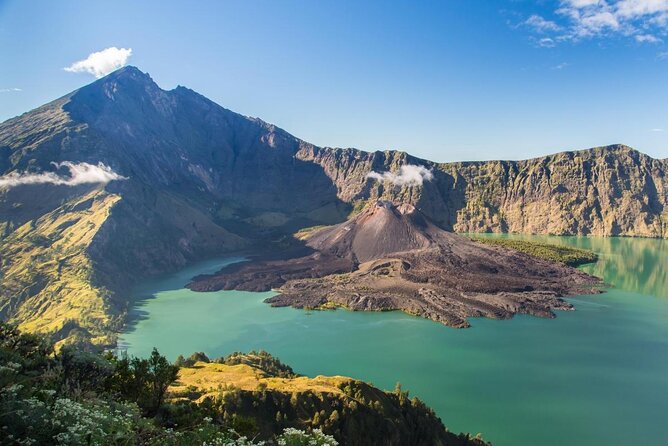
Mount Rinjani saves its best first impression for the top of the Senaru route. After a long climb from tropical forest, you reach a camp at 2,641 meters, where the view takes in Segara Anak Lake, Rinjani’s summit, the Gunung Baru volcanic cone, Bali’s Mount Agung, and the Gili Islands. The sunset is the reward, but the climb to it is no gentle stroll.
I like the private format, since your guide can set a pace that suits your group. I also like the practical camping set-up: mattresses, pillows, sleeping bags, food, water, and a toilet tent are carried and arranged for you. The main catch is simple: you gain more than 2,000 meters in one day, so the route is often harder than its description as the easiest Rinjani option suggests.
Key points before you book
- The main climb reaches 2,641 meters, not Mount Rinjani’s 3,726-meter summit.
- Day one is the hard day, with more than 2,000 meters of uphill walking from Senaru.
- Your private guide controls the pace, which is useful for couples, families, and small groups with mixed fitness.
- The camp has real comforts, including a mattress, pillow, sleeping bag, tent, and toilet tent.
- Sunset and sunrise views are the prize, with Bali, the Gilis, Segara Anak Lake, and the volcanic cone in view.
- The $156 price excludes several costs, including the national park fee, transport, personal hiking gear, and pre-trek lodging.
What this Senaru trek actually covers
This is a two-day, one-night trek to the Senaru Crater Rim. You start at the Rinjani Trek Centre in Senaru at 601 meters, climb through forest and grassland, camp at 2,641 meters, then return to Senaru the following afternoon.
That distinction matters. You are not climbing to Mount Rinjani’s summit. The summit route requires a longer and more demanding trip, while this outing gives you a high viewpoint and a night beside the crater without the final summit push.
The route is described as the easier Rinjani choice, but I would still treat it as a serious mountain trek. The uphill gain is substantial, and the final section becomes steeper. A moderate level of physical fitness is required, and you should expect tired legs rather than a relaxed nature walk.
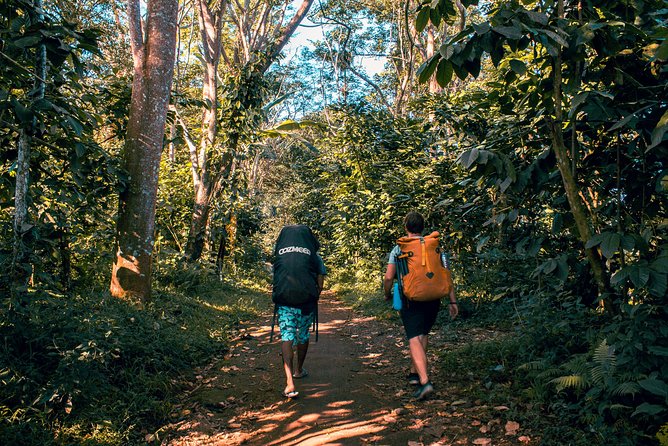
The private arrangement is one of the strongest reasons to choose this trip. You are not tied to a large group’s schedule, and your guide can stop when you need water, food, or a breather. The guide and porters carry the cooking equipment and camp supplies, leaving you to carry your own personal items.
More walks and treks around Lombok:
- Rinjani trekking 2D 1N RIM
★ 5.0 · 94 reviews - Rinjani Trekking 3D2N Summit
★ 4.5 · 85 reviews - 3D/2N Rinjani trekking summit,lake and hot springs.
★ 5.0 · 85 reviews
Day one: from Senaru forest to the crater rim
The first morning begins at the Lombok Volcano Trekking office on Jalan Pariwisata in Senaru. Registration takes place at the Rinjani Trek Centre, where the route begins at about 601 meters.
The early section passes through dense tropical forest. This gives you shade and a more gradual start, although the steady uphill work begins soon enough. You will stop at Pos 1 and Pos 2, useful places to rest and break up the long ascent.
Lunch is served at Pos 3, around 2,000 meters. By this stage, you have already done a large part of the climb. The pause is not just about eating. It gives you time to recover before the path leaves the forest and heads into open grassland.
From Pos 3, the trail gets steeper. The change in scenery is welcome, but the lack of forest cover can make the effort feel more exposed. This is the section where a private guide is especially helpful. A good pace is not the fastest possible pace. It is the pace that gets you to camp with enough energy to enjoy the view.
The published start time is 7:00 am. You should plan your morning around that fixed departure and arrive ready to register. Transport before and after the trek is not included, so you need to arrange your own way to Senaru and back from the office.
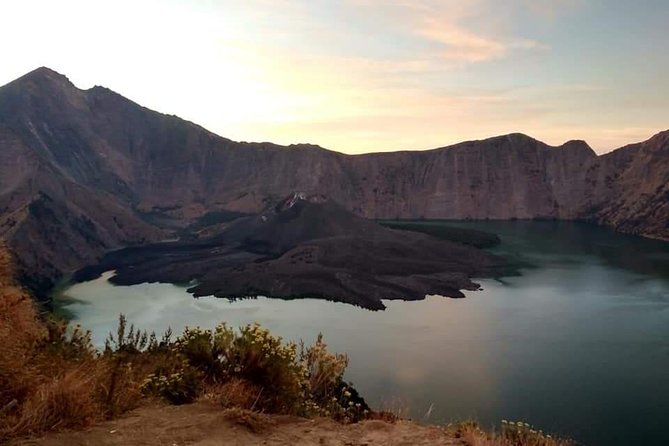
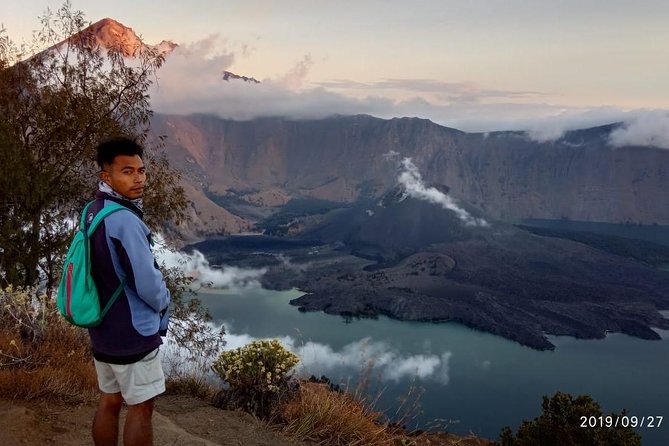
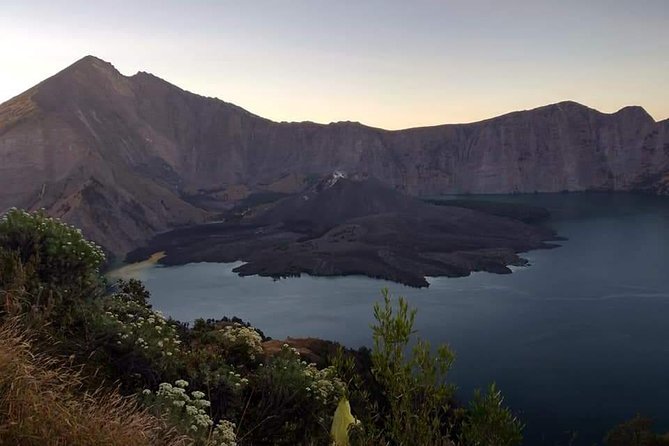
At the crater rim, the scenery opens in several directions. You can look toward Mount Rinjani’s summit and the volcanic cone of Gunung Baru, down toward Segara Anak Lake, and outward toward Mount Agung on Bali and the Gili Islands. The setting is the real centerpiece of the trip.
Sunset is a major reason to choose this route. On a clear evening, the sun drops behind Bali, while the Gili Islands sit out beyond the coast. Weather can interfere, as it did for one group that experienced rain, but a good guide such as Anton can still make the evening feel positive and manageable. The view is never guaranteed, so you should approach it as a bonus rather than a promise.
Camping at 2,641 meters
The overnight camp is basic, but it is more comfortable than carrying and arranging everything yourself. The package includes a tent, sleeping bag, mattress, pillow, toilet tent, and toilet paper. Porters carry the equipment and cooking gear, then prepare the camp.
Several parts of this arrangement matter more than they might on paper. A thick mattress makes a hard night easier, and a warm sleeping bag is useful at altitude. The toilet tent gives you some privacy, which is a meaningful comfort at an exposed mountain campsite.
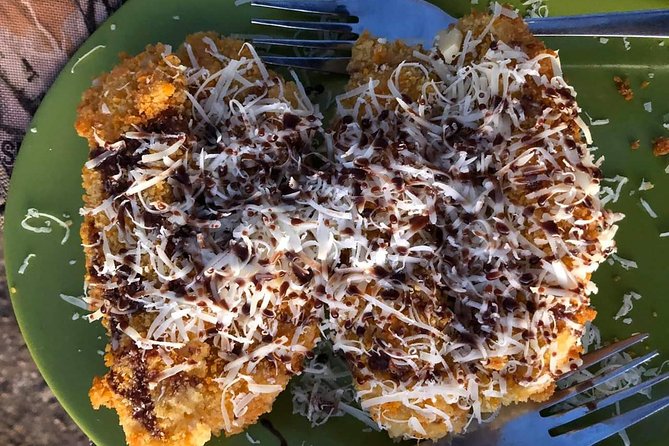
Food and water are included. The stated water allowance is three liters of mineral water per person per day. Meals and snacks are provided throughout the trek, and the food earns unusually strong praise in the supplied comments. Dishes are described as plentiful, varied, and surprisingly good for a mountain camp, with vegetarian adjustments available.
You should still bring your own bottle or hydration system if you prefer to spread your water intake across several containers. The included water is a useful allowance, but uphill walking in tropical conditions makes hydration important.
Camping on the rim is not a hotel night. Facilities are simple, and weather can change quickly. Still, the combination of a mattress, pillow, sleeping bag, cooked meals, and a toilet tent turns this into supported camping rather than a bare-bones survival exercise.
The guide team is another important part of the experience. Names that appear repeatedly in the trip details include Mario, Lim, Anton, Benji, and Rudy or Rudi. Their roles include setting the pace, helping with the route, answering questions, and checking on the group. Porters carry the heavy equipment and cook, a demanding job that is easy to underestimate when you see them moving quickly up and down the mountain.
If you are pleased with the service, budget for a tip. The crew does much of the physical work that makes the trip possible, and one solo participant specifically pointed out how hard the guides and porters work.
Day two: sunrise, breakfast, and the long return
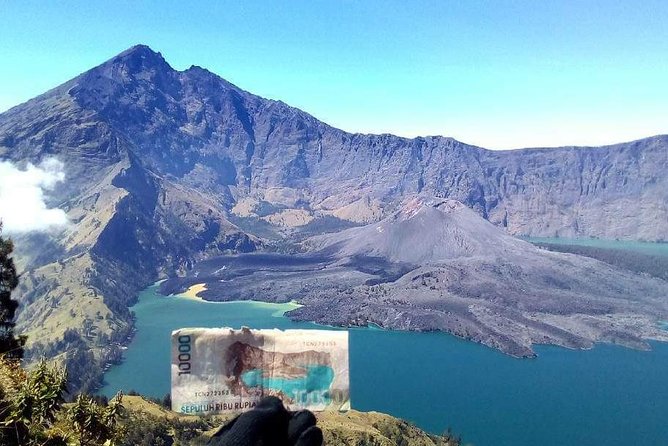
The second morning begins with sunrise at the rim. If the weather cooperates, this is your chance to see the crater, lake, cone, Bali, and the Gilis in a different light.
After sunrise, you have breakfast and begin the descent back to Senaru. The downhill direction may sound easy, but it can be tough on knees and thighs after the first day’s climb. Loose or uneven sections can also make descending tiring, so good footwear matters.
There are snack breaks along the route and lunch at Pos 2. These planned stops help break up the return journey. The group is expected to arrive back in Senaru at about 1:00 pm, ending at the original meeting point.
The second day is shorter in terms of effort for most people because you are descending, but do not assume it will feel effortless. If the first day has pushed you hard, the return can still be a test of stamina. The private format lets you take breaks when needed, rather than trying to match a large group.
A few more Lombok half-days to weigh up
- Mount Rinjan 2Days Summit Full Sunrise View Point 3726m
★ 5.0 · 96 reviews - Mt. Rinjani 2D1N Senaru Crater Rim
★ 5.0 · 75 reviews - Trekking Mt. Rinjani 2 Days 1 Night Senaru Crater Rim
★ 5.0 · 55 reviews - Mount Rinjani Hiking to summit( 2 Days 1 Night )
★ 5.0 · 50 reviews
The views are excellent, but the effort is real
The appeal of this trip is visual and physical. You earn a high perch over one of Indonesia’s most dramatic volcanic areas, then spend the night beside the crater.
The view combines several features that are rarely seen together. Segara Anak Lake sits inside the caldera, the active volcanic cone rises within the crater area, Mount Rinjani’s summit forms a larger backdrop, and Mount Agung appears across the water toward Bali. Looking outward, you may see the Gili Islands.
That is a lot of scenery for a two-day trip. You do not need the longer summit route to get a strong sense of Rinjani’s scale. For many people, the crater rim offers the better trade-off between time and reward.
The trade-off is the climb. You gain from 601 meters to 2,641 meters in one day. That is more than 2,000 meters of ascent, and the route includes a steep section after Pos 3. The description calls it the easiest option, but that should be read as easiest among Rinjani routes, not easy in ordinary hiking terms.
One family completed the route with children aged 10 and 12, but it required determination. That is useful context for parents considering the trip. A family with regular hiking experience may manage it, while a family expecting a casual holiday outing should choose with care.
What the $156 price gives you
At $156 per person, the tour includes the central costs of a supported trek:
- A private English-speaking guide
- Professional porters
- Food and snacks
- Three liters of mineral water per person per day
- Tent, sleeping bags, mattresses, and pillows
- Toilet tent and toilet paper
- Storage for luggage at the trekking office
That package gives you good value if you want the mountain experience without buying or carrying camping equipment. The guides and porters also handle cooking gear and camp equipment, which removes a large amount of practical work.
The price is not all-inclusive. You must add the Rinjani national park fee, listed as IDR 250,000 per person per day. For this two-day trek, that means IDR 500,000 per person based on the stated daily rate.
You also pay separately for transport before and after the trek, accommodation before the trek, and personal equipment. Trekking shoes, a rain jacket, long pants, gloves, and a headlamp or hand torch are not supplied.
That last point deserves attention. You should not arrive assuming the tour provides every item needed for mountain walking. Bring or arrange suitable shoes and rain protection, and make sure you have a light source for camp and early morning movement.
Luggage storage at the Lombok Volcano Trekking office is useful if you are carrying bags around Lombok. You can leave non-trekking luggage behind and take only what you need for the mountain.
The booking is non-refundable and cannot be changed after purchase. That makes it wise to confirm your fitness, travel dates, transport, and equipment before paying.
The guide and porter service
The strongest part of the experience is the human support. The guides are not only there to point out the route. They help regulate your pace, encourage you on the hard sections, answer questions, and keep the day moving.
Mario is specifically connected with a group that received a well-positioned campsite and attentive support. Benji is praised for guiding and adapting to the group, while Lim is noted for being considerate, informative, and encouraging. Anton receives credit for staying cheerful in rain, and Rudy or Rudi is associated with a lively and supportive team.
You may not receive the same guide named in another booking, so do not choose the trip solely because of one person. Still, the repeated attention to the guide and porter teams tells you where much of the trip’s value lies.
The private format also changes the mood. You can travel as a couple, family, or small private group, and your guide can adjust the pace to your needs. It does not make the mountain shorter, but it can make the effort feel more manageable.
What to pack and how to prepare
The supplied equipment list is useful, but your personal kit still matters. At minimum, pay attention to the items specifically excluded from the price:
- Trekking shoes
- Rain jacket
- Long pants
- Gloves
- Headlamp or hand torch
Pack light, since the porters carry group equipment but not every personal belonging. Keep essential personal items close, including anything you need overnight.
You should also prepare mentally for a long uphill day. The route passes through forest, then grassland, and finishes with a steeper ascent. Your fitness does not need to be elite, but you should be comfortable with sustained walking and a moderate physical challenge.
A private guide can slow the pace, but cannot remove the elevation gain. If you are worried about the climb, the Senaru Crater Rim route is still a more sensible choice than attempting the summit route without enough time or conditioning.
Who should choose this trek
I would recommend this trip to you if you want Rinjani’s major views but do not want a longer summit itinerary. It suits people who value a private guide, prepared meals, and porters who handle the camp.
It is also a good fit for solo participants who want a private activity with support. One solo participant felt well looked after throughout the trek, and the included equipment means you do not need to organize a full camping kit yourself.
Families and couples can benefit from the adjustable pace. Families should be honest about the effort, especially for younger children. The route is possible for determined children, but it is not a light day outdoors.
I would think twice if you dislike steep climbs, basic camping, uncertain weather, or non-refundable bookings. I would also avoid treating this as a sightseeing tour with a short walk attached. The sunset and sunrise are beautiful, but you work for them.
Should you book the Senaru Crater Rim trek?
Book it if you want a serious but shorter Rinjani experience, excellent crater views, and a private support team that handles meals and camping. The $156 price is fair for the guide, porters, food, water, and equipment, though you must add the park fee, transport, lodging, and personal gear.
Do not book it because the route sounds easy. Book it because you can handle a major uphill day and want the reward of camping on the rim. If you prepare properly, this trip gives you the most important Rinjani moments, sunset, sunrise, Segara Anak Lake, Bali, and the Gilis, without committing to the full summit trek.
FAQ
How high does the trek go?
The trek reaches the Senaru Crater Rim at about 2,641 meters. It does not continue to Mount Rinjani’s summit at around 3,700 meters.
How long is the activity?
The experience lasts two days and one night. You start at 7:00 am on day one and usually return to Senaru at about 1:00 pm on day two.
Where does the trek begin and end?
You meet at the Lombok Volcano Trekking office on Jalan Pariwisata in Senaru. The activity ends back at the same meeting point.
Is transportation included?
No. Pickup before the trek and transfers after the trek are not included.
What camping equipment is provided?
The package includes a tent, sleeping bag, mattress, pillow, toilet tent, and toilet paper. Porters carry the camping and cooking equipment.
Is the national park fee included?
No. The Rinjani national park fee is listed as IDR 250,000 per person per day. For two days, the stated rate totals IDR 500,000 per person.
What personal gear do I need to bring?
You need to arrange trekking shoes, a rain jacket, long pants, gloves, and a headlamp or hand torch. Accommodation before the trek is also not included.
Just added around Lombok
- Full-Day Private Trip to South Lombok★ 5.0 · 15 reviews
- MODERATE HIKING: 2D/1N Crater Rim Senaru | Rinjani Samalas Tour★ 5.0 · 8 reviews
- Trekking Rinjani Mountain Summit 2 Days 1 Night – Em Adventure★ 5.0 · 42 reviews
- Waterfall Tour And Sasak Traditional Tour★ 5.0 · 3 reviews
- Trekking Rinjani 1 Day Trek Senaru Crater Rim★ 5.0 · 3 reviews
- Fantastic trip to Sindang Gile & Tiu Kelep Waterfall★ 4.5 · 3 reviews
- Lombok Tour For Cruise Passangers★ 4.5 · 16 reviews
- Trekking Rinjani Volcano To Crater Rim Senaru 2D-1N Private – Syam Trekker★ 5.0 · 45 reviews
Lombok Tours, compared.
Learn to cook Indonesian food at Gili Cooking Classes Trawangan
Read our review →
Tetebatu Walking Tour – Rice Terraces, Waterfall & Monkey Forest
Read our review →
Gili Island Snorkeling Trip – Gili Trawangan, Gili Meno, & Gili Air, From Lombok
Read our review →
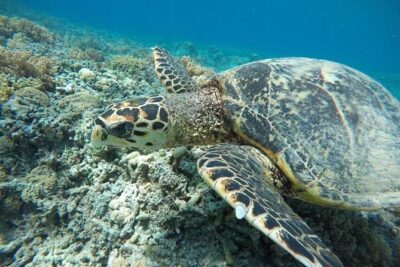
Private Snorkeling Gili Island (Coral, Statue and Turtle)
Read our review →
Day Trip 5 Secret Gilis : Layar, Rengit, Nanggu, Tangkong, Kedis
Read our review →
Day Trip Gili Trawangan, Gili Meno, Gili Air (Depart Lombok)
Read our review →Browse the lists this tour appears in